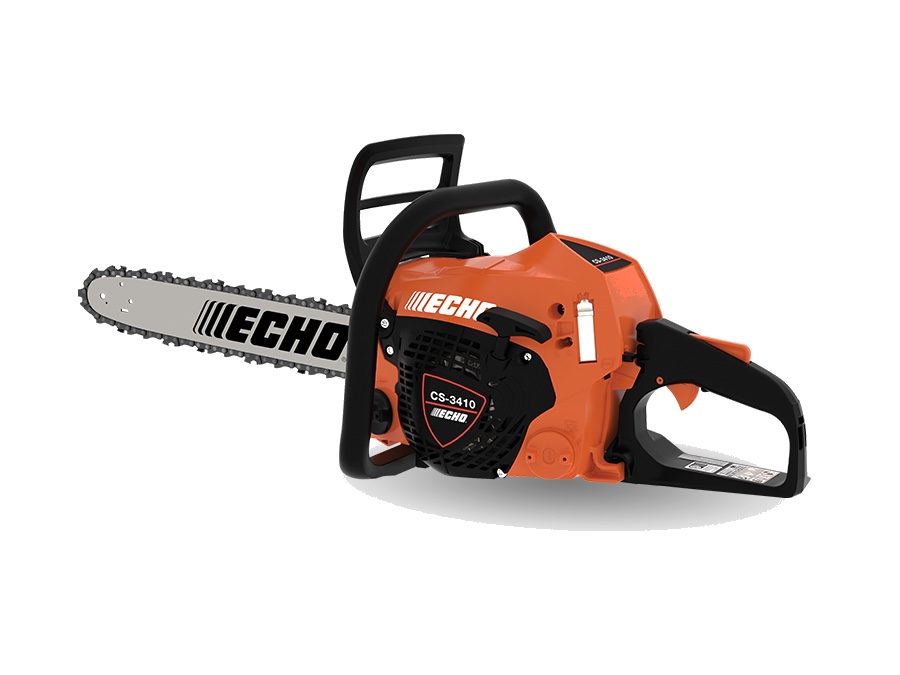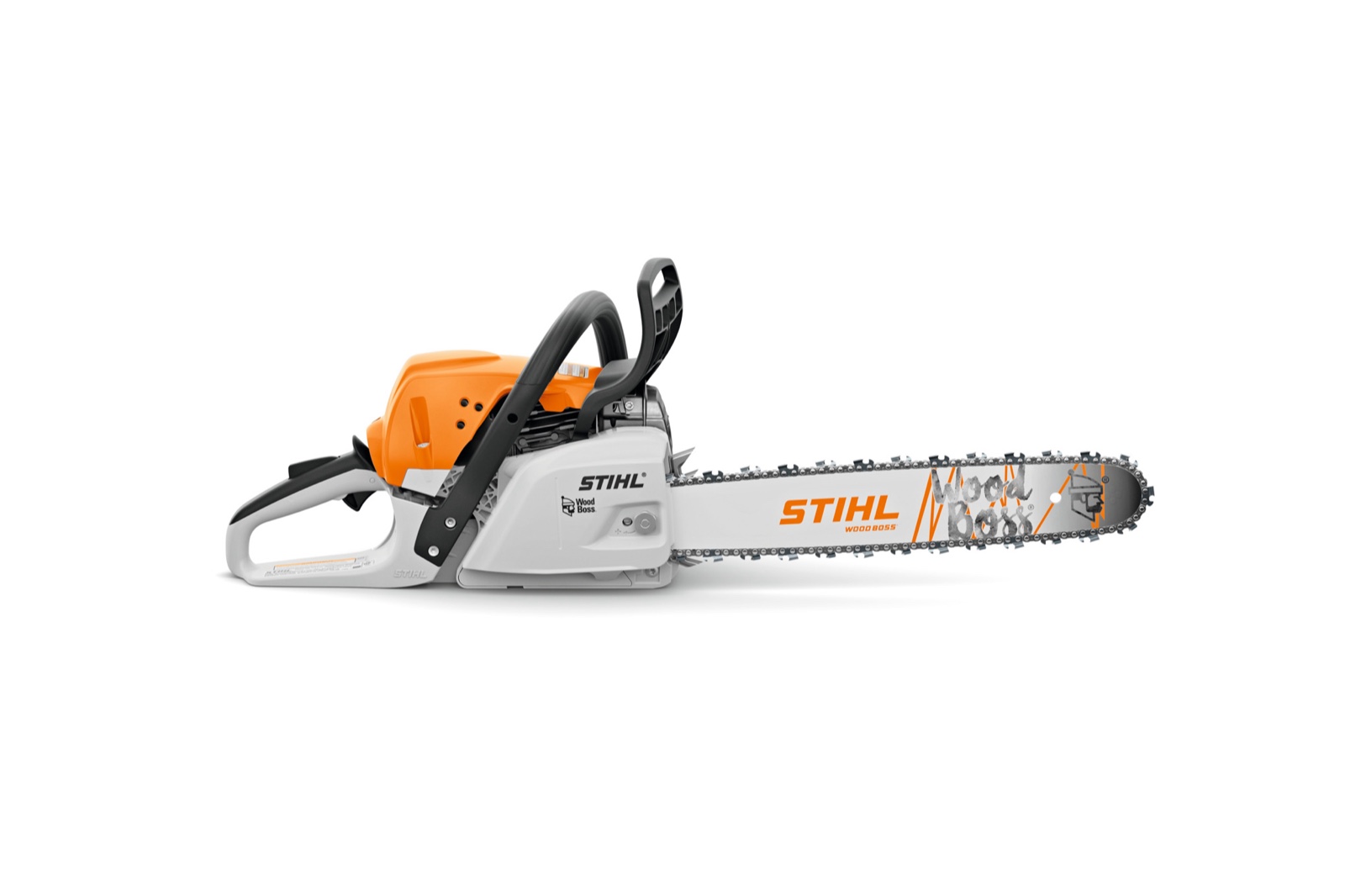
Best Gas Chainsaws
Gas saws are still the benchmark for real work: refuel in thirty seconds, cut all day, and get more power per pound than any battery can deliver once you pass the 45cc class. The tradeoffs are honest ones — two-stroke maintenance, pull-starting, noise that demands ear protection, and fuel that goes stale if the saw sits. From 30cc storm-cleanup saws to 90cc+ felling iron, this is the category where the Stihl-versus-Husqvarna argument lives.
ChainsawRanker tracks 30 gas chainsaws from 5 brands, priced $169 to $2,680. Our top-rated pick is the Husqvarna 455 Rancher at 4.6★, and the most affordable is the Craftsman S205 at $169. Compare them all below.

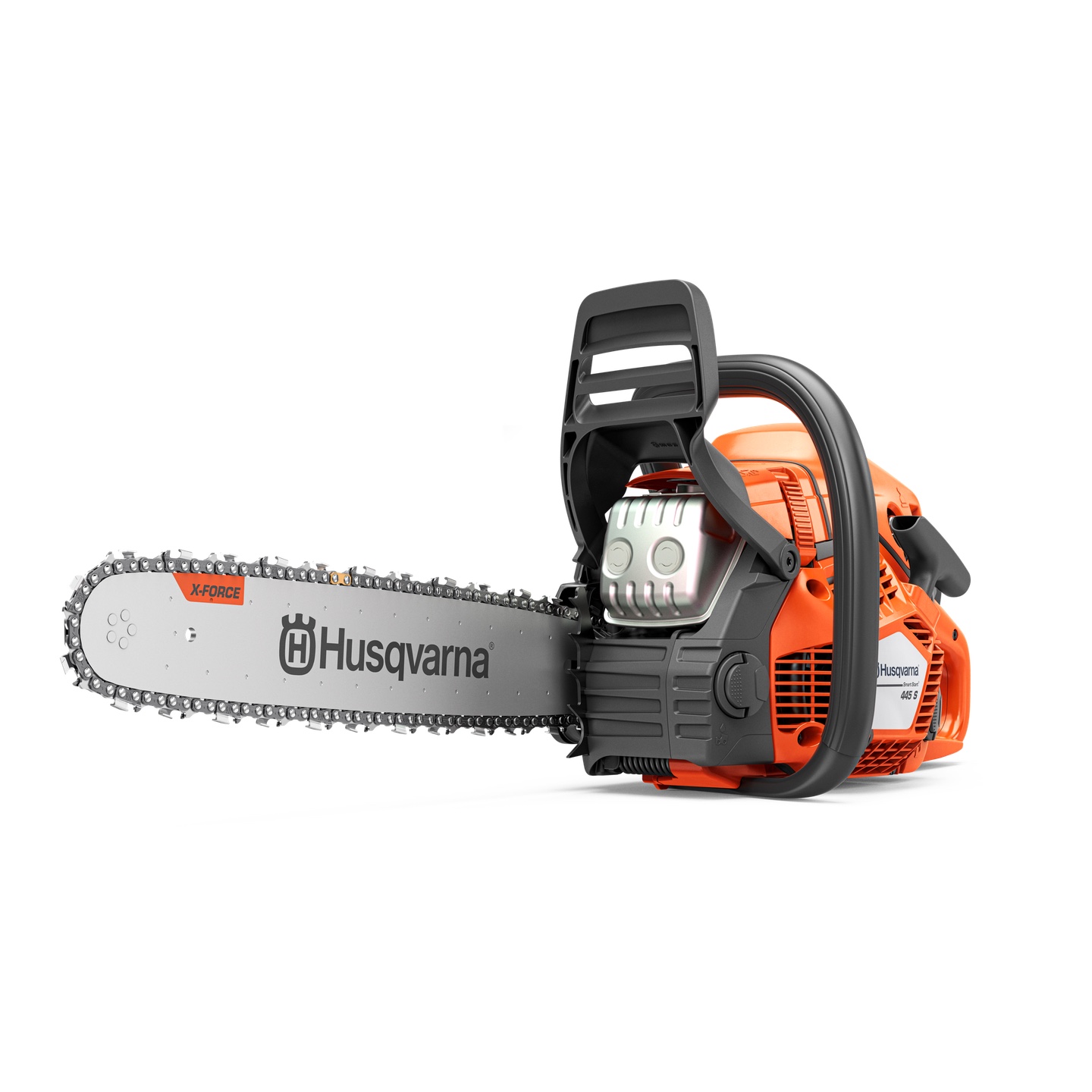
Husqvarna
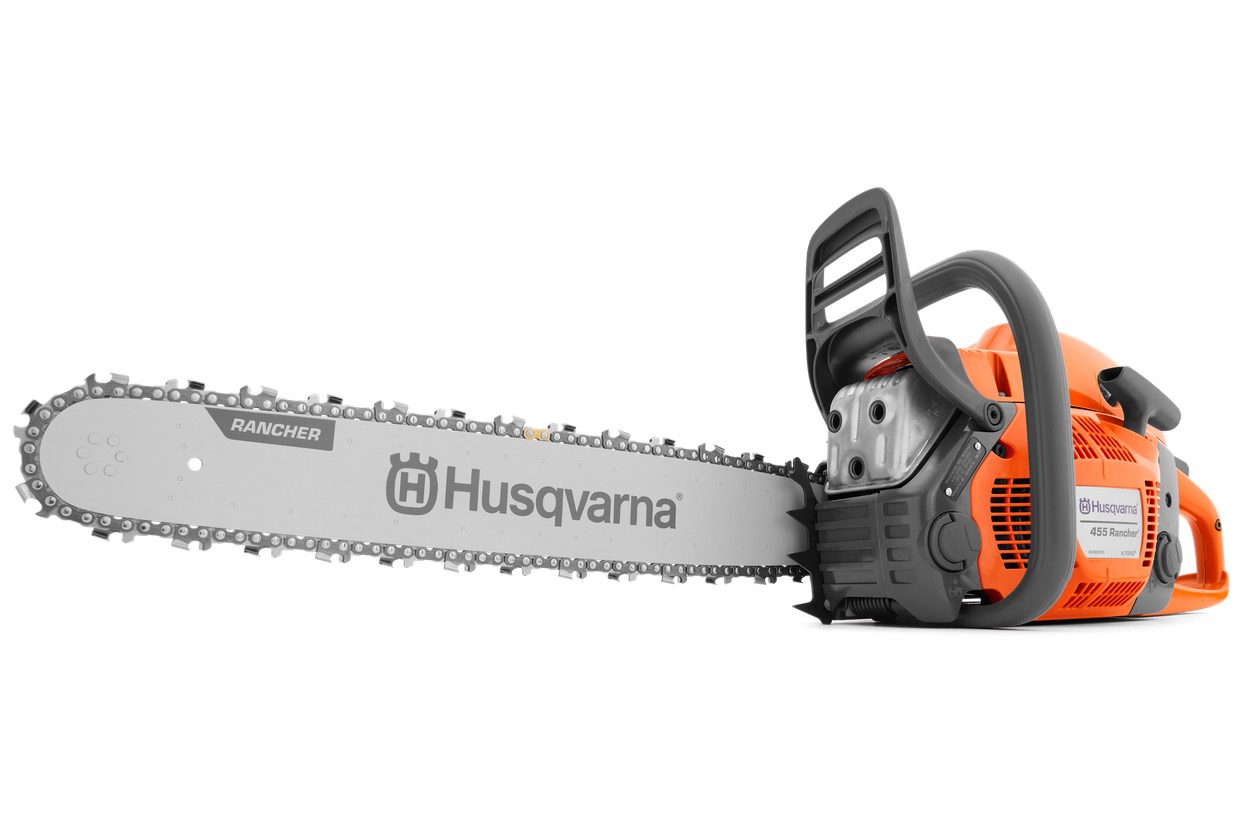
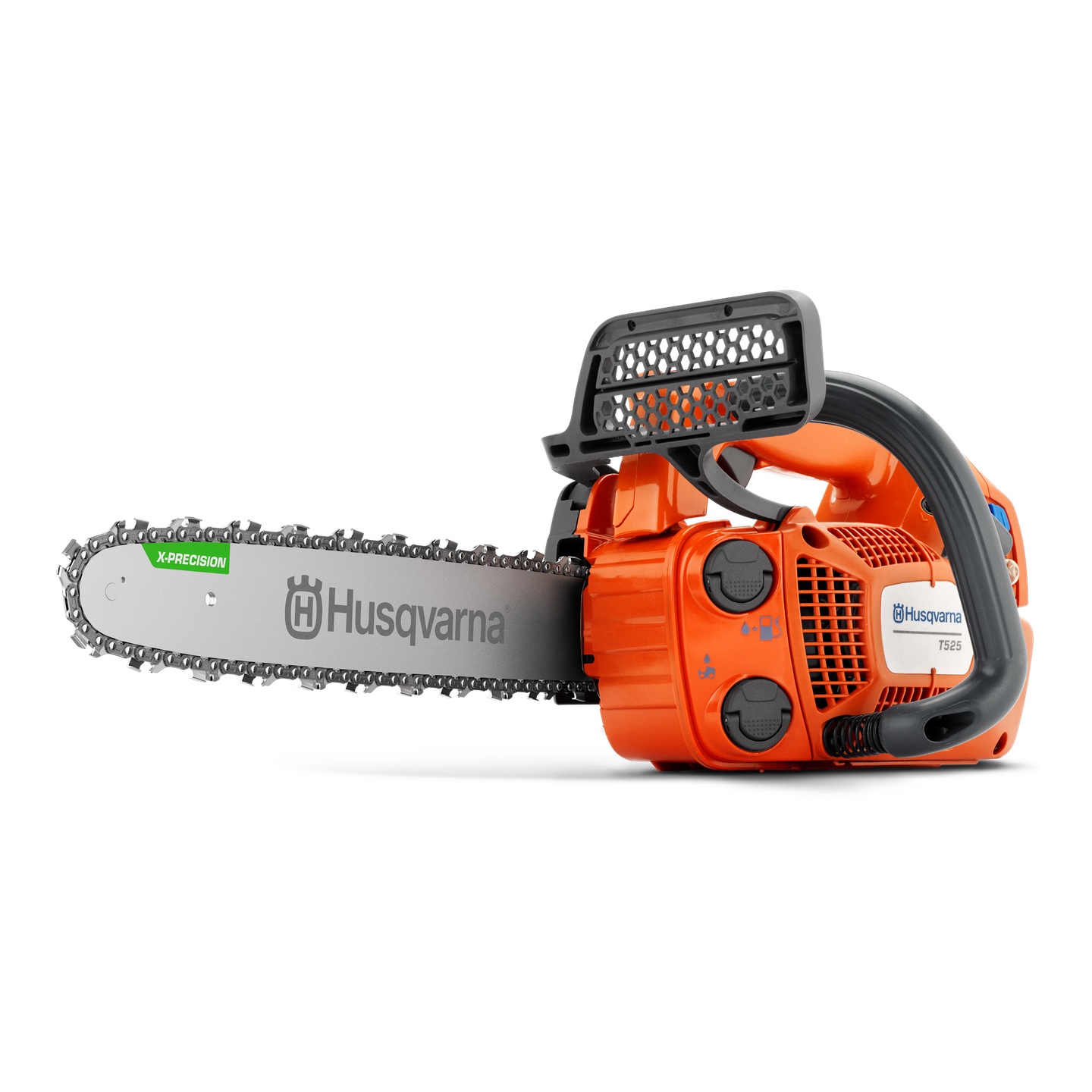
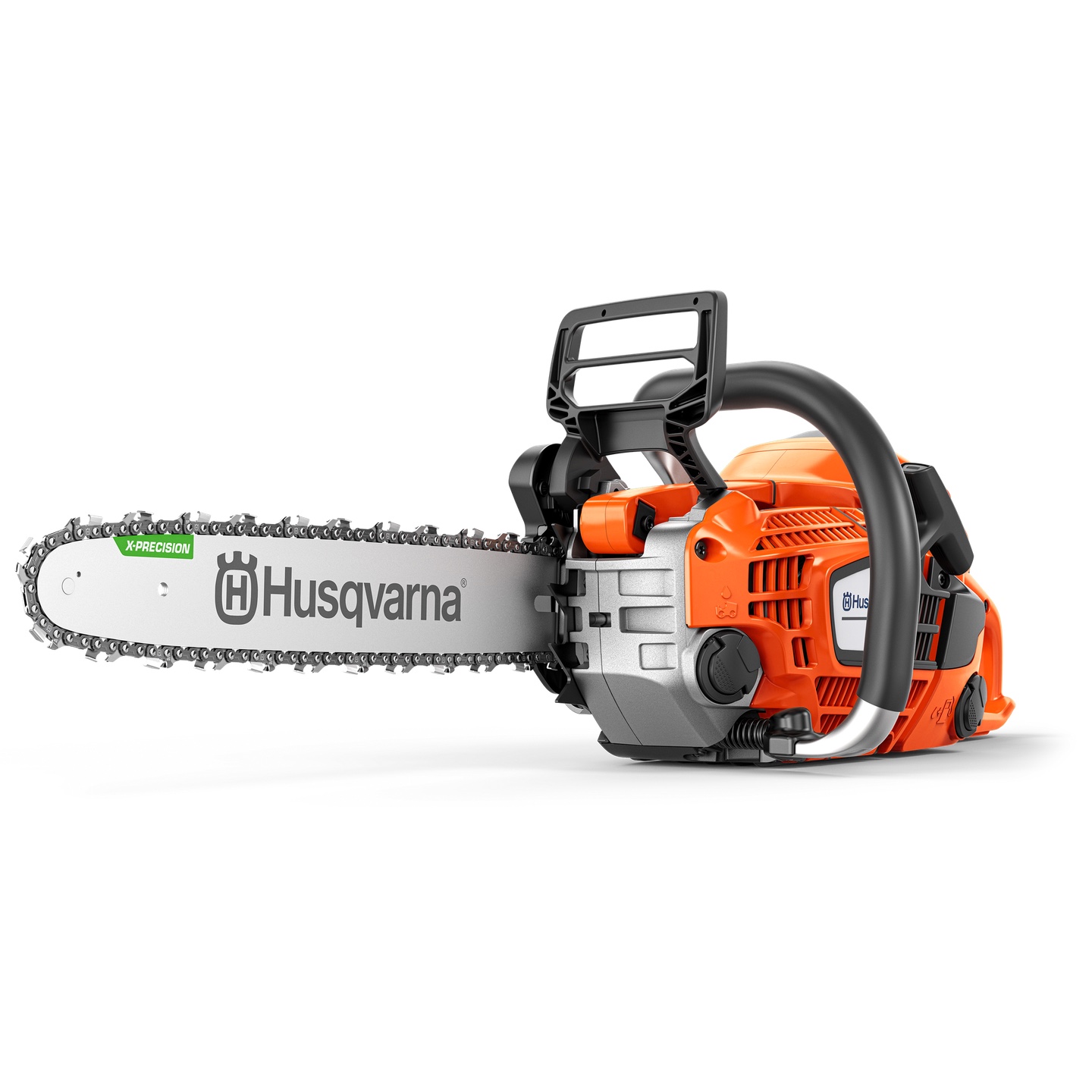
Husqvarna 455 Rancher
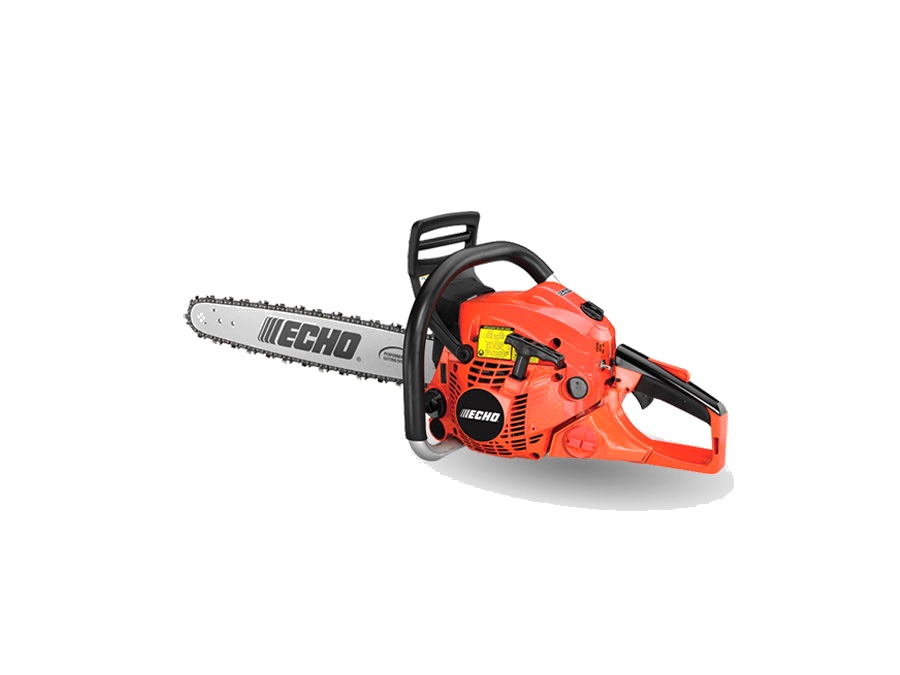
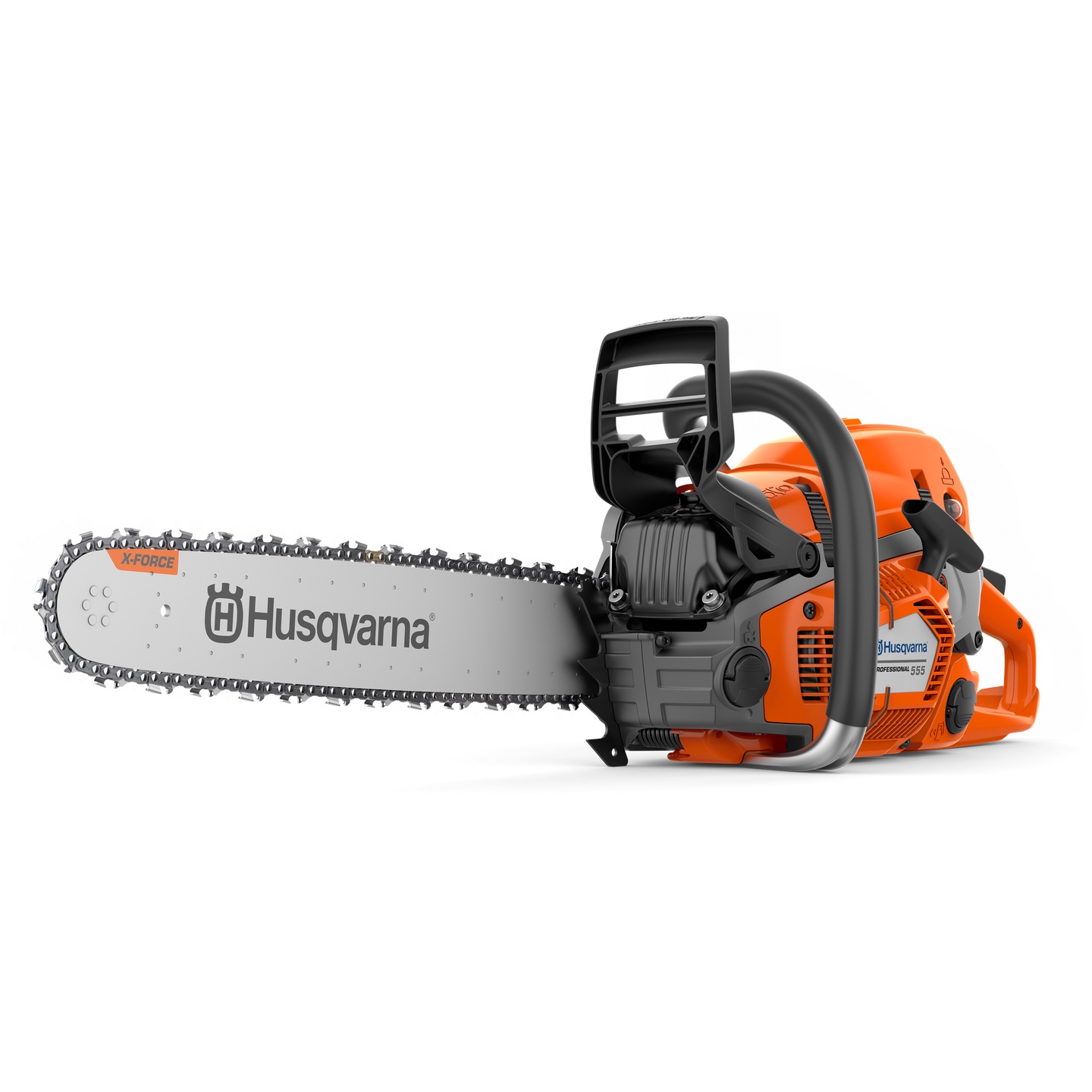
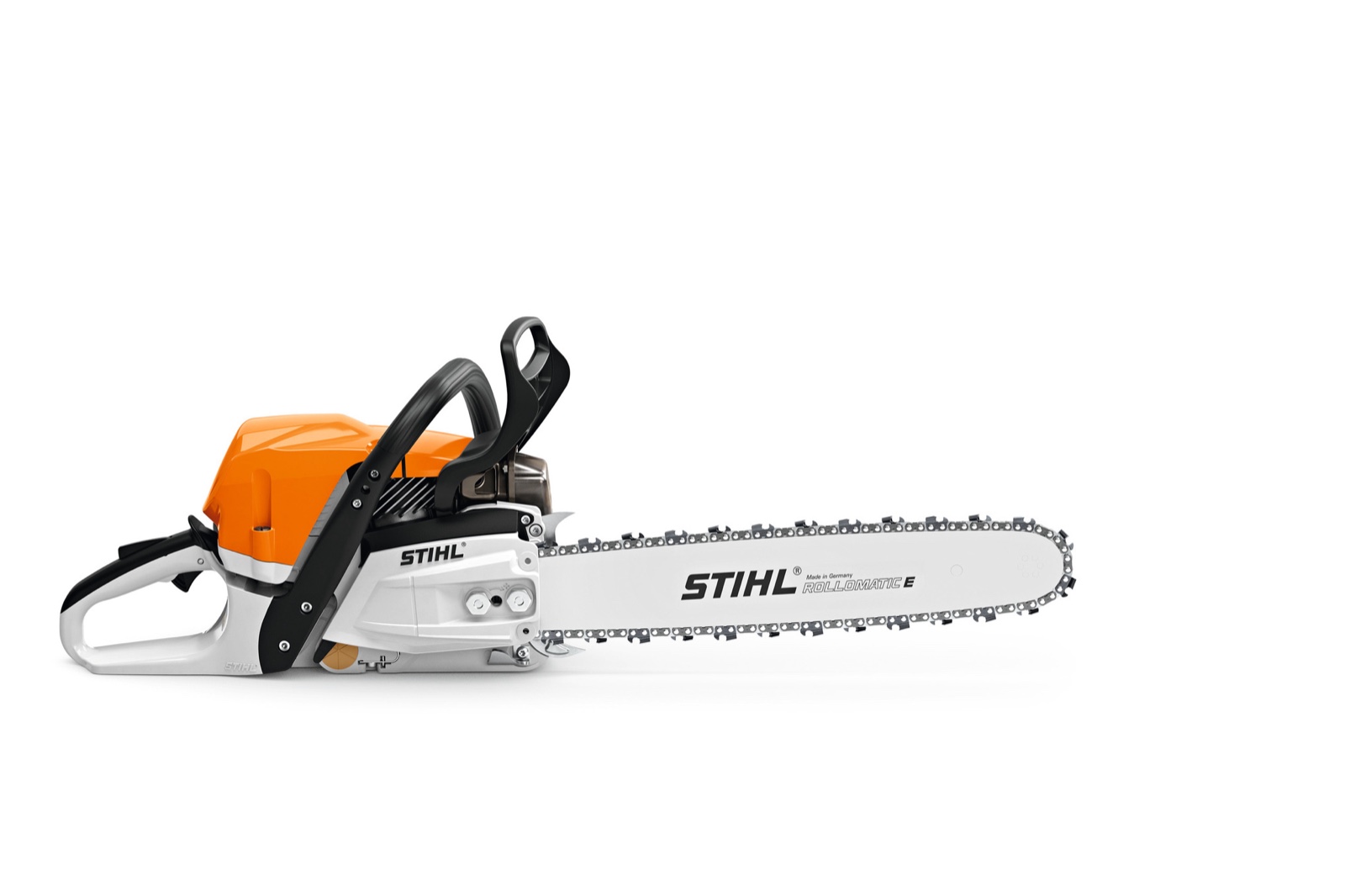
America's default farm saw, full stop — the 455 Rancher has been the answer to "what chainsaw should I buy for firewood" at Lowe's for two decades, and its 4.6-star average across about 700 reviews there says the formula still works: 55.5cc, a 20-inch bar, and a chassis that shrugs off neglect. Owners love that it starts spring after spring and pulls a full 20 inches through oak without drama. The counterpoint lives on the forums, where the 455 is the perennial punching bag: at 13.2 pounds for the powerhead it's genuinely heavy for its power class, the vibration is noticeable next to a 550 XP, and the pro crowd sniffs at the consumer crankcase. Both camps are right. This is a saw built to survive ranch sheds, not win power-to-weight arguments — and the Stihl MS 271 and Echo CS-590 comparisons are the most-argued matchups in the category for a reason.

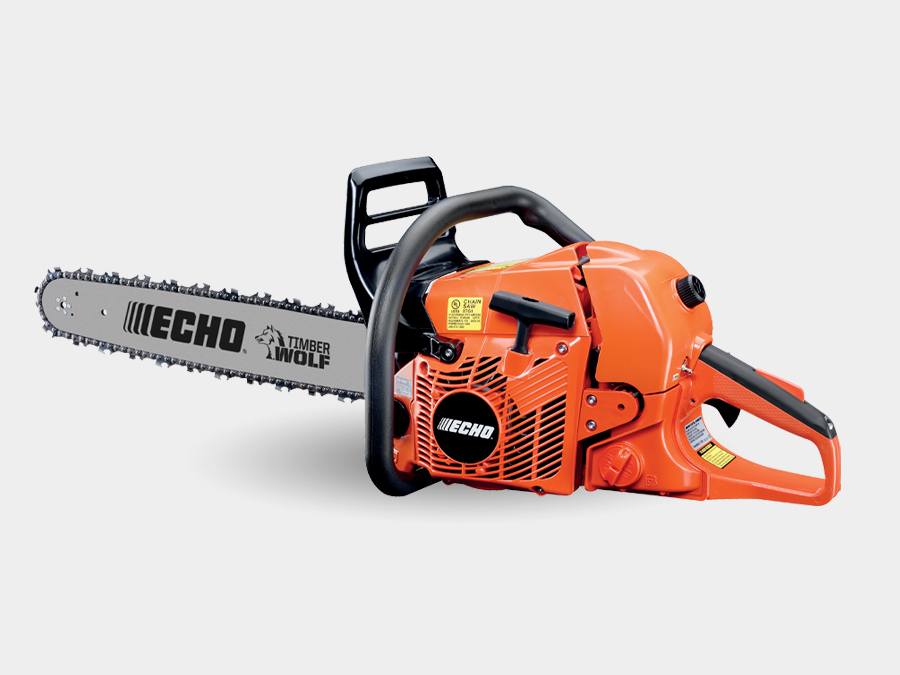
Ask any firewood forum for the best chainsaw value in America and the Timber Wolf comes up in the first three replies: 59.8cc of genuine 60-class grunt for about $449 at Home Depot, with a 5-year consumer warranty, and a 4.6-star aggregate across more than 1,600 reviews. Owners routinely run 24-inch bars on it and report it pulls them without complaint, and a decade of production means the failure modes are well mapped — which is to say, there mostly aren't any. The honest knocks: at 13.2 lbs for the powerhead it's a chunk heavier than modern 60cc pro saws, it takes a few more cold-start pulls than a comparable Husqvarna, and the factory semi-chisel chain goes dull fast enough that most owners swap to Oregon 72LPX full-chisel immediately. The carb ships with EPA limiter caps that leave the low-speed circuit lean, so the tinkerer ritual is caps off, retune, muffler mod — after which owners say it embarrasses saws costing $200 more. It lacks the magnesium crankcase and refinement of Echo's X-Series, but for felling and bucking firewood on a budget this is the default answer.

Echo
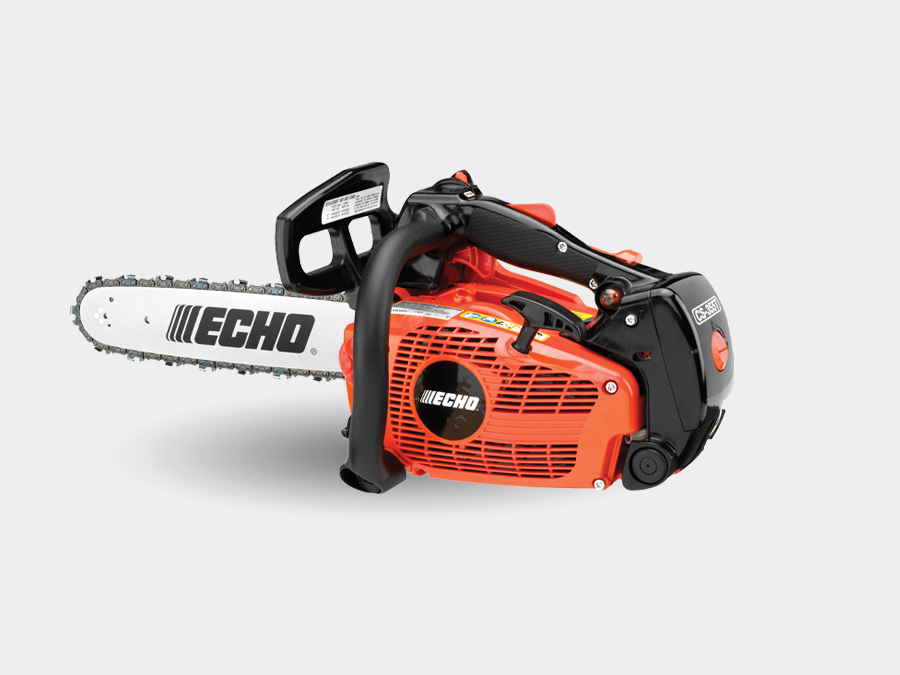
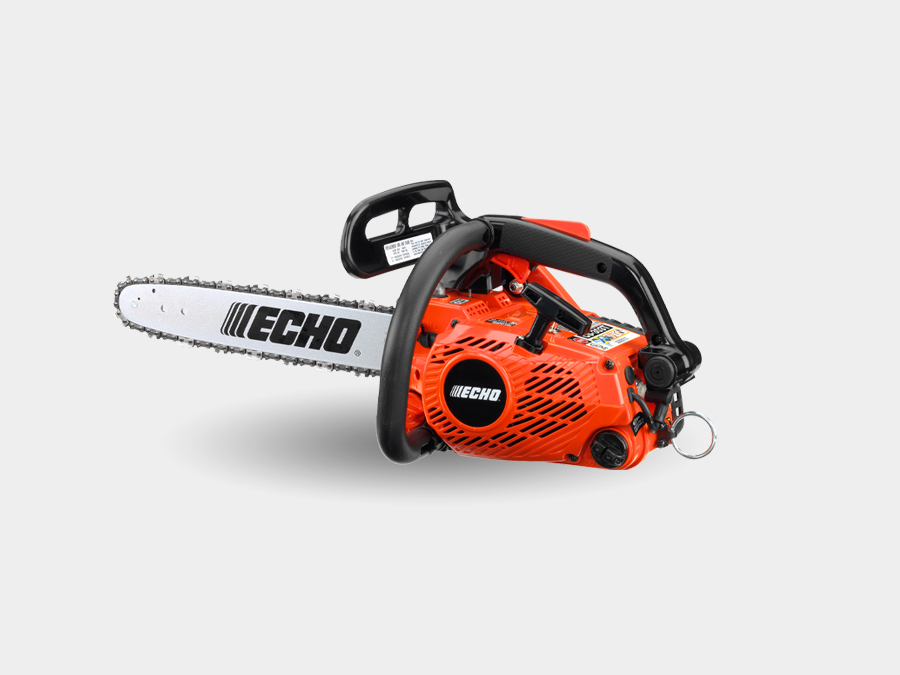
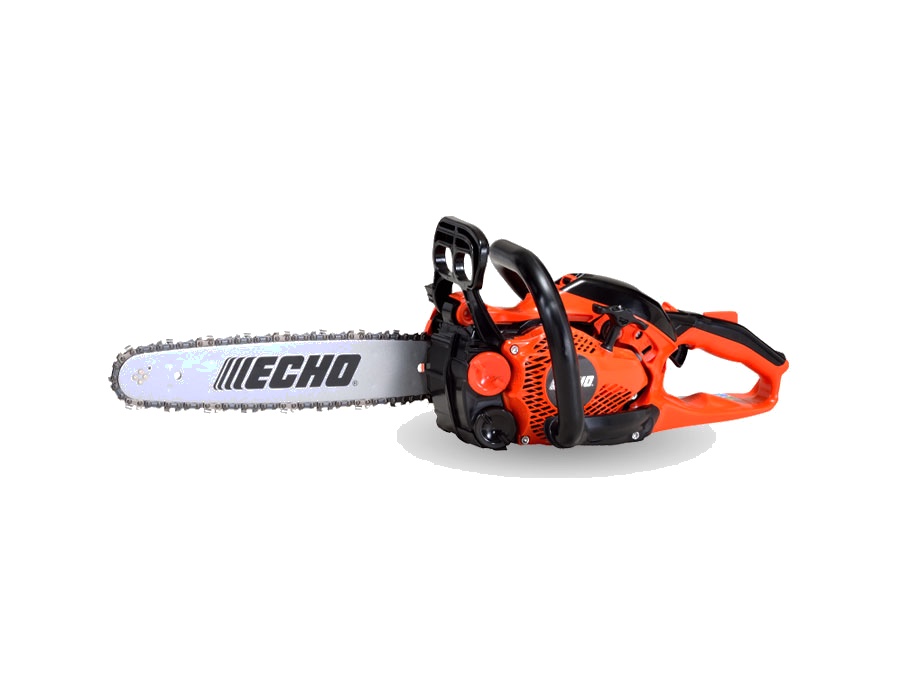
Echo CS-355T
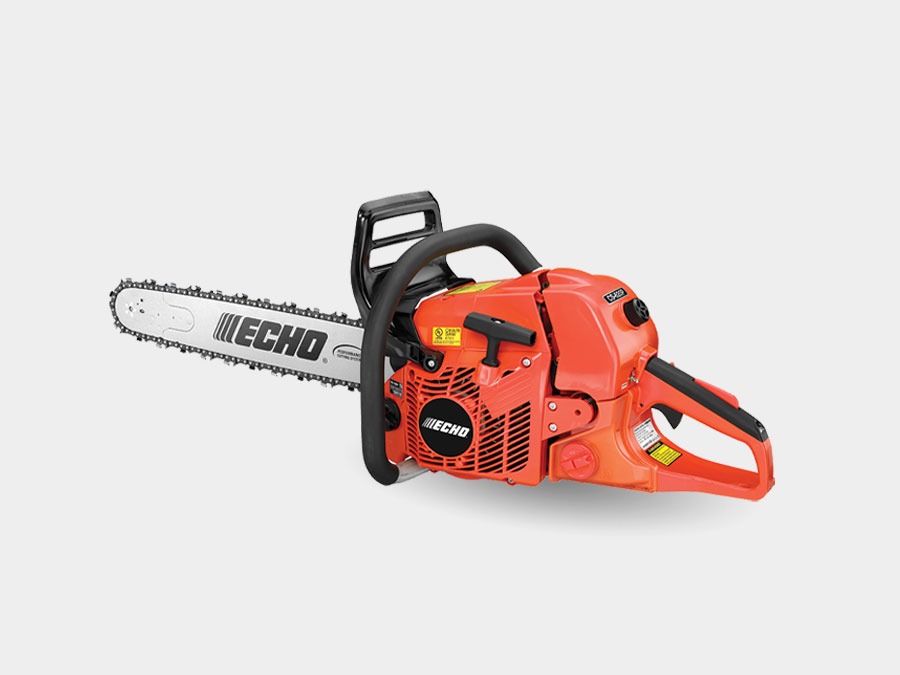
Echo's full-size top-handle, and the budget counterpoint to the Stihl MS 201 T that every tree crew debates. The out-of-box comparison is real: multiple ArboristSite users say a stock 355T "smokes a 201T outta the box" thanks to Stihl's choked factory tune, though a broken-in, modded 201 pulls back ahead on torque. At around $499 — versus roughly $700+ for the Stihl — whole crews have switched, and one tree-service owner reported his climbers actually preferred the 355s after the changeover. It's also one of the few pro top-handles you can buy at Home Depot, where it holds a 4.6-star rating across nearly 500 reviews, with owners repeatedly noting years of daily starts without failure. The knocks: at 8.0 lbs it's nearly three pounds heavier than Echo's own CS-2511T, the ergonomics and balance feel less refined than the Stihl/Husqvarna benchmarks to picky climbers, and serious users still do a muffler mod and retune to wake it up. The palm rest is an Echo-exclusive touch climbers either love or ignore. For groundies, firewood work from a ladder-free position, and cost-conscious crews, it's the workhorse pick.

Stihl
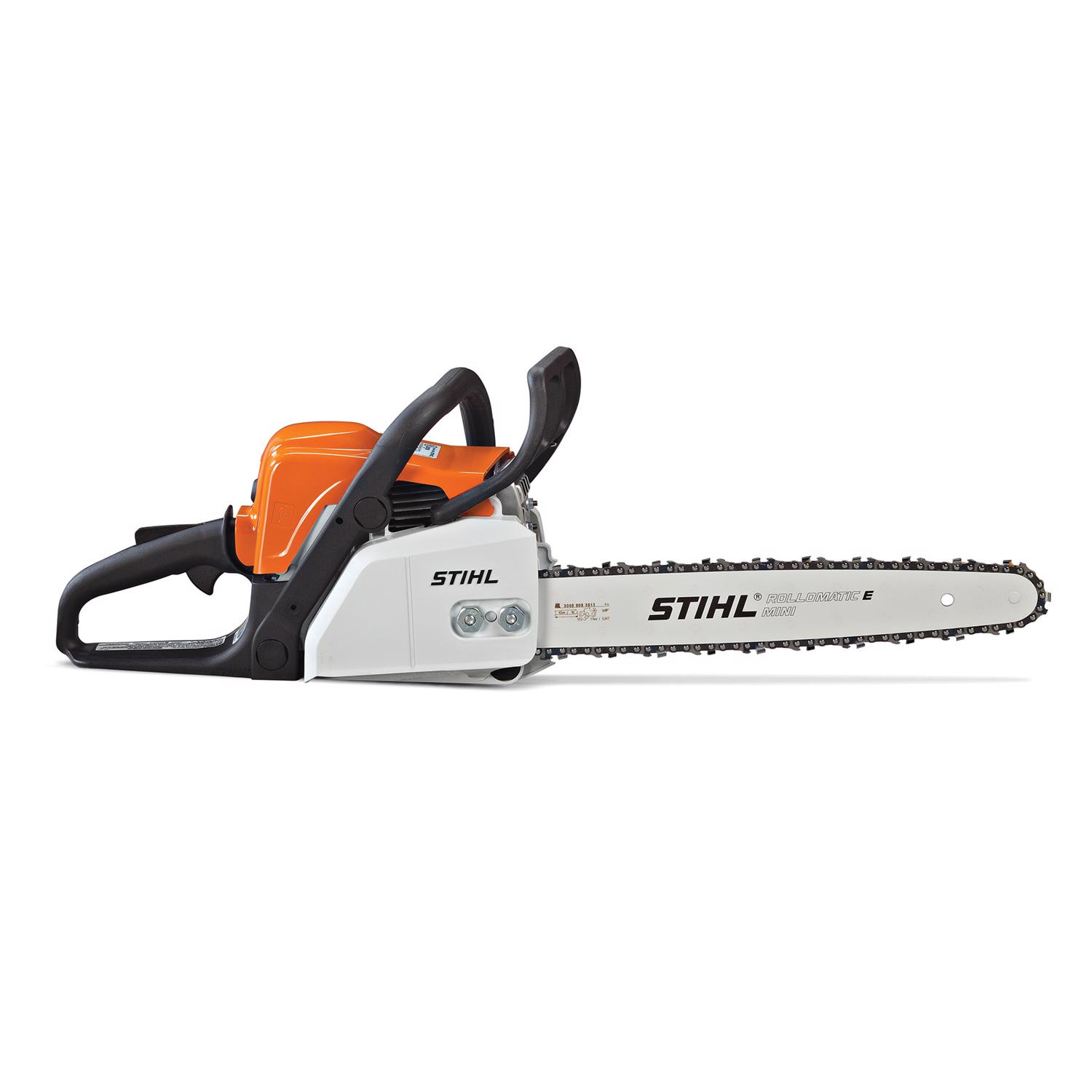
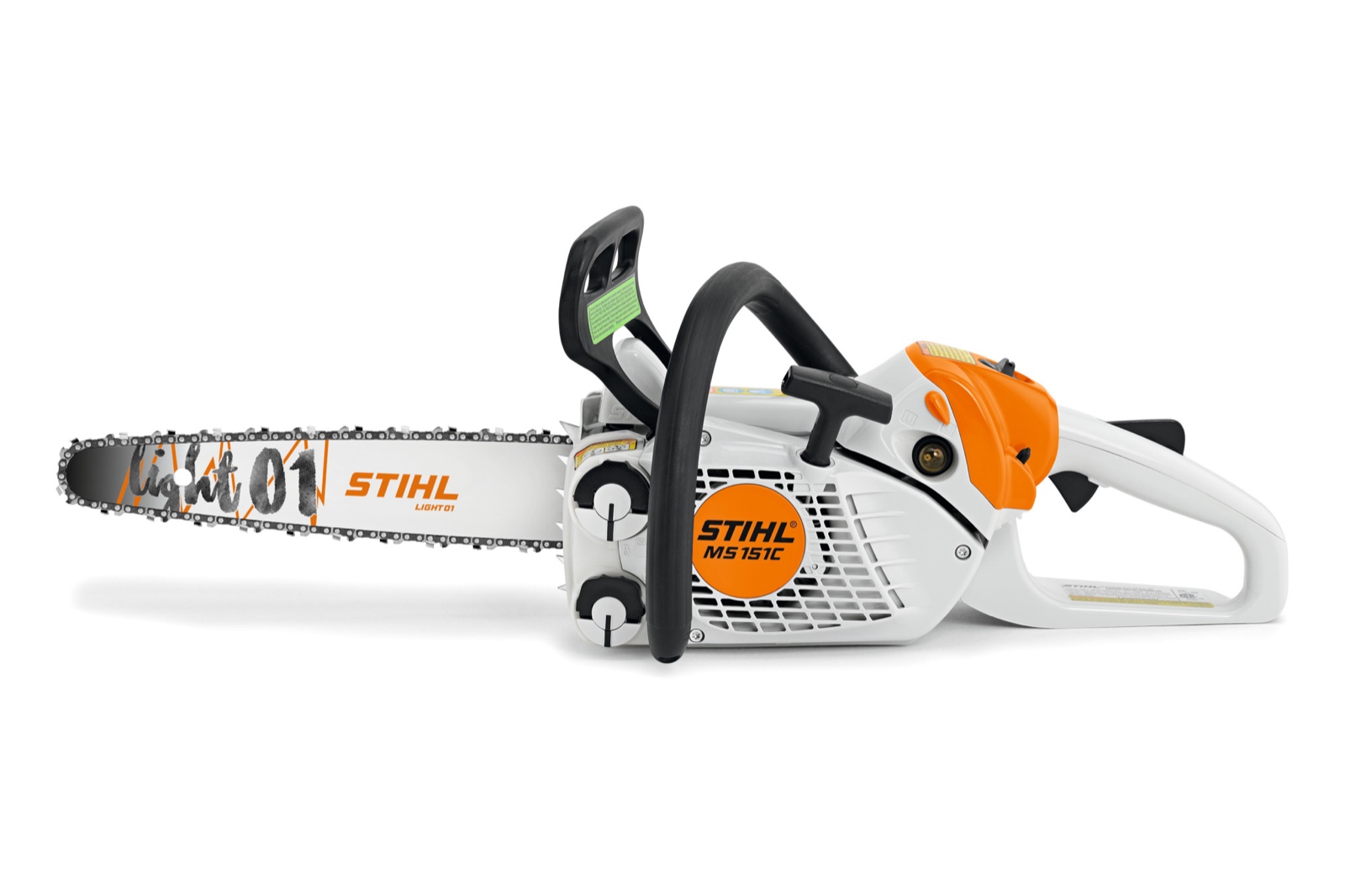
Stihl MS 170
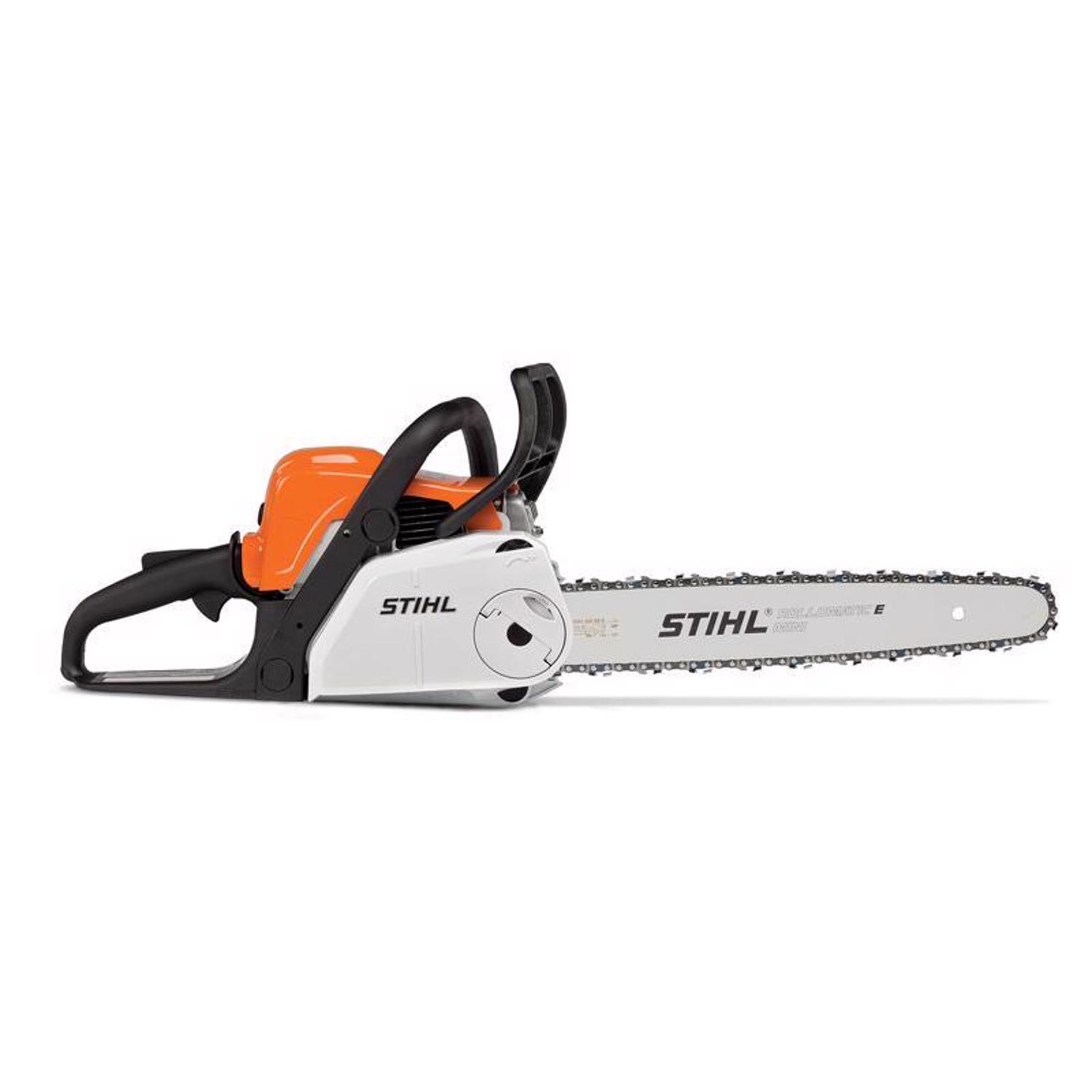
The cheapest way to get a real Stihl in your garage, and the saw dealers hand to first-time buyers who need to clean up storm limbs a few weekends a year. At 8.6 pounds for the powerhead it's genuinely easy to run all afternoon, and the 4,400+ Ace Hardware reviews averaging 4.5 stars back up the 'thousands of happy owners' vibe you see in forum threads. But owners are blunt about the ceiling: this is a light pruning and limbing saw, not a firewood saw, and it gets slow and sluggish once logs pass about 10-12 inches. The cost-cutting shows up close — a basic carburetor, minimal anti-vibration, and a bar-swap chain tensioner instead of the side-access adjuster on pricier models. Stihl has also started rolling out the updated MS 172 alongside it, so the 170 is a proven but aging design. For under $230 with a 16-inch bar, most homeowners decide the limitations are a fair trade.

Stihl
Stihl MS 180 C-BE
The MS 170's more comfortable sibling — same compact class, but with the Easy2Start recoil system and a tool-free chain adjuster that make it the pick for owners who hate yanking pull cords and fishing for scrench wrenches. The Easy2Start spring assist genuinely works; reviewers note the cord pulls about two-thirds easier than a standard recoil, which is why this saw shows up so often in recommendations for older owners and smaller-framed users. The 31.8cc engine has a touch more grunt than the 170, and owners have cut plenty of firewood with it, though it's still happiest under 14-inch wood. The gripes cluster around the convenience features themselves: some old-school owners actively dislike the EZ tensioning wheel, and there are recurring reports of new chains stretching and derailing until you learn to re-tension obsessively during the first tanks. At $319.99 you're paying about $100 over the MS 170 purely for convenience — a trade the 1,300+ Ace reviewers largely endorse at 4.5 stars.

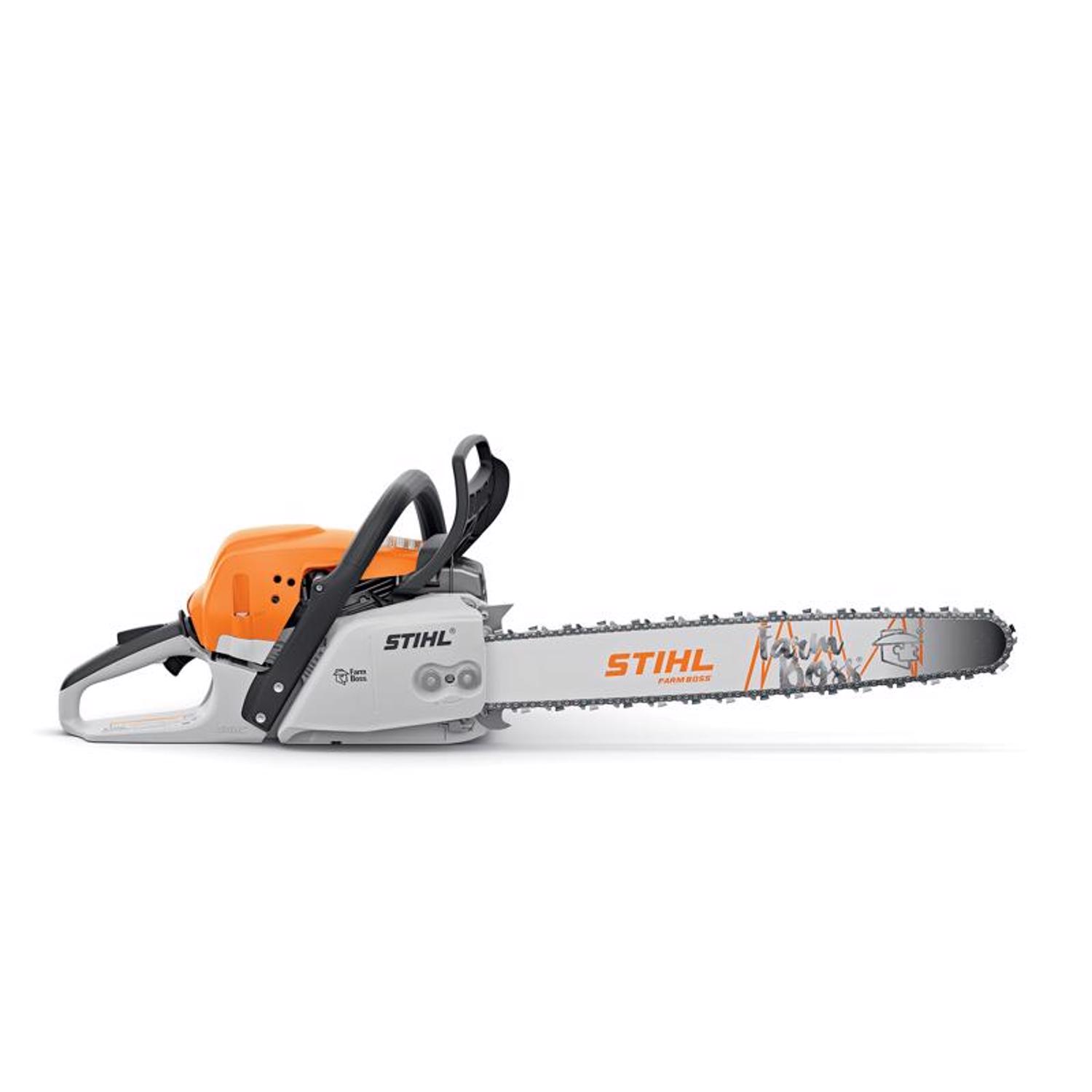
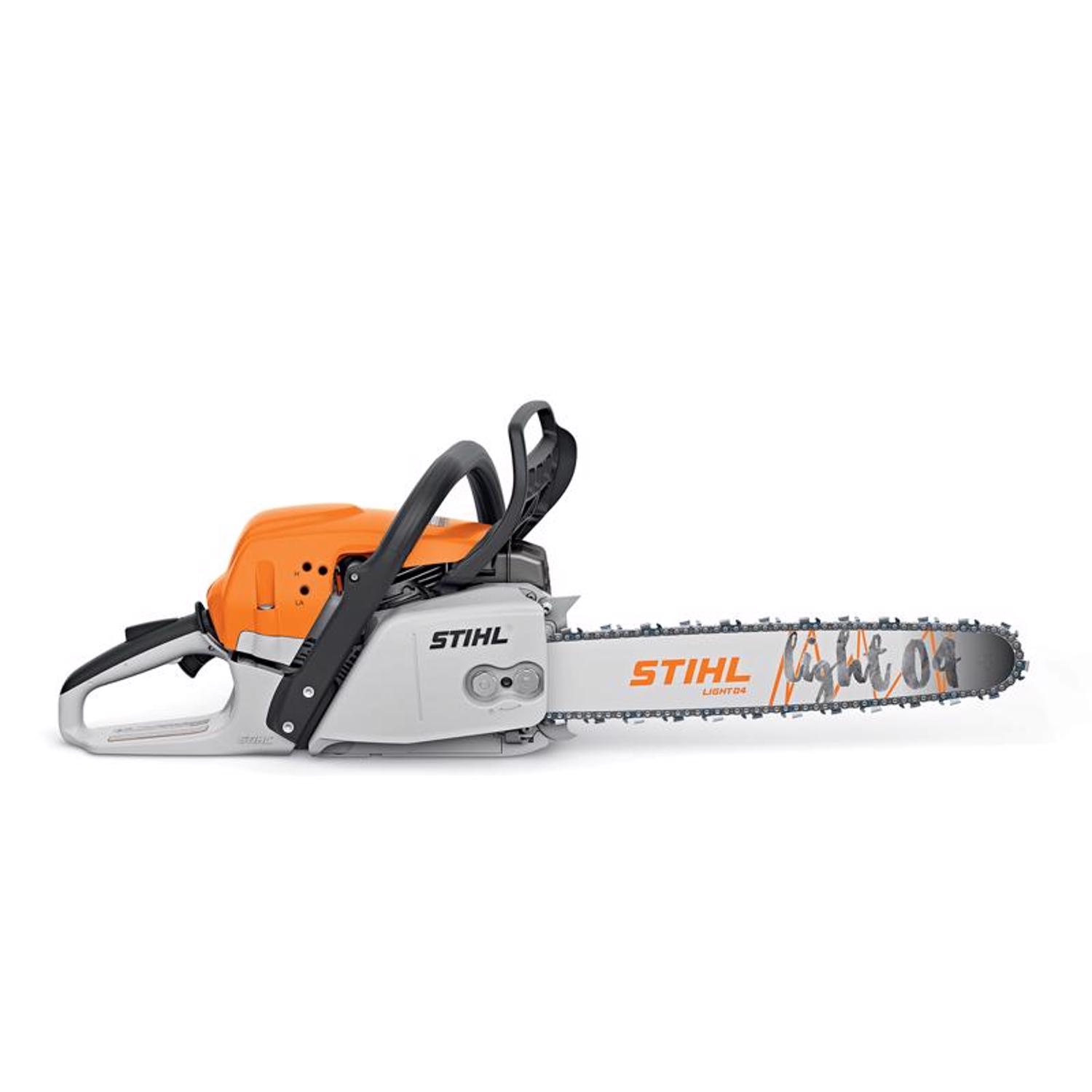
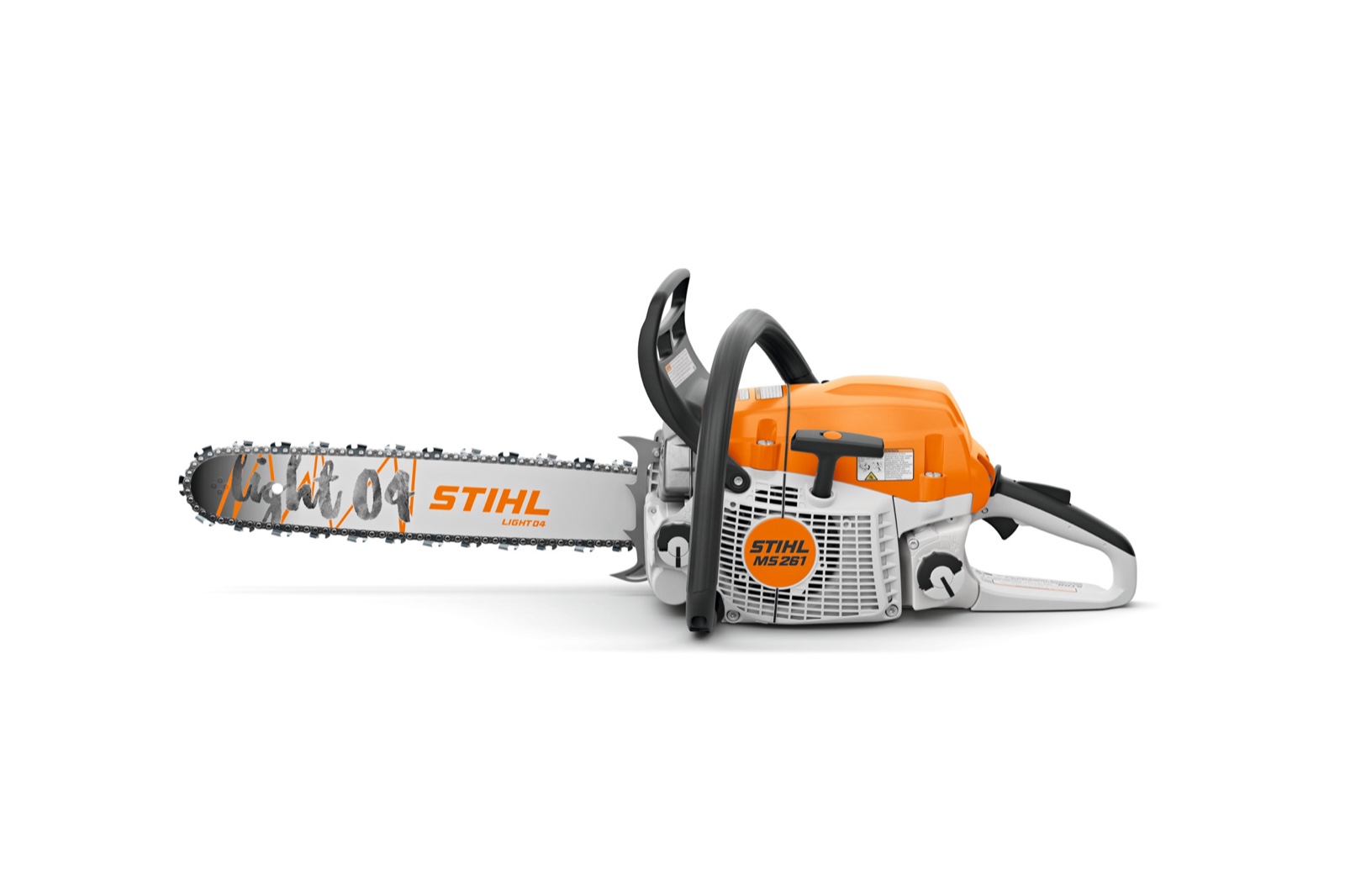
The Farm Boss is probably the most-recommended 'my first serious saw' in America, and its 4.5-star average over 2,850+ Ace reviews shows the formula works: 50.2cc, a 20-inch bar, modern spring anti-vibration that owners say leaves their hands fresh after a full day, and a fuel-efficient engine that runs 20% longer per tank than the MS 270 it replaced. There's a whole ArboristSite thread literally titled 'Why do so many guys bad mouth the MS 271' — the answer is that pros dismiss it as a heavy clamshell homeowner saw with mediocre power density (12.3 lbs for only 2.6 kW, about what a 10-pound pro 50cc saw makes). Both sides are right. It's slower than an MS 261 and not rebuildable the way a pro saw is, and OEM top-end parts are expensive with little aftermarket support. But for a landowner cutting a few cords a year, it's smooth, dependable, and roughly half the price of the pro alternative — which is exactly why dealers can't keep them on the wall.

Echo
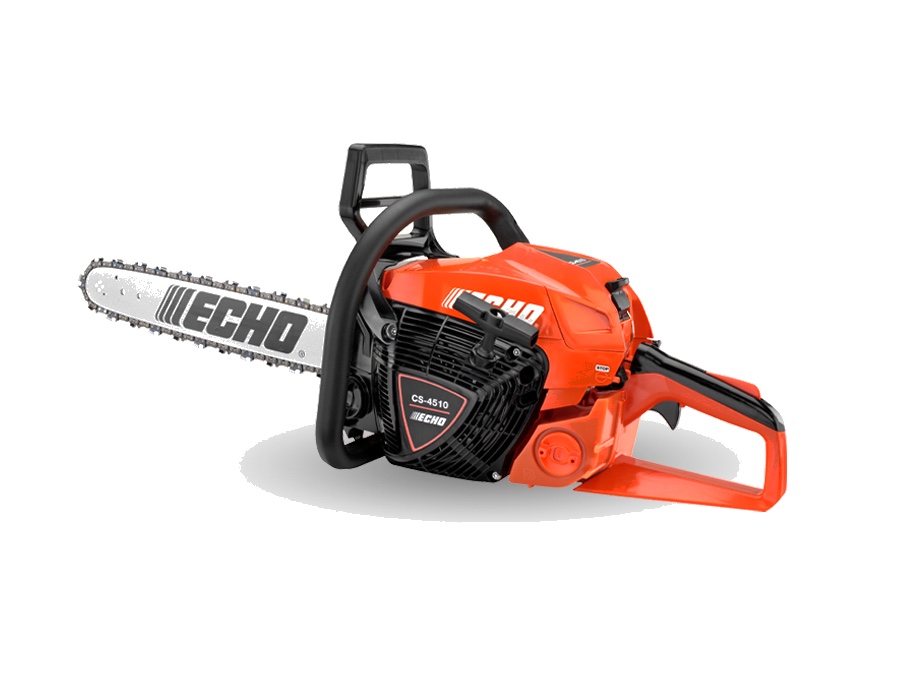
Echo CS-4920
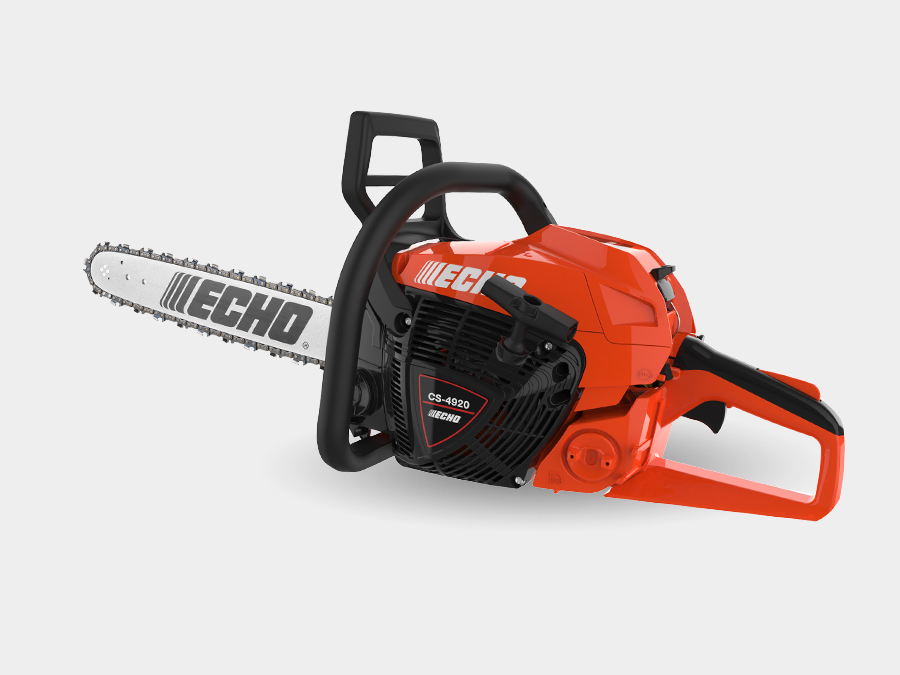
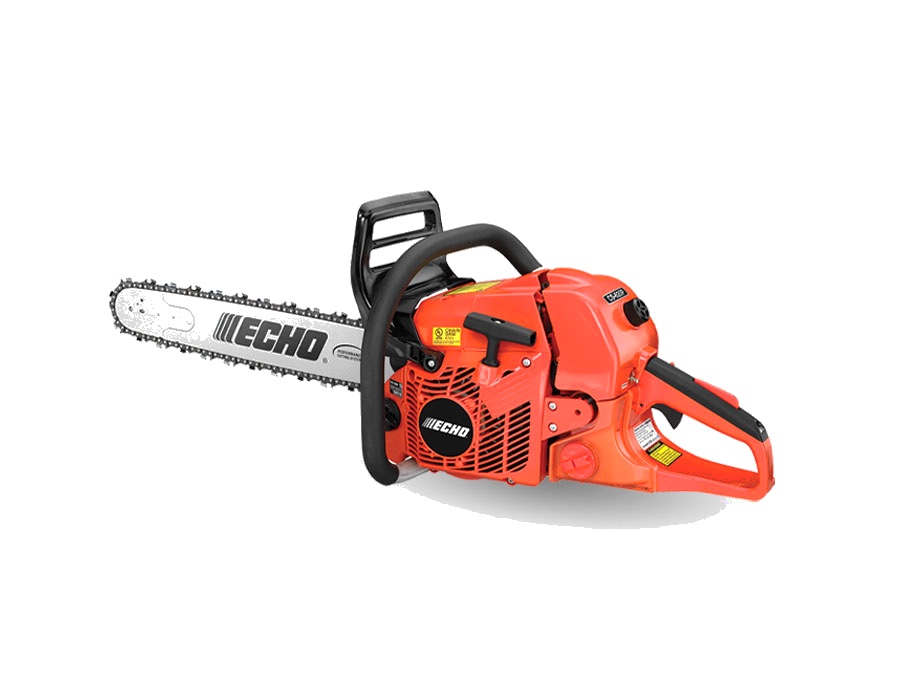
The CS-4920 replaced the CS-4910 in 2023 and inherited its mission: near-pro 50cc performance at a consumer price, roughly $429 at Home Depot when a comparable Stihl MS 271 or Husqvarna 450 Rancher runs meaningfully more with a fifth of the warranty. Echo claims it's the lightest saw in its class, and at 11.1 lbs for the powerhead owners agree it swings a 20-inch bar without the boat-anchor feel of older farm saws. Reviewers consistently call out three-or-four-pull cold starts, first-pull warm starts, and enough grunt to chew through 16-18 inch hardwood without drama. The recurring gripes are the factory chain — several owners say it dulled absurdly fast and swapped to Oregon full-chisel immediately — and a few units arriving with the carb adjusted so lean they wouldn't start until tweaked. The stratified two-stroke also trades a little throttle response for emissions compliance, which modders address with the usual muffler work. For a fence-line and firewood saw backed by a 5-year warranty, owner threads consider it the value pick of the 50cc class.

Echo
Echo CS-620P
Echo's X-Series 60cc pro saw, and the recurring punchline on ArboristSite is some version of "I'd take a CS-620P over an MS 362 or 562XP every day, then spend the $200 I saved on my wife." The magnesium crankcase, 3.3 kW output, and torque curve that owners swear out-grunts every other 60cc saw make it a legitimate professional tool, and multiple users report it handles a 27-inch bar in green hardwood all day. Street price at Home Depot runs about $739 — still under the Stihl/Husqvarna equivalents — and unlike those brands it carries a 5-year consumer warranty. Its 4.2-star retail aggregate is dragged down by a real complaint: a subset of owners find it nearly impossible to cold-start after sitting, and the felt air filter arrangement gets called out as the one un-pro thing about the saw. It's also thirstier than the strato-charged competition. The mod crowd does a muffler mod, base-gasket delete, and retune and reports the saw becomes "flat out mean." If the CS-590 is the value pick, this is the same displacement grown up: lighter feel, harder pull, pro-grade guts.

Echo
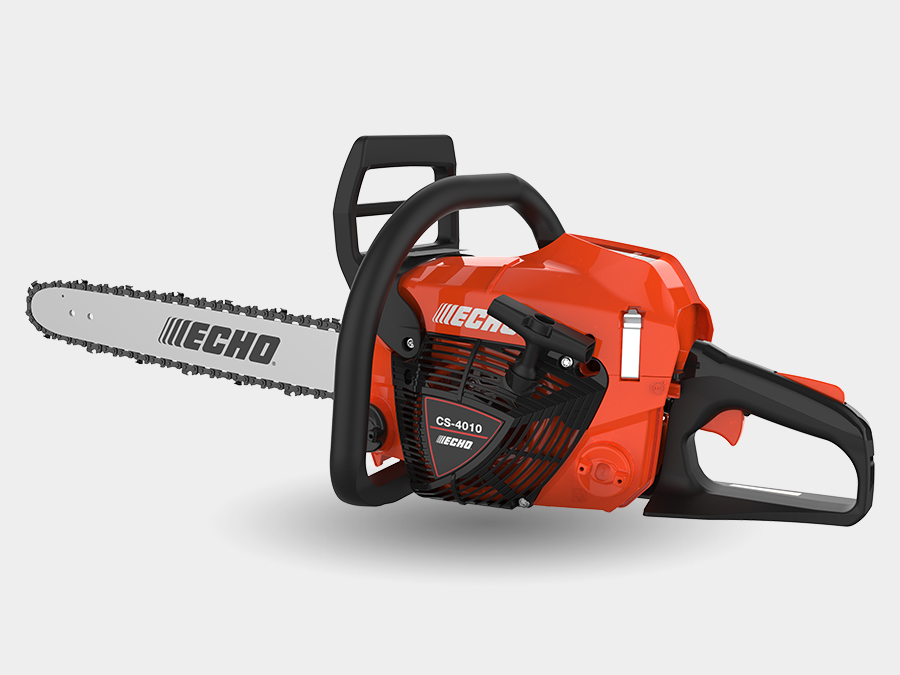
Echo CS-4010
This is the saw that replaced the much-loved CS-400 in 2023 — 13% more power, 0.7 lbs lighter, and the same 5-year consumer warranty, which is why it took over the CS-400's slot at Home Depot at about $349. At 9.4 lbs for a 41.6cc engine it has one of the better power-to-weight ratios in the homeowner aisle, and owners doing storm cleanup and light firewood duty praise how easily it swings an 18-inch bar through softwood. The 4.1-star Home Depot aggregate tells the honest story though: most reviewers love it, but a vocal minority report inconsistent starting, and several longtime Echo owners grumble that the new air filter design and overall build feel a step down from the old CS-400. The i-30 starter does make the rope pull noticeably easier than the outgoing model. Forum consensus is that a proper carb warm-up routine solves most of the starting complaints, and the 5-year warranty is the safety net if it doesn't. A solid do-it-all homeowner saw, just not quite the cult classic its predecessor was.

Stihl
Stihl MS 250
A 25-year-old design that refuses to die because the math still works: 45.4cc pulling an 18-inch bar from a 10.1-pound powerhead, for under $450. Firewood cutters love the power-to-weight — it out-cuts every saw below it in the Stihl lineup by a wide margin and handles real firewood duty the 170/180 can't. The catch is that it's an old-school saw in every sense: no fuel primer, dated air filtration, and a reputation on OPE forums for being cold-blooded and hard-starting when the carb gets finicky, with more than one owner saying 'when it runs well it's a great saw' through gritted teeth. The anti-vibration system is also a generation behind, so your hands feel more buzz than on the spring-mounted farm saws. Its 4.0-star average across 2,600+ Ace reviews is the lowest of Stihl's homeowner line — starting complaints drive most of the one-star reviews — but the owners who learn its ritual keep them running for decades.

Stihl
Stihl MS 291
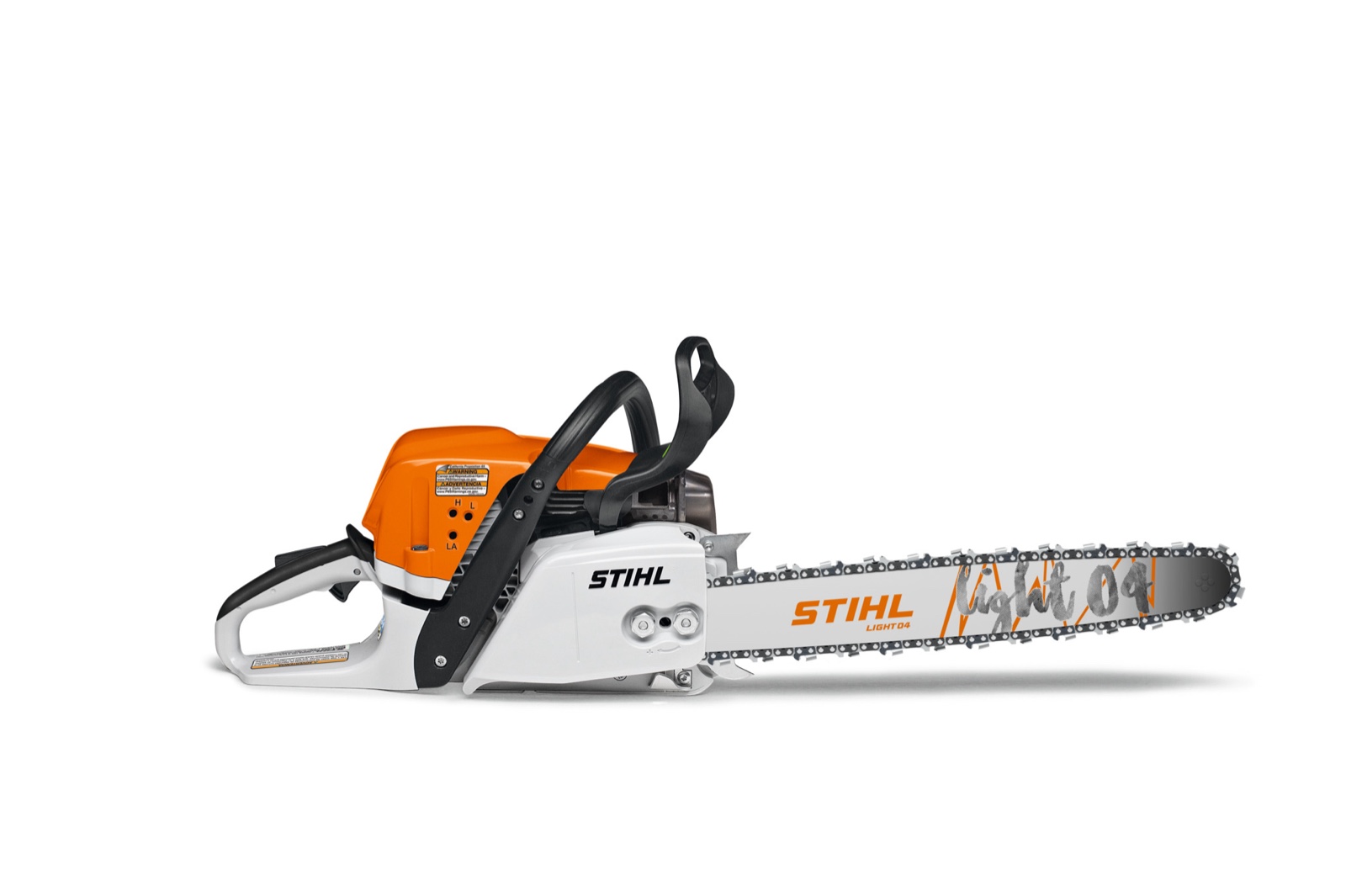
The MS 291 is the Farm Boss's bigger brother — same 12.3-pound clamshell chassis, but bored out to 55.5cc and 2.8 kW, which buys you a quarter horsepower and noticeably better pull on a 20-inch bar in hardwood. ArboristSite regulars who like this class generally steer buyers here over the 271: it's essentially the same saw with more engine, and the fuel-sipping design and five-times-longer air filter life carry over. The criticisms carry over too. Pros still call it a heavy homeowner clamshell, OEM parts (especially the top end) are expensive, and there's essentially no aftermarket support — one owner grumbled his 291 spends too much time on the bench. The real debate is value: at $619.99 you're only $80 from where used MS 362s and other pro saws start appearing, which is exactly the 'new 291 vs used 362' thread that keeps recurring on the forums. If you're set on new with a warranty, though, it's the strongest saw in Stihl's farm line.

Stihl
Stihl MS 362 C-M
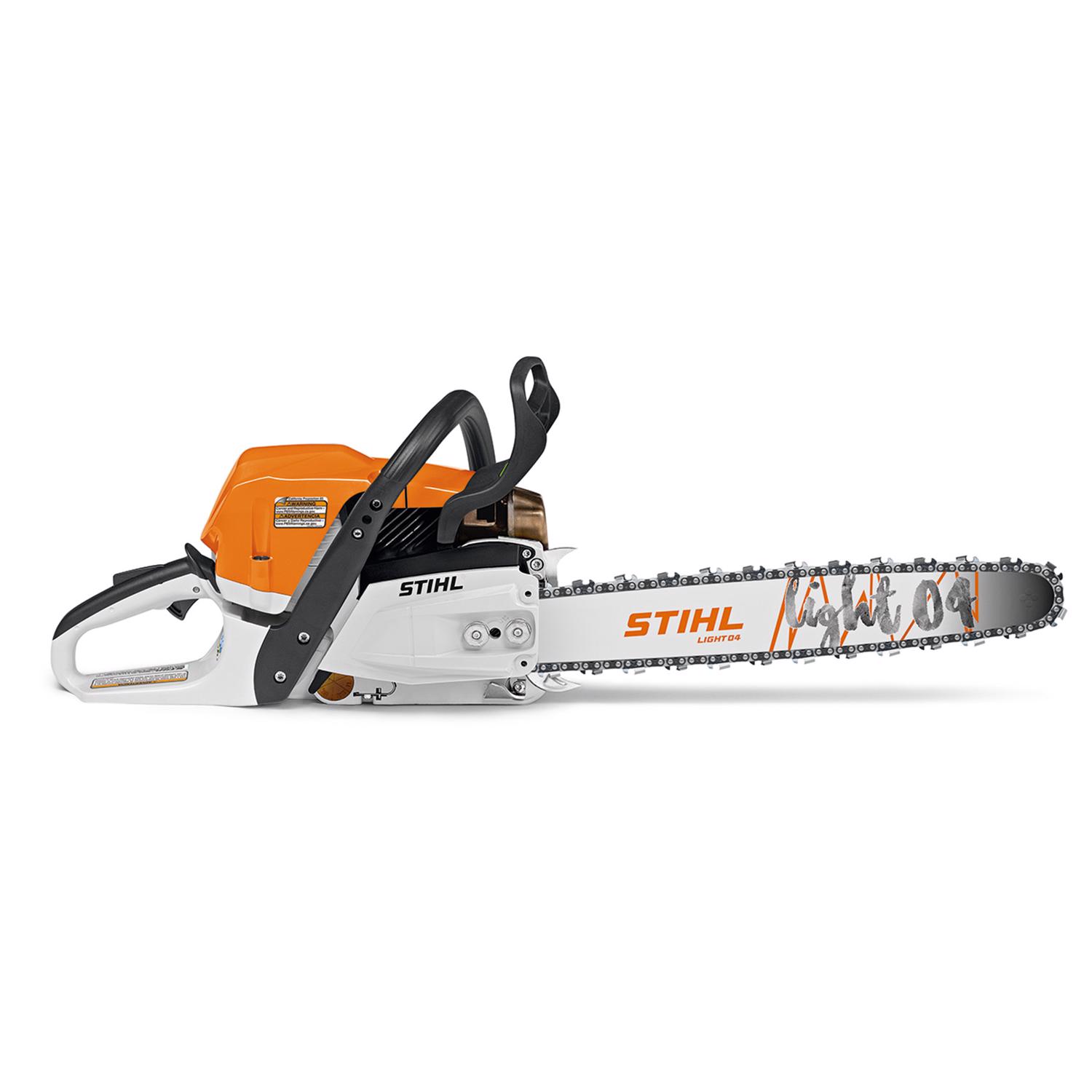
The entry point to Stihl's real pro saws, and the model forum veterans call the ideal all-day firewood saw: a magnesium-case, fully rebuildable 59cc engine making 3.5 kW from the same 12.3-pound powerhead weight as the plastic farm saws below it. The M-Tronic engine management is the quiet hero — it self-tunes for altitude, temperature, fuel, and a dirtying filter, so there's no carb screwdriver ritual, and owners consistently describe it as easy-starting and smooth. The honest knock from ArboristSite is that it's no longer the power-to-weight king: bury a 20-inch bar in big oak and it works for it, and the 462 makes vastly more power for barely half a pound more, which is why 'just save up for the 462' is a stock reply in every 362 thread. Pricing has also crept past $1,100, roughly double a Farm Boss. It remains the sweet spot for cutters who want pro durability and serviceability in a mid-size package — just know the pros above it cast a long shadow.

Stihl
Stihl MS 462 C-M
The saw that made West Coast fallers trade in their 044s and 461s: 72.2cc and 4.4 kW in a 13.2-pound powerhead that Stihl bills as the lightest it has ever built in this class, and owners on ArboristSite describe with phrases like 'monster torque' and 'game changer'. The M-Tronic metering keeps it in perfect tune from sea level to mountain jobs, and users bucking hardwood with 25- and 28-inch bars report it never feels short of breath — several admit their 660-class saws now sit unused because the 462 does the work at two pounds less. Complaints are scarce and mostly economic: the price has marched steadily upward (Ace lists the 25-inch at $1,619.99), and weekend cutters frequently confess they love it but reach for it less than expected because it's simply more saw than most firewood requires. A few owners cross-shop the lighter MS 400 and wonder if 66cc would do. As a do-everything big saw for felling and heavy bucking, though, forum consensus is about as unanimous as chainsaw forums get: no buyer's remorse.

Stihl
Stihl MS 500i
The first fuel-injected chainsaw ever sold, and the one saw that makes grown professionals gush: 79.2cc, 5.0 kW, and a 13.9-pound powerhead give it what Stihl claims is the best power-to-weight ratio on the market. The injection system replaces the carburetor entirely — it reads air pressure and temperature and meters fuel electronically, so it lights off in a couple of pulls hot or cold and owners report instant, hesitation-free throttle response that carbureted saws can't match. ArboristSite owner threads are full of people who sold their other big saws after buying one; more than one homeowner splurger calls it the best saw they've ever run. The gripes are specific and consistent: it drinks fuel hard, fine dust can sneak past where the plastic filter housing attaches, a handful of high-hour owners report warm-stall quirks, and the price has ballooned roughly $500 since launch to about $1,779.99 with a 25-inch bar. There's even a contrarian 'flagship saw disappointing' thread — but it's an island in a sea of five-star sentiment. If money were no object, this is the saw most of the forum says they'd grab.

This is the 90cc benchmark — the saw West Coast fallers and Alaskan-mill users on ArboristSite treat as the default answer for big wood. The M-Tronic computer handles tuning at any altitude or on any fuel, and owners consistently report it pulls a 28-32 inch bar buried in fir or oak without complaint while weighing 16.4 lbs, genuinely good power-to-weight for the class. The recurring debate in owner threads is whether you actually need it: MS 462 owners argue their saw does 90% of the work at 3 lbs less, and most firewood cutters concede the 661 only earns its keep in timber over 30 inches or on a mill. Real gripes: the price has climbed to roughly $1,850, it drinks fuel fast in long cuts, and Stihl's gas-saw warranty is a stingy 1 year consumer / 3 months commercial. Dealer-only distribution means no retailer review aggregates exist, but forum consensus over a decade is about as unanimous as chainsaw opinions get.

Stihl
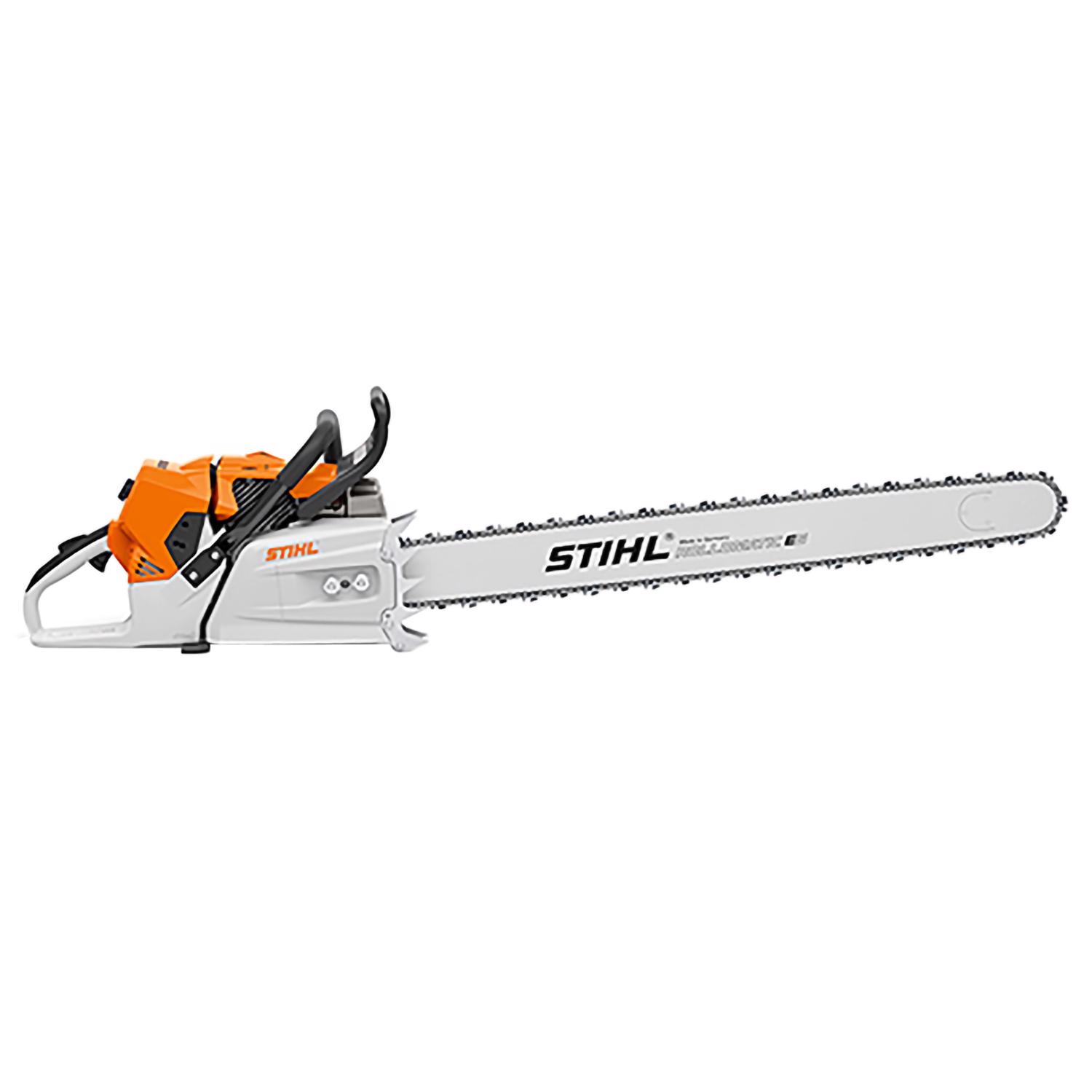
Stihl MS 881 Magnum
The biggest production chainsaw you can buy new — 121.6cc and 8.6 hp — and owner threads are honest that almost nobody needs one. The people who do (slabbing-mill operators, storm crews facing 4-foot trunks, big-timber fallers) describe torque that simply doesn't stall: it pulls .404 chain on a 36-41 inch bar through hardwood at a steady, unhurried pace. Milling forums treat it as the safe choice over the 661 for 36-inch-plus slabs because it stays out of the RPM range where smaller saws cook themselves. The gripes are what you'd expect: 21.4 lbs before you add a 3-foot bar, a cold-start flooding ritual owners learn the hard way, an old-school carburetor (IntelliCarb, not M-Tronic) that may need seasonal retuning, and a price around $2,680 that makes used MS 880s tempting. Chain speed is modest, so it feels slow limbing — this is a torque instrument, not a firewood saw.

Husqvarna
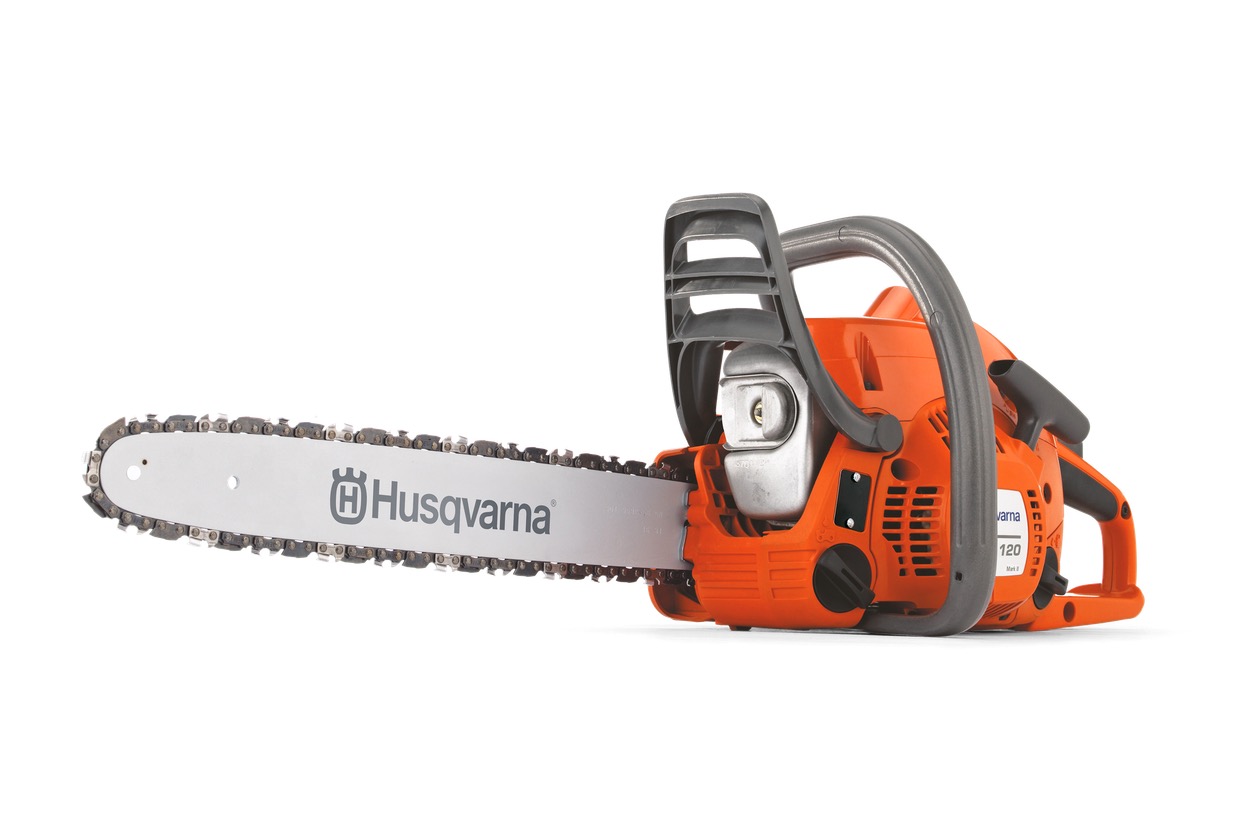
Husqvarna 120 Mark III
Husqvarna's answer to the Stihl MS 170 fight at the bottom of the gas market, now in its third generation: 38.2cc, a hair over 10 pounds, and a $219 price at Lowe's that gets a real Husqvarna badge into suburban garages. Owners like the X-Torq engine's fuel sipping and the light, neutral balance for limbing and storm cleanup, and the Mark III now carries bars up to 18 inches. The gripes are consistent and worth knowing: cold starts take more pulls than the ritual printed on the recoil housing suggests, the plastic construction reads budget next to the 400-series, and the tool-required chain tensioning annoys people coming from big-box battery saws. It's built in the same value tier as the Poulan hardware it shares DNA with — the badge buys you Husqvarna's dealer network and parts availability, which is exactly what the no-name saws at this price lack.

Husqvarna
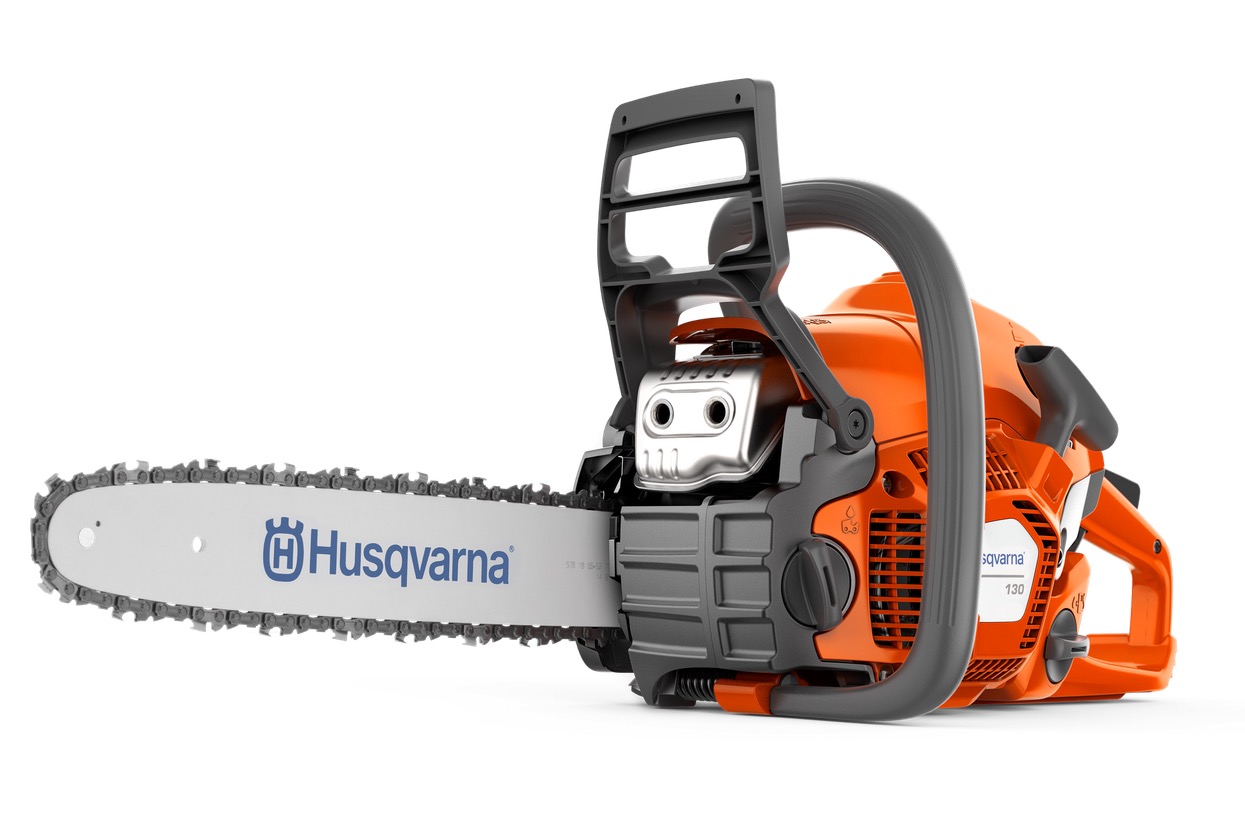
Husqvarna 130
The 130 is the 120's slightly stronger sibling — same 38.2cc bones with a two-horsepower tune and a 16-inch bar as standard for $259. That extra bit of chain speed matters more than the spec sheet suggests: owners report it holds RPM through 10-12 inch rounds where the 120 starts asking for patience. It shares the 120's honest limitations too — a budget airbox, tool-required tensioning, and a cold-start routine you'll memorize — and the forum consensus is blunt about the tier: this is a homeowner saw for occasional duty, not a firewood machine. The interesting cross-shop isn't Stihl; it's Husqvarna's own 435 II, which for about $120 more buys a genuinely nicer saw. But as a step up from the 120 that keeps the price under $300, the 130 hits a spot the competition mostly ignores.

Husqvarna
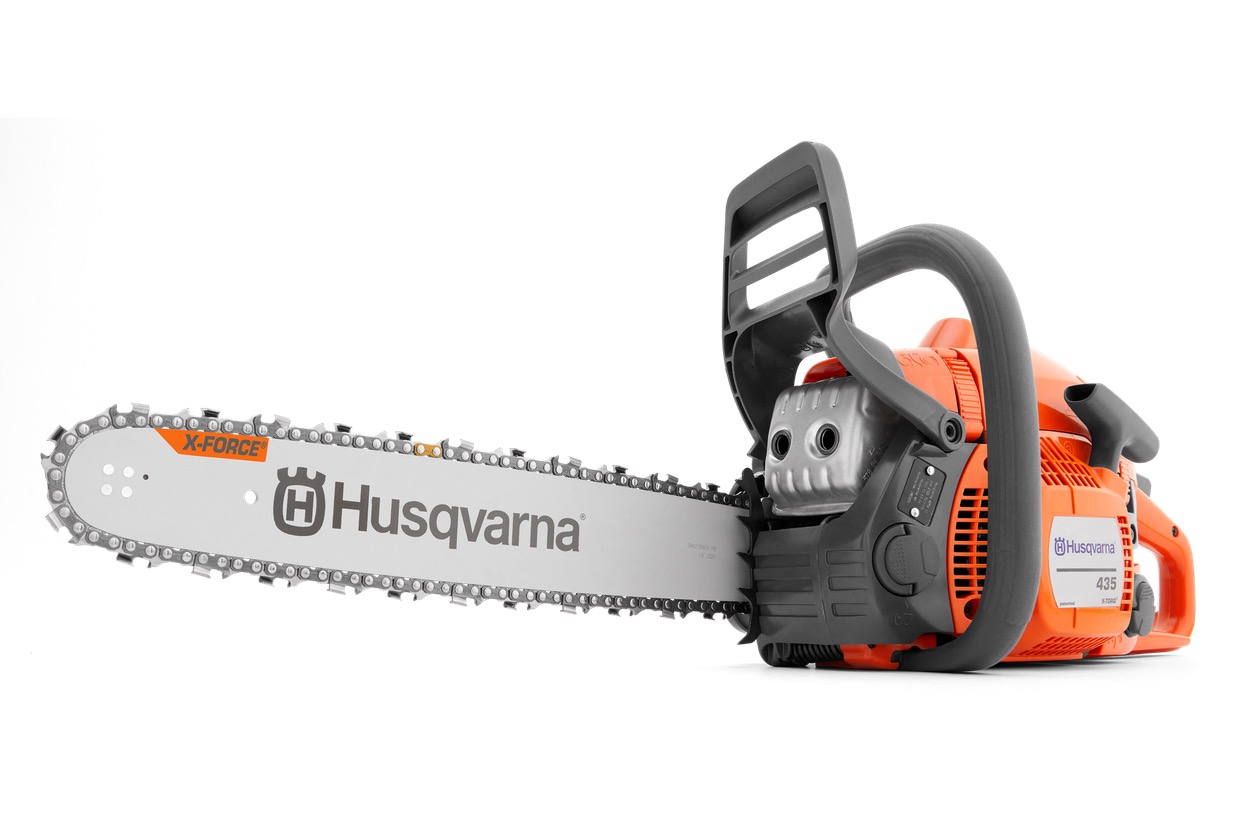
Husqvarna 435 II
The 435 II is where Husqvarna's homeowner line stops feeling built to a price: a 40.9cc X-Torq engine in a 9.8-pound powerhead, which makes it one of the lightest real gas saws you can buy. Owners consistently praise exactly that combination — enough grunt for a 16-inch bar and small felling, in a package light enough that limbing all afternoon doesn't wreck your forearms. The .325 chain cuts smoother than the 3/8 mini on the 1-series, the air filtration is a genuine step up, and LowVib makes it far more pleasant than its price peers. The honest knocks: it's carbureted and fussy about stale fuel like every small two-stroke (spring no-start posts are a forum staple), the auto-oiler runs conservative from the factory, and at $379 it overlaps Echo's CS-4010, which brings a 5-year warranty to the same fight. Still the pick for weight-sensitive buyers.

Husqvarna
Husqvarna 450S Rancher
The current evolution of the 450 Rancher II, and quietly the smart buy in Husqvarna's Rancher lineup: 50.2cc making 3.2 horsepower in an 11-pound powerhead — over two pounds lighter than the 455 that everyone defaults to. Owners who cross-shop the two keep landing on the same math: the 450-class gives up a little displacement but swings all day, and the .325 chain keeps it smooth in the 12-16 inch hardwood that makes up most real firewood work. Street prices at dealers run $470-500. The knocks are familiar Rancher-line stuff: it's a consumer-grade crankcase built for weekends rather than pro duty, the factory chain is unimpressive, and Husqvarna's model churn (450, 450e, 450 Rancher II, now 450S) makes parts lookup mildly annoying. If your firewood pile doesn't demand the 455's extra cc, this is less money and less fatigue for the same cords.

Husqvarna
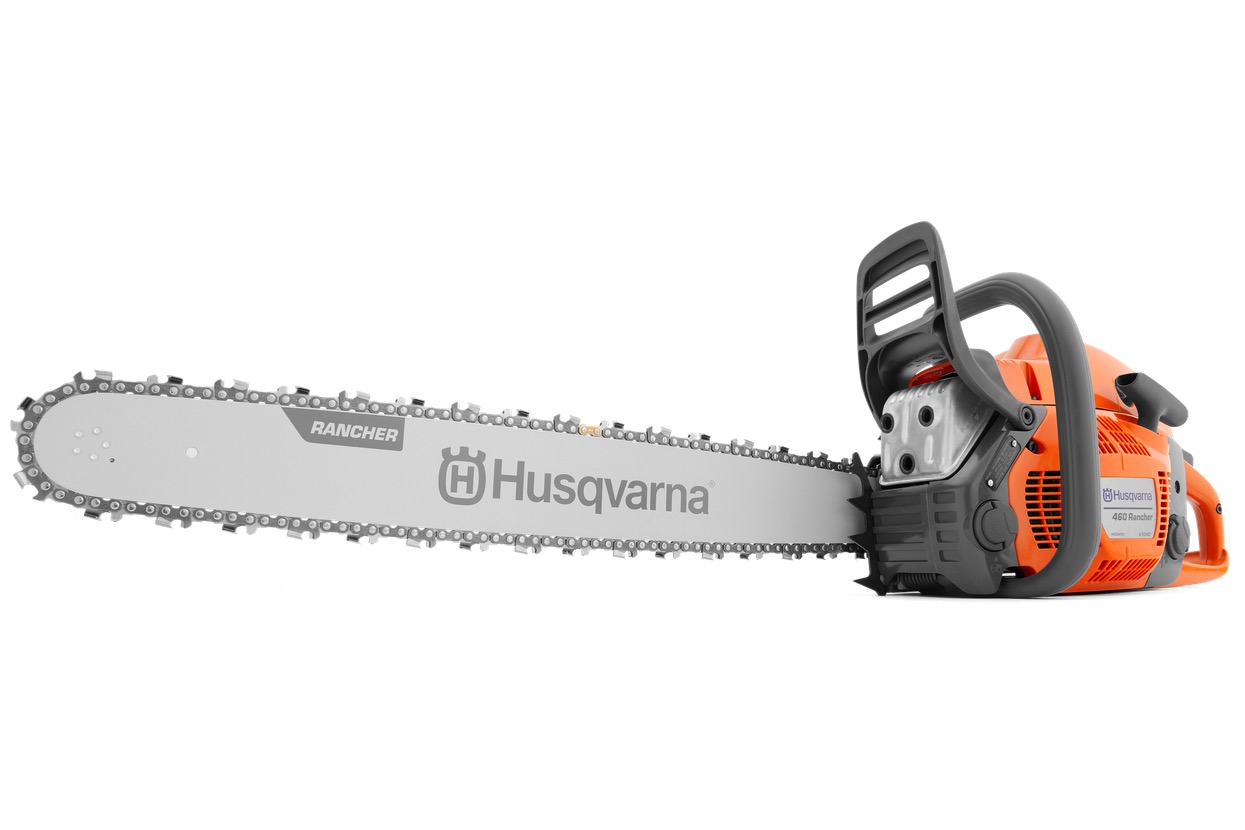
Husqvarna 460 Rancher
The 460 Rancher is the 455 with a bigger bore — same 13.2-pound chassis, same ranch-tough intent, but 60.3cc and the factory 24-inch bar that sells it: this is the Rancher for people with genuinely big wood. Owners who bought it for storm-downed oaks and large-lot clearing say it does exactly what the 455 can't quite, holding chain speed through 20-plus-inch rounds. The tradeoffs are the 455's, unchanged: the weight is real, the vibration is real, and with only a tenth of a kilowatt more than its smaller sibling, what you're buying is torque and bar capacity rather than speed. Forum wisdom cuts two ways — some call it the best value in big consumer saws, others point out that the Echo CS-590 gives up nothing meaningful for $200 less. If a 20-inch bar covers your wood, buy the 455 or the Echo; if it doesn't, the 460 is the cheapest credible 24-inch saw from a major brand.

Husqvarna
Husqvarna 550 XP Mark II
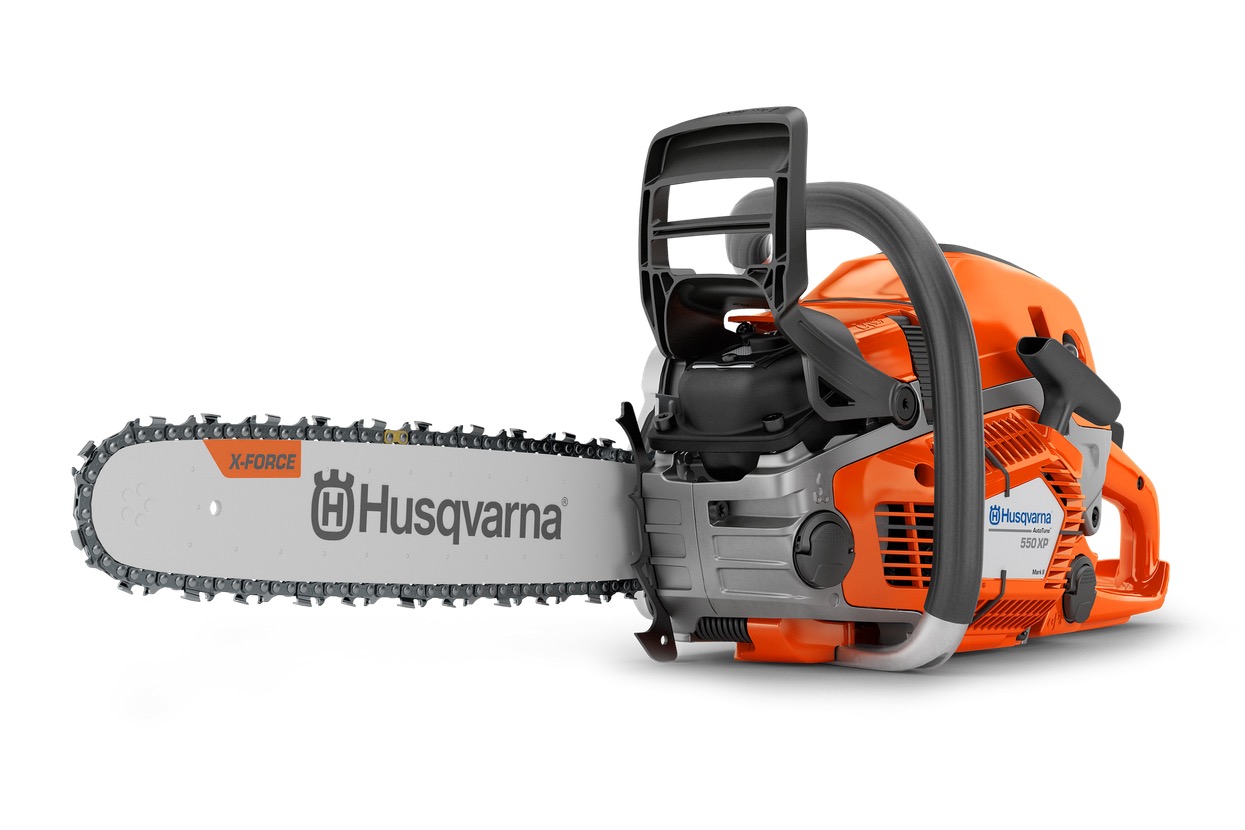
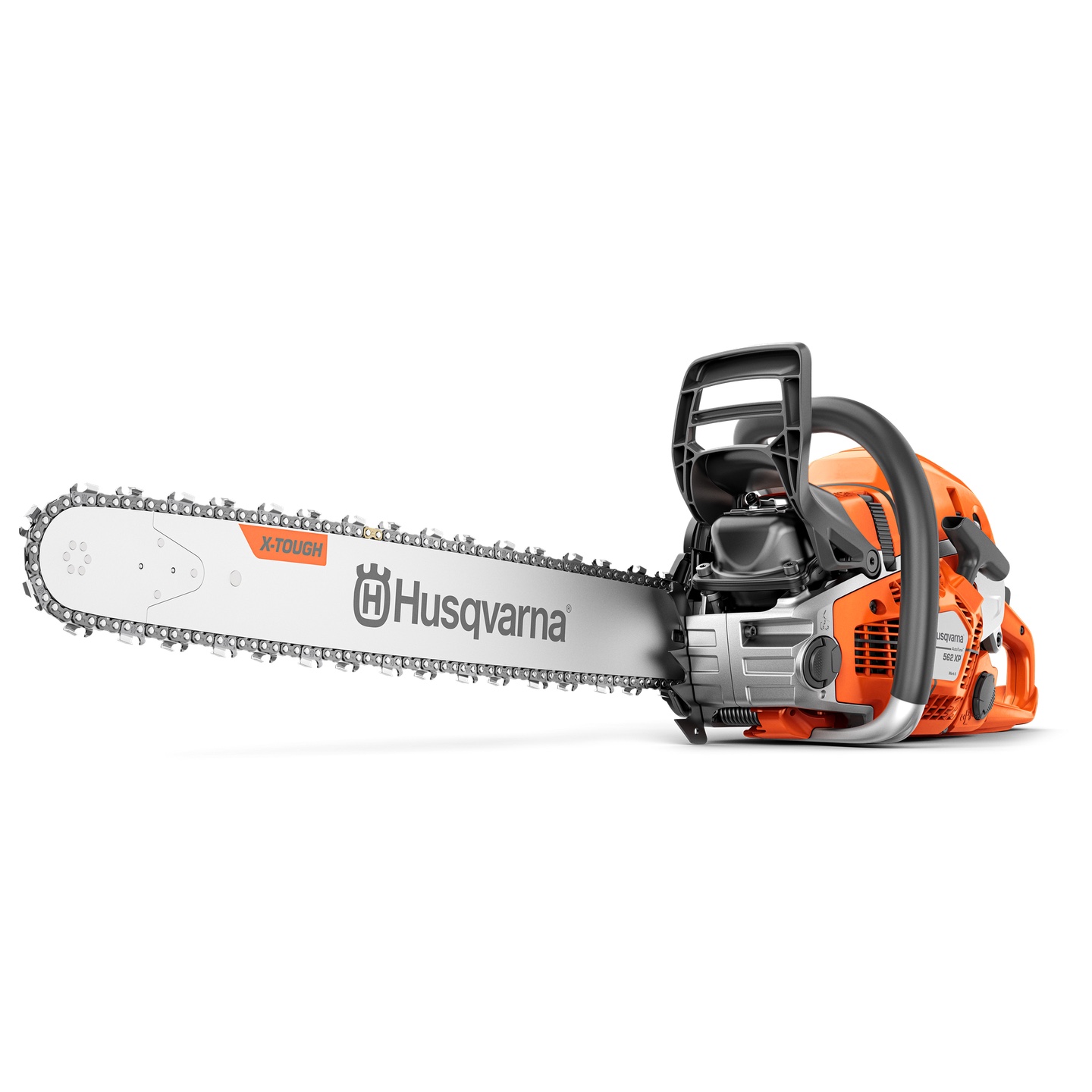
The 550 XP Mark II is what happens when a manufacturer actually fixes a saw: the original 550 XP's air-leak and AutoTune teething drama is gone, and what's left is arguably the best 50cc saw money buys — four horsepower at 11.7 pounds, an X-Cut chain from the factory, and handling that arborists describe as telepathic in the limbs. Dealer pricing runs $660-760, and the pro crowd that was burned by the Mark I now recommends the Mark II without caveats, which is its own kind of endorsement. AutoTune means no carb screwdriver, ever — it compensates for altitude, fuel, and filter condition automatically. The honest asterisks: it wants to rev and rewards full-throttle technique (lug it and it feels flat), dealer-only distribution means no big-box convenience, and casual cutters are paying a $250 premium over a Rancher for refinement they may never use. For daily-use limbing and firewood at speed, nothing in the class touches it.

Husqvarna
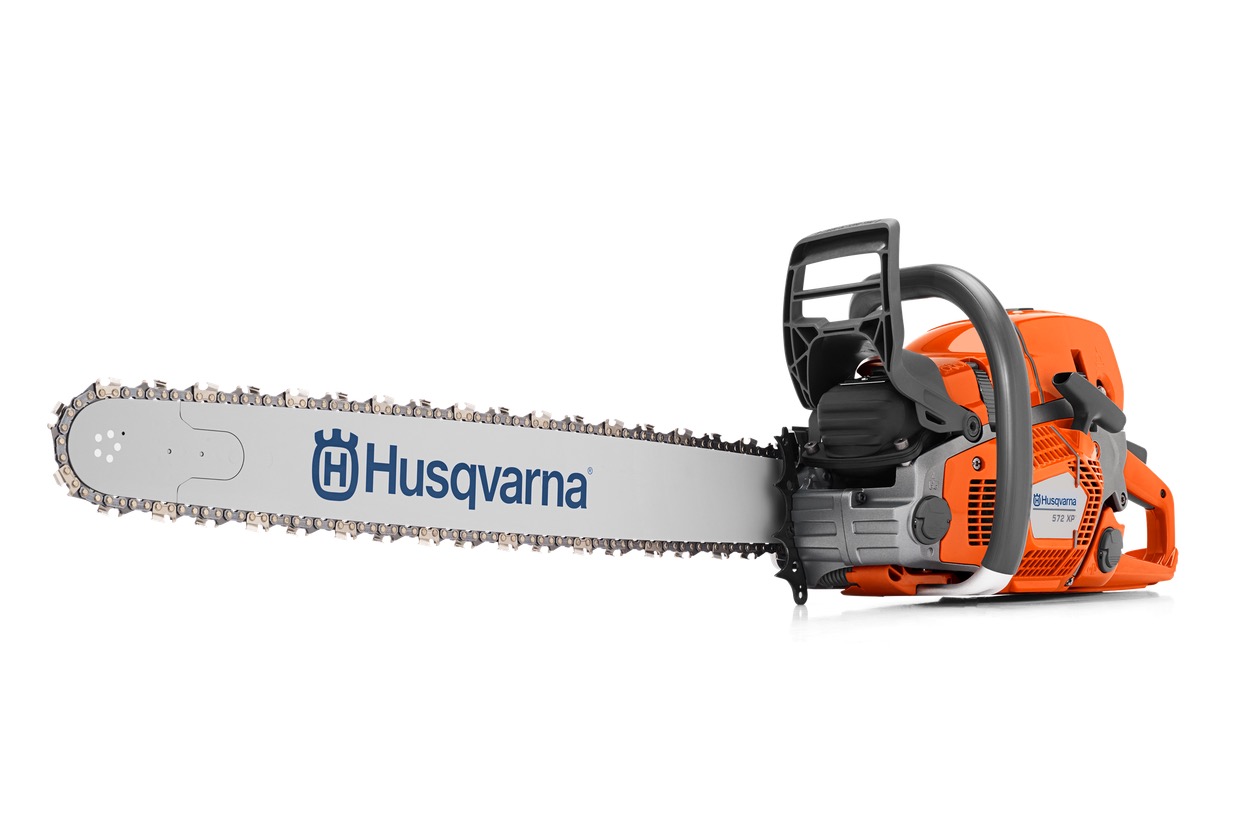
Husqvarna 572 XP
Husqvarna's 70cc flagship and one half of the great modern felling-saw rivalry — every 572 XP thread eventually becomes a Stihl MS 462 thread, and the fact that neither side wins is the point: both are spectacular. The 572's case is 5.8 horsepower with AutoTune, cooling and filtration designed for all-day timber work, and vibration numbers that let pros run it for full shifts. Owners praise how it pulls long bars — 24 inches is its sweet spot and 28 is genuinely workable — and how the X-Torq engine keeps torque flat deep into the cut instead of falling on its face. The knocks are few and honest: at 14.5 pounds it gives up half a pound to the MS 462, early-production cylinder issues (since resolved) still echo around ArboristSite, and the $1,349 list price plus dealer-only service makes it a professional's purchase. For felling and bucking serious timber, this and the 462 are the two right answers.

Echo
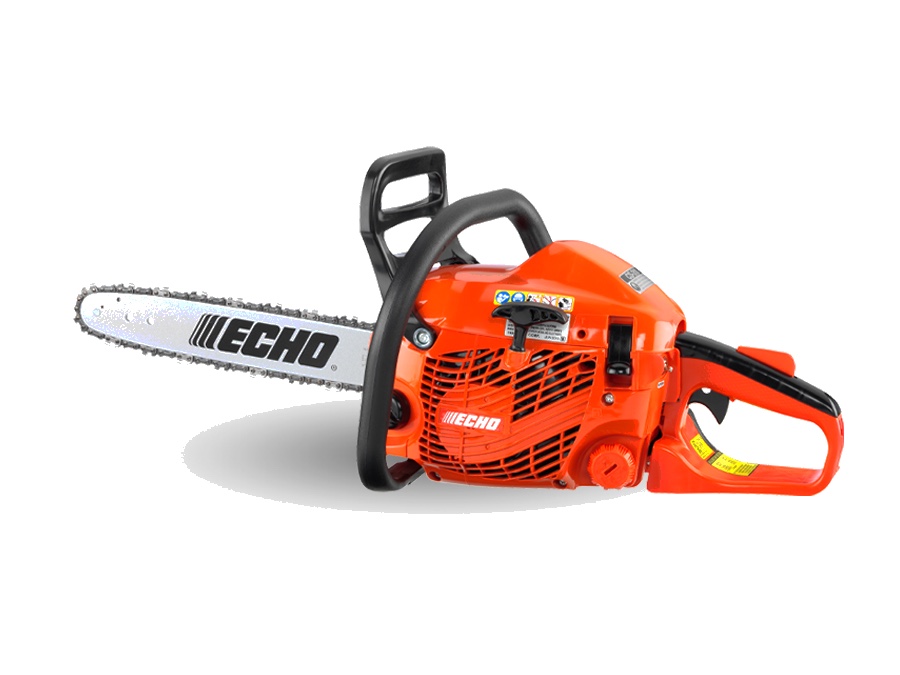
Echo CS-310
Echo's cheapest gas saw, and the one owners keep recommending over box-store Poulans because it pairs a real two-stroke with a 5-year consumer warranty for around $219 at Home Depot. At 8.8 lbs for the powerhead it's genuinely easy to run one-handed on a sawhorse, and the i-30 starter means most owners report two-to-three-pull starts once they learn the choke routine. The gripes in owner threads are consistent rather than dramatic: the chain stretches and loosens noticeably in the first few tanks, it can be cranky to start in cold weather, and like most clutch-driven-oiler saws it will seep bar oil if stored with a full tank. Reviewers also agree the 16-inch version overtaxes the 30.5cc engine — stick with the 14-inch bar and it stays in its happy zone. This is a limbing and storm-cleanup saw, not a firewood producer; owners who ask it to buck 16-inch hardwood all day come away disappointed. For occasional use, the long warranty and dealer network make it an easy keep.

Echo
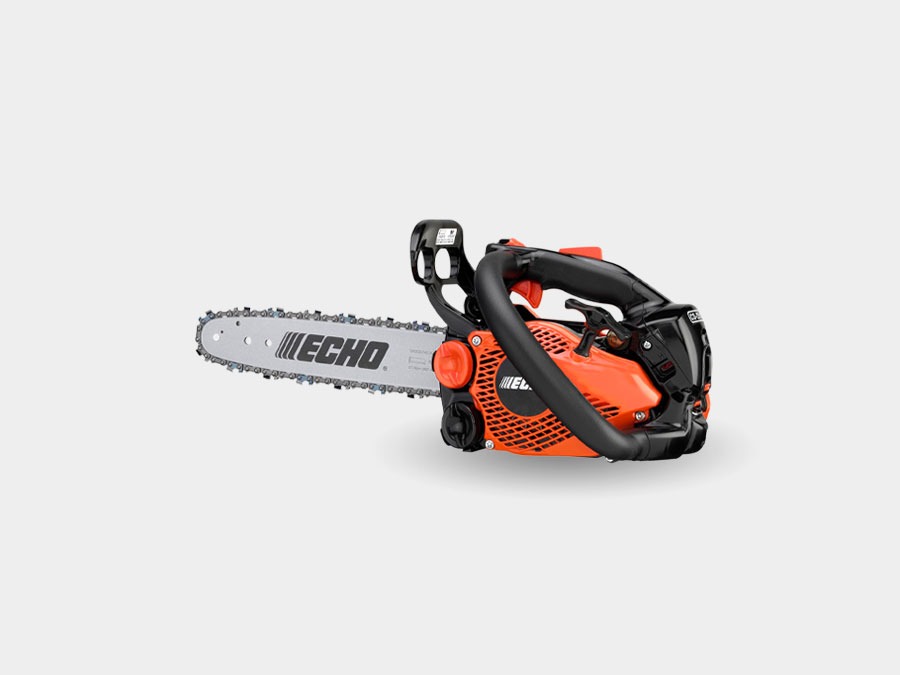
Echo CS-2511T
The lightest gas chainsaw sold in North America at 5.2 lbs, and the saw that made working climbers take Echo seriously — when it launched, ArboristSite threads were full of "can't get one, they're back-ordered everywhere." Climbers love that after a full day aloft they aren't wrecked the way they are with a Stihl MS 201 T or Husqvarna T540 that weighs two-plus pounds more, and the 25cc X-Series engine punches above its 1.1 kW rating on small wood. It is a specialist though: reviewers note it slogs through anything much over 10 inches, and this is a pruning-and-tips saw, not a chunking saw. The documented gripes are specific: the tiny air filter clogs quickly and can let fines past (climbers add an O-ring fix), some units have had the oiler passage clog and stop feeding the bar until torn down and cleaned, and a few owners report heat-soak complaints after an hour of continuous running. Echo backs even this pro tool with its 5-year consumer warranty, and at roughly $599 it undercuts the T540 XP Mark III by over $100. Among lightweight top-handles, this is the class benchmark.

Stihl
Stihl MS 194 T
Stihl's entry-level in-tree saw, slotting under the MS 201 T at $509.99 list — and the forum verdict is blunt: "a budget climbing saw with a disappointing amount of torque." That's the climber's take; the flip side is a smooth 2-MIX engine, 7.3 lbs on the powerhead, and the 1/4-inch PM3 chain, which cuts glassy-smooth on pruning wood and is a genuine advantage for fine ornamental work. Owners who advance the timing and open the muffler report it "pretty well catches up to the MS 201 T," which tells you the potential is tuned out at the factory. As a Stihl it's dealer-only, so there's no retail review aggregate to cite, but resale value and dealer support are the usual Stihl strong suits. Watch-outs from owner threads: the automatic oiler has no manual backup, the 1/4-inch chain means you're buying loops from the dealer rather than any hardware store, and parts don't interchange with the older MS 192/193 T it replaced. Stihl labels it for professional in-tree use only and it isn't sold in California. Homeowner-arborists love it; production climbers pay up for the 201.

Husqvarna
Husqvarna T435
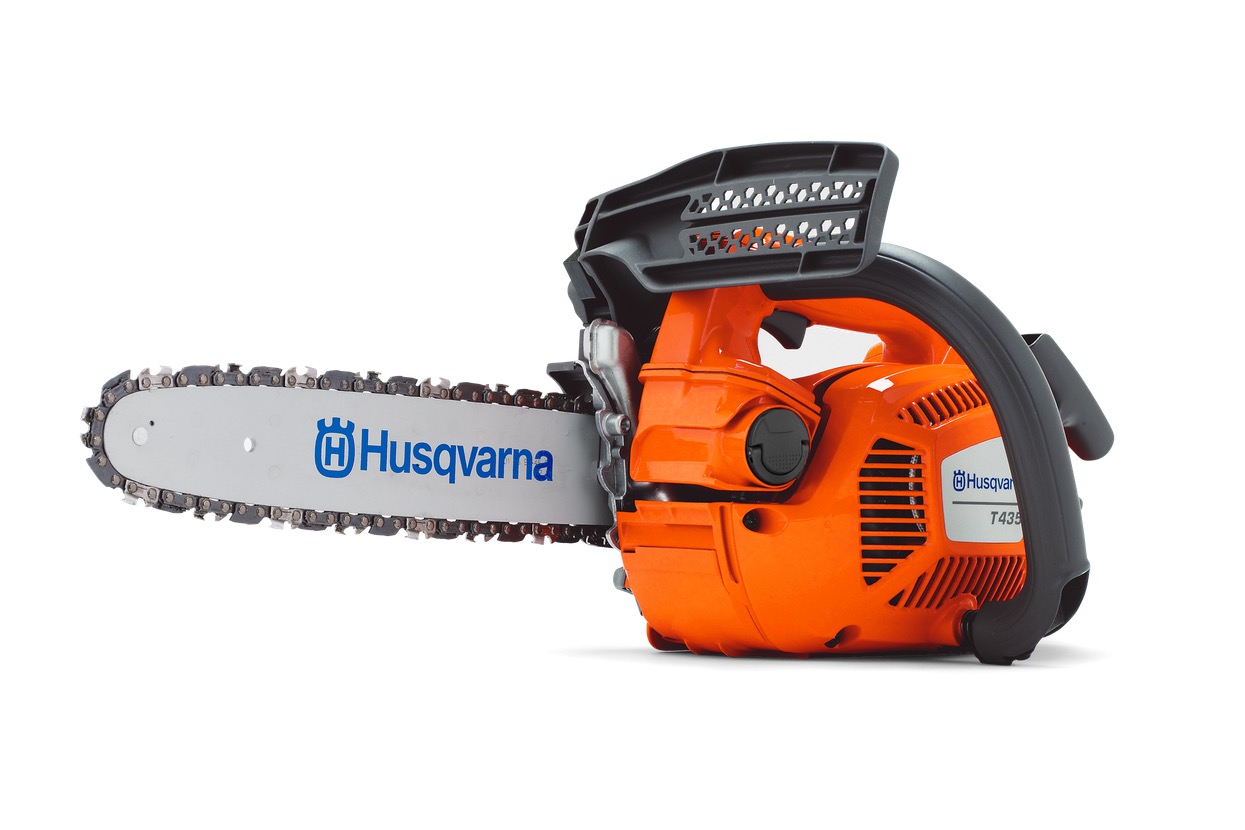
Husqvarna's budget top-handle has quietly outlived several rumored replacements — it's still sold new in the US at around $429 (12-inch bar) while the flagship T540 XP Mark III runs $719. ArboristSite is candid about where it sits: "you won't find much love around here for a T435, but it's fine for the occasional-use homeowner type," though at least one commercial outfit ran three of them and kept buying because they were half the price of the old 338 XPT. The 35.2cc X-Torq engine is fuel-efficient and the 7.5 lb powerhead balances nicely in hand — several owners say it feels better than the spec sheet reads. The wear points show up under commercial abuse: stiff chain brakes, kill-switch failures, carb rebuilds, a torn intake boot on hard-used units, and an idle that wanders as the saw ages. Buy-once-cry-once voices push climbers to the T540 XP instead, and that's fair — this is the pruning saw for orchards, storm cleanup, and part-time climbing, not production takedowns. As a dealer-channel saw with no verifiable retail review aggregate, its reputation lives in forums, where the consensus is: honest little saw, know its lane.

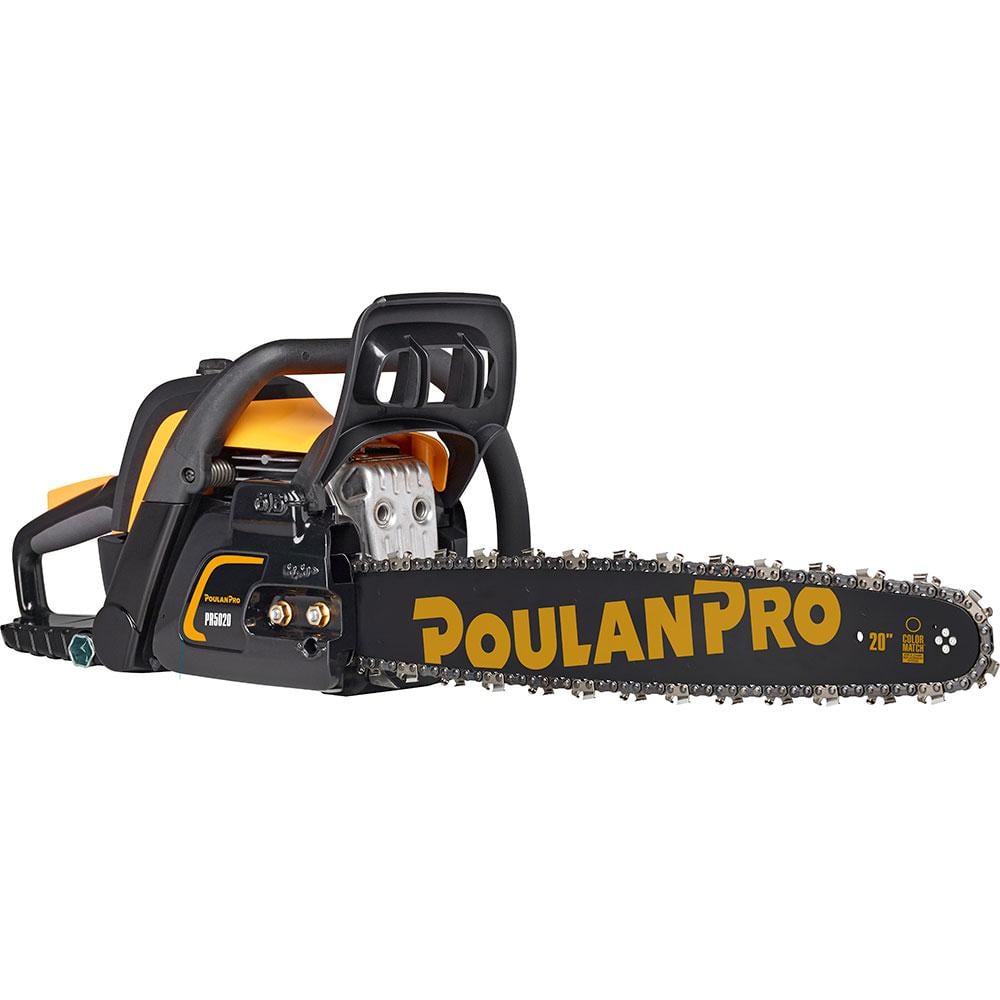
Poulan Pro
Poulan Pro PR5020
The PR5020 is the saw people buy when they want 50cc and a 20-inch bar for the least money on the shelf — and mostly, it delivers exactly that bargain and nothing more. Under the purple plastic sits Husqvarna-group OEM hardware (Poulan Pro is Husqvarna's value brand), so the bones are more legitimate than the price suggests, and owners who feed it fresh premix report years of adequate weekend service. The gripes are the value-tier classics: the carb is famously intolerant of stale fuel, starting when cold is a wrestling match, at 17 pounds ready-to-cut it's heavier than saws costing three times more, and when something breaks, the repair quote frequently exceeds the saw's value. Pricing swings wildly — Lowe's lists it around $360 and then runs clearances under $100 — so what it's 'worth' depends entirely on the week you catch it. At a deep-discount price it's a genuinely defensible firewood starter; at list, an Echo CS-4920 is a far better saw.

Craftsman
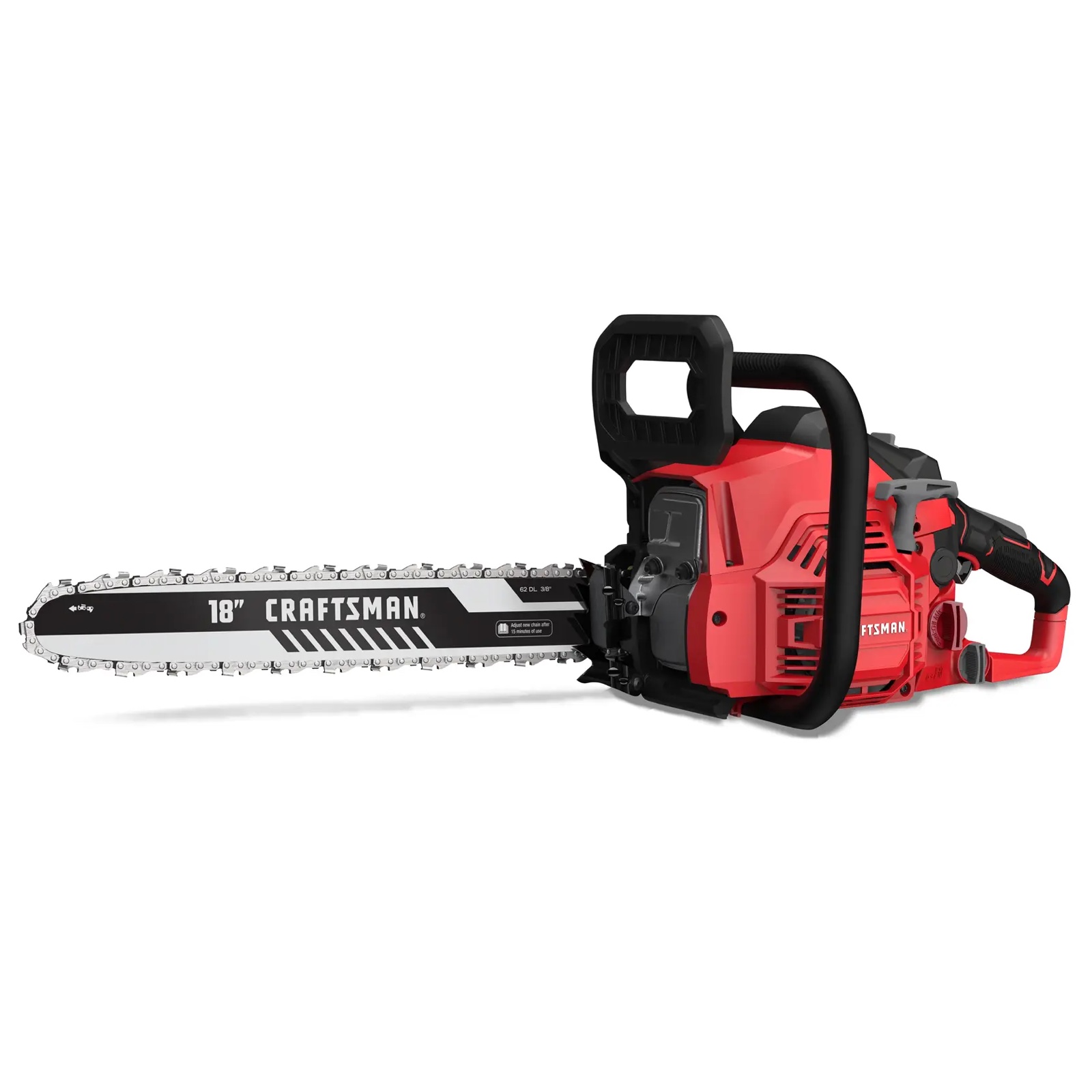
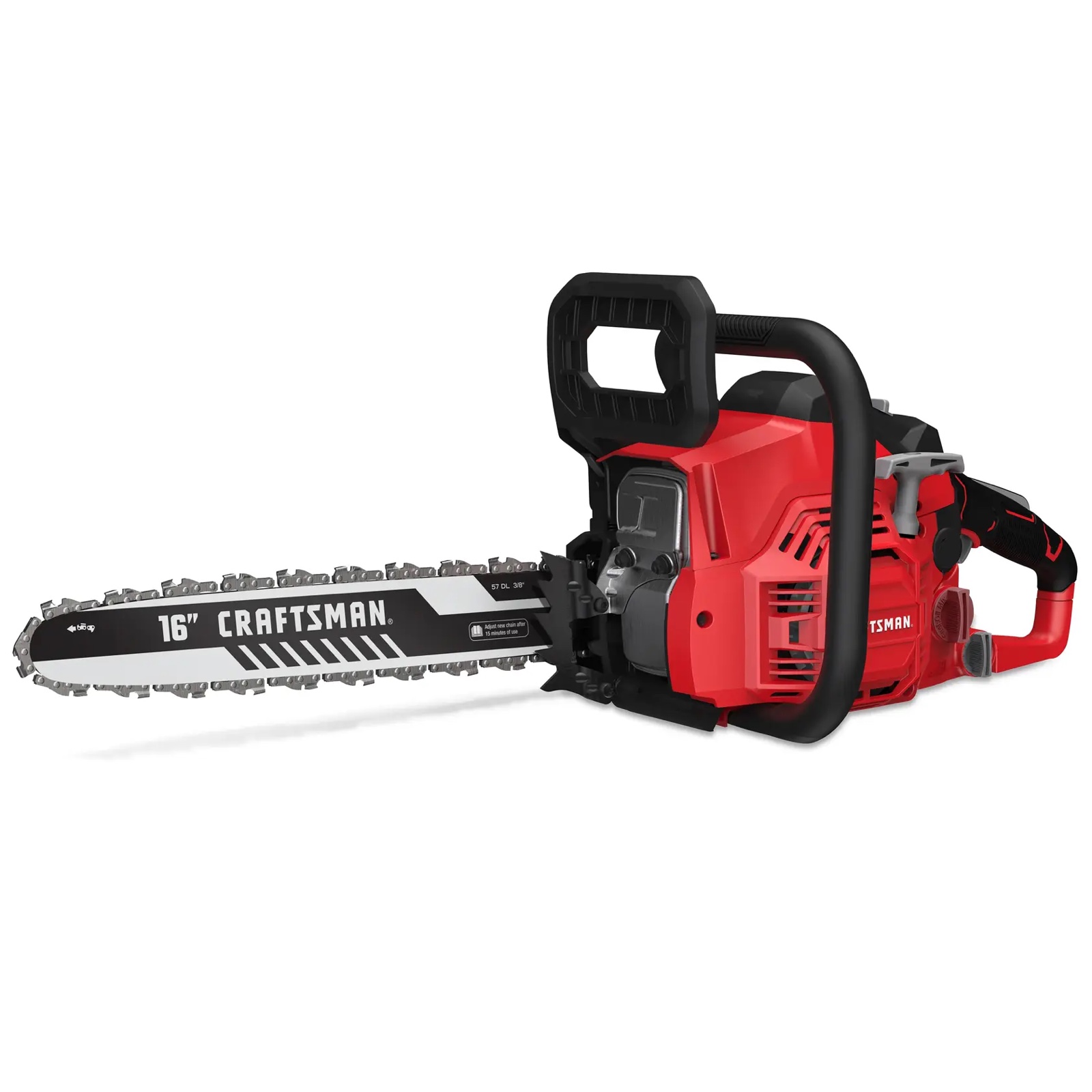
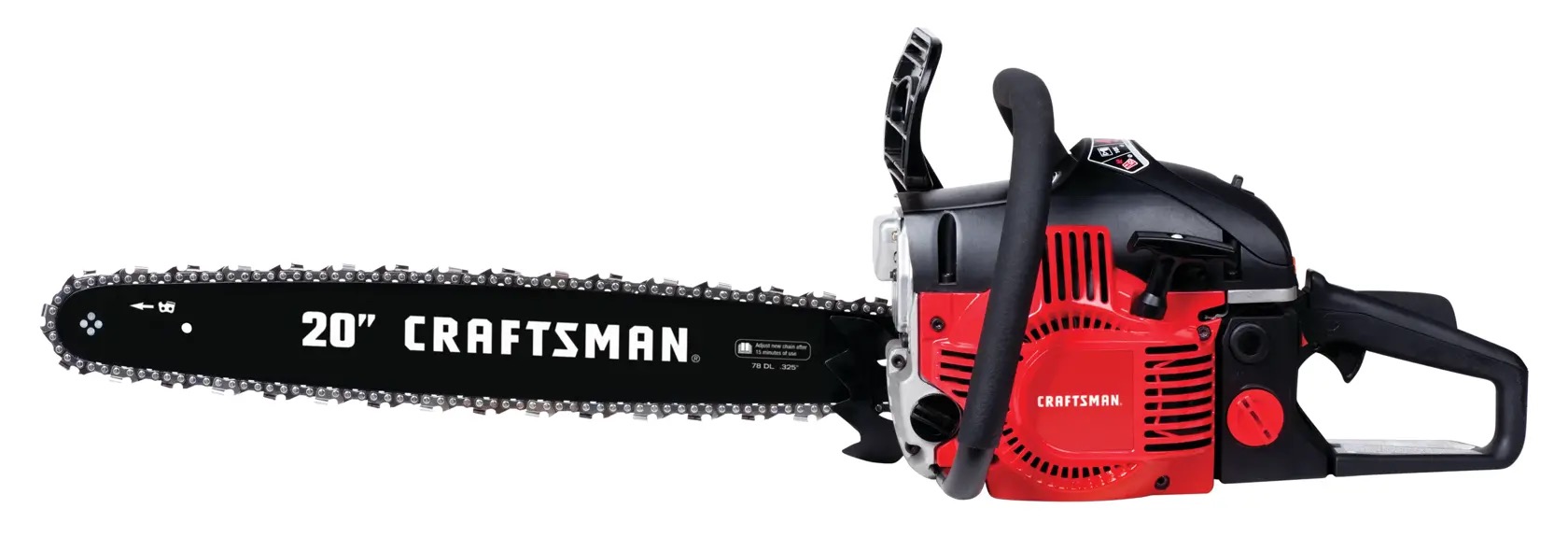
Craftsman S205
The S205 is the best-kept secret of the value gas tier: a 46cc full-crank engine with a 20-inch bar that Walmart routinely sells in the $130-170 range, built by MTD on proven bones and reviewed surprisingly kindly by the tool press. Pro Tool Reviews' take matches the owner consensus — for storm prep, cleanup, and occasional firewood, it balances power and price better than anything near it. The Easy Start system genuinely reduces pull effort, and the full-crank design runs smoother than the half-crank engines common at this price. The honest ceiling: it's an occasional-use machine with a low-kickback safety chain that cuts slowly until swapped, the anti-vibe is rudimentary next to anything premium, and Craftsman's service network is a returns desk rather than a dealer bench. Buy it on sale, put a real chain on it, keep the fuel fresh, and it embarrasses its price bracket.

Echo
Echo CS-303T
The CS-303T is Echo's lighter, smaller answer to its own CS-2511T — a 30.1cc top-handle at 7.7 pounds dry, built for climbing arborists doing production pruning where every ounce overhead matters. Echo's professional-grade positioning is earned: magnesium where it counts, a G-Force air pre-cleaner that stretches filter intervals, and the same 5-year consumer warranty that embarrasses the industry. Working climbers describe it as a dependable, easy-starting saw that gives up a little top-end snort to the 2511T in exchange for a gentler price and Echo's legendary longevity. The same disclaimer applies as to every top-handle: this is an in-tree tool for roped-in professionals — on the ground its short frame gives you less kickback leverage, not more, and OSHA and Echo both say so explicitly. For ground work at this displacement, a rear-handle saw is safer and cheaper.