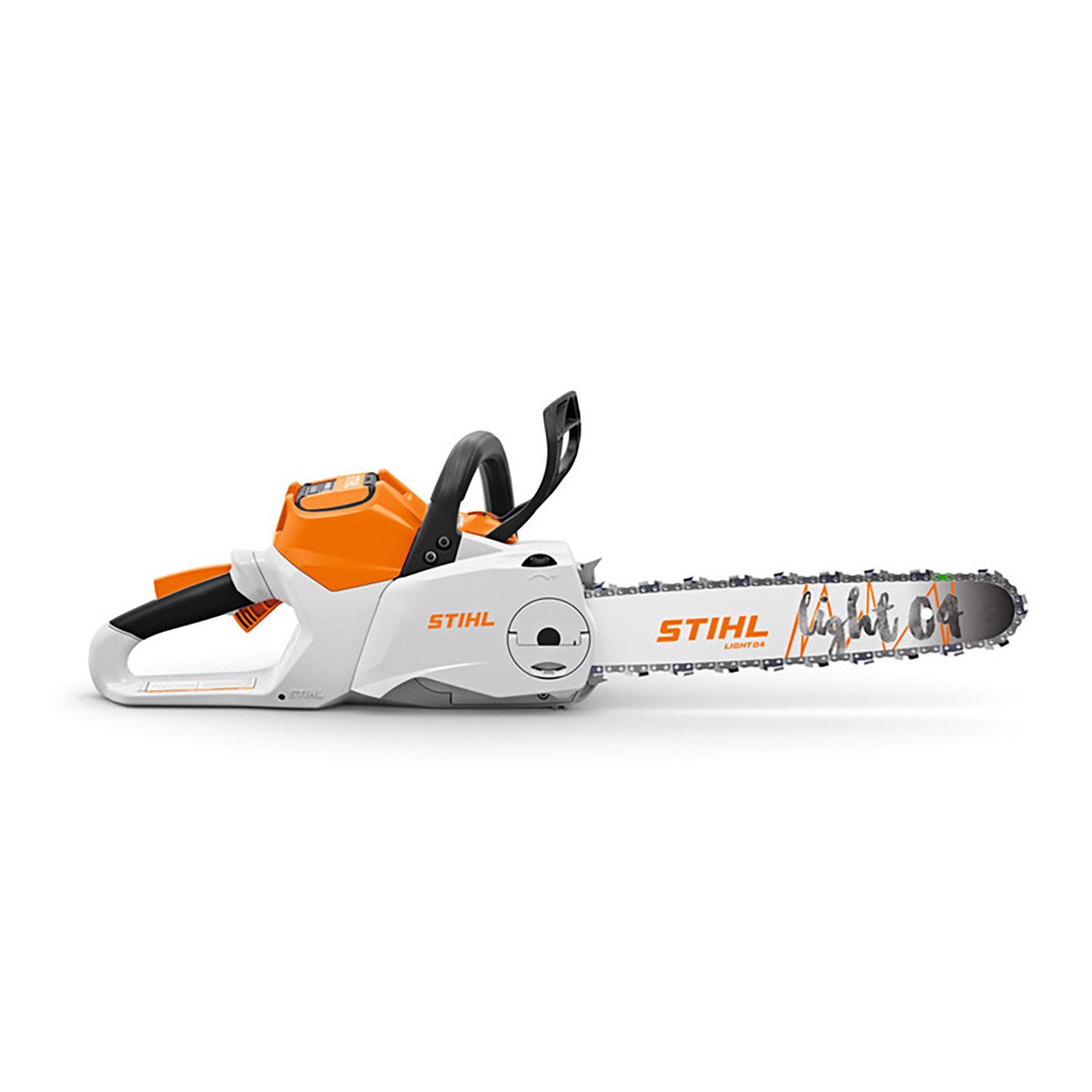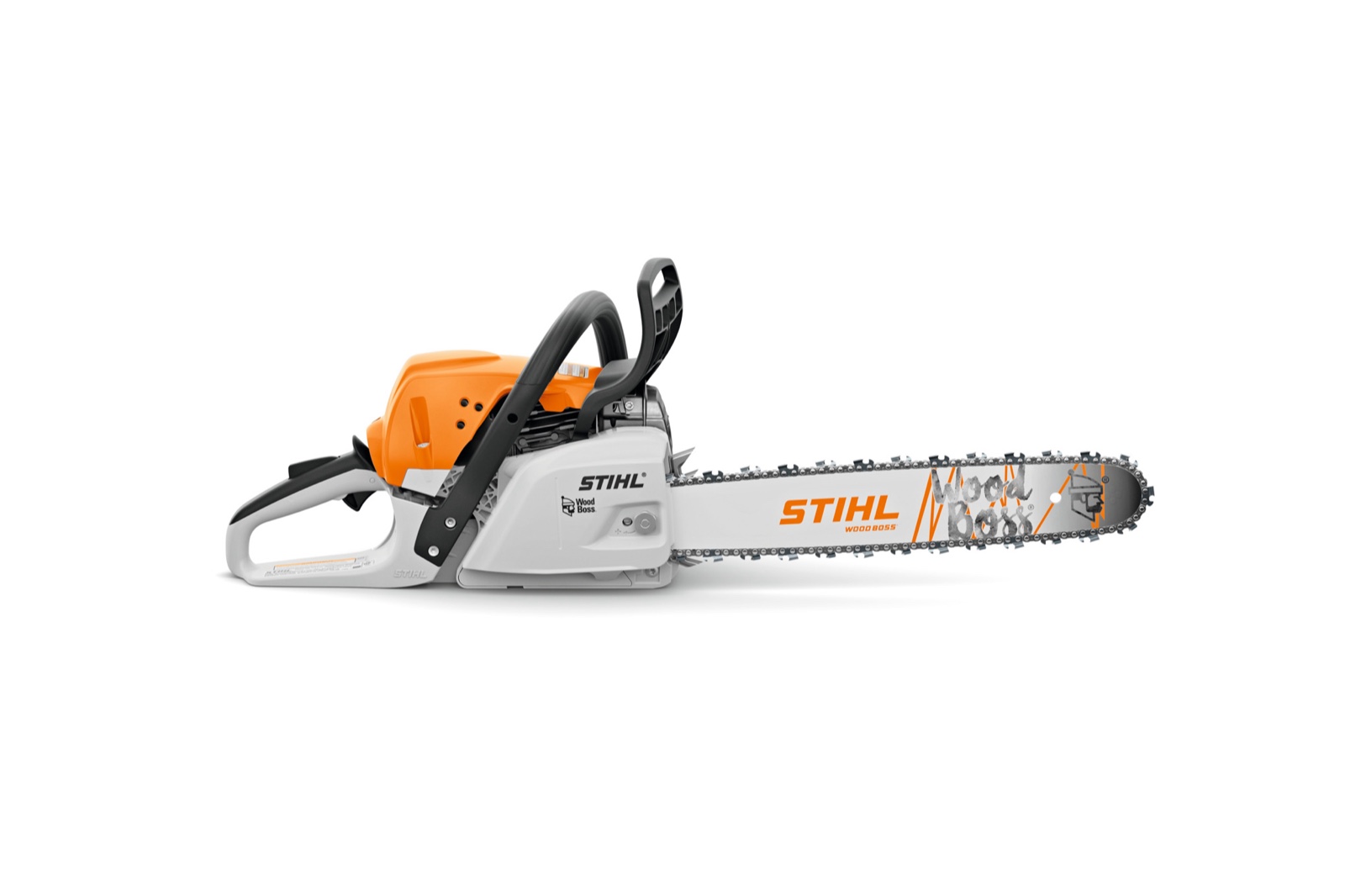
Stihl MS 250

Stihl / Gas / Homeowner

Stihl MS 250

40cc class
45.4cc
2.2 kW rated
18 in
cuts to about 16 in
10.1 lb
powerhead only
~$430
approx., with 18" bar and chain
See it at Stihl

Price and availability on Stihl's site may differ.

4/5 across 2,628 reviews on Ace Hardware. Nobody reviews saws here; that number is theirs.

A 25-year-old design that refuses to die because the math still works: 45.4cc pulling an 18-inch bar from a 10.1-pound powerhead, for under $450. Firewood cutters love the power-to-weight — it out-cuts every saw below it in the Stihl lineup by a wide margin and handles real firewood duty the 170/180 can't. The catch is that it's an old-school saw in every sense: no fuel primer, dated air filtration, and a long-standing reputation among owners for being cold-blooded and hard-starting when the carb gets finicky, with more than one owner saying 'when it runs well it's a great saw' through gritted teeth. The anti-vibration system is also a generation behind, so your hands feel more buzz than on the spring-mounted farm saws. Its 4.0-star average across 2,600+ Ace reviews is the lowest of Stihl's homeowner line — starting complaints drive most of the one-star reviews — but the owners who learn its ritual keep them running for decades.

Best for: Budget-minded firewood cutters who want the most cutting power per pound and per dollar in Stihl's homeowner line and will tolerate old-school starting ritual.

Specifications

Engine class
40cc class (by displacement)
Engine
45.4 cc
Bar range
16-18 in
Single-pass cut
about 16 in (bar minus 2)
Chain
.325" pitch / .063" gauge (26 RM3)
Weight
10.1 lb, powerhead only
Use case
Homeowner
Warranty
1-year consumer / 3-month professional (Stihl policy from Jan 1, 2026)
Model
MS 250

Manufacturer figures except the engine class and single-pass cut, which are derived here. What each spec means

  • 45.4cc in a 10.1 lb powerhead
  • Real firewood capability under $450
  • Decades-proven (finicky) design

What owners like

  • Best power-to-weight in Stihl's homeowner range — 45.4cc in a 10.1 lb powerhead
  • Pulls an 18" bar and .325" chain well enough for genuine firewood processing, not just cleanup
  • Side-access chain tensioner beats the bar-nut fiddling on the 170/180
  • Simple, parts-everywhere design that dealers have serviced for 20+ years
  • Winter/summer carb shutter prevents icing for cold-weather cutting
  • Hundreds of dollars cheaper than any pro-tier Stihl with comparable displacement

Common complaints

  • Cold-blooded, hard-starting reputation — the most common complaint in its 2,628 Ace reviews and in owner discussions
  • Dated anti-vibration system transmits noticeably more buzz than the MS 271/291
  • Old-generation engine is thirstier and dirtier than Stihl's newer low-emission designs
  • Stihl doesn't allow OEM parts sales online, so every repair means a dealer trip
  • Air filtration is far behind the pre-separation systems on newer saws — filters clog fast in dusty wood

What owners say

Read from owner discussions, long-term write-ups and dated retail reviews; nothing here was measured on this site.

The MS 250 is the saw that splits owners cleanly down the middle, and both halves are right. On one side are people who have genuinely worked them — a line-clearance sawyer of six years who still runs his, an excavation contractor who finds it the right size for 80% of what his crews hit, owners who recommend it as the default household saw because it's light, cheap and serviceable at the hardware store up the road. On the other side are threads titled things like "ready to throw my gas chainsaws in the river." The capability isn't the argument; at 45cc on an 18-inch bar it will buck real firewood, and one owner happily cuts 20-25 inch hardwood with his on a budget.

What owners fight with is starting. The 025 and 250 have a reputation as the easiest Stihl saws to flood, and once flooded they are done for the afternoon. The pattern that comes up again and again is the warm saw that won't restart: run it a couple of hours, put it away, and the next day it needs tearing apart — one owner went back to his dealer three times and never got a lasting fix, and another bought one new that neither he nor the shop could start until a veteran mechanic worked out a procedure that contradicted the official instructions. Carburetor settings also wander with storage, so owners who use the saw a few times a year find themselves re-adjusting before every job. Beyond fuelling, the recurring faults are heat-related plastic damage beside the muffler (sometimes from a loose muffler) and chain brakes that won't release after a long hard session.

Who owners say should buy one: someone who wants the cheapest Stihl that can actually make firewood, has a dealer close by, and will keep fresh fuel in it and run it often enough to stay ahead of the carburetor. If you cut all day or want to walk up and pull once, owners steer you elsewhere — upward to the MS 291, which owners who own both describe as a night-and-day difference in big wood, or to the pro-grade 261 for weight and power, or across to an Echo CS-590 or a Husqvarna Rancher if easy starting matters more than the dealer network.

What owners like

  • The people who have put real hours on one defend it hard: a sawyer with six years of line-clearance work still runs his personal 250 beside a 562XP, says he has mulched countless brush piles and climbed countless trees with the 250 alone, and recommends it to anyone asking what to buy for ordinary household work
  • Light for the displacement, and owners say so unprompted — it is the saw they reach for when the pro 50cc saw is more than the job needs, and owners who upgraded to a 261 point out the 250 is genuinely the smaller, lighter saw
  • Enough saw for budget firewood: one owner reckons a 250 will keep him warm all winter and has no problem with 20-25 inch hardwood — you won't outcut the man with twice the displacement, but you get it done
  • Easy to live with where it counts: owners who also run a 572XP single out the 250 for how simple the chain is to remove, tension and clean, and the saw is stocked and serviced by hardware stores, so owners talk about having three dealers inside 20 miles

Common complaints

  • Flooding is the defining fault. Owners call it the easiest Stihl to flood and say it simply won't start once you have, put the 025/250 near the top of the list of notorious starters, and one reports his takes almost exactly twelve pulls every time
  • The restart-after-cutting pattern is real and dealers struggle with it: one owner with ten hours on a two-year-old saw says if he runs it more than two hours it is near-guaranteed dead the next day, and three dealer visits only ever bought him another couple of hours
  • Carburetor settings drift. One owner's routine is to have the carb adjusted so it starts and runs beautifully, use it for a day, let it sit two weeks, and adjust it again — and more than one owner's starting ritual had to be worked out by their dealer rather than from the manual
  • It bogs in big wood. A land-clearing contractor says his bogs on large hardwood trunks even with a fresh chain, and owners cutting much over 12 inches describe it as a struggle rather than a slog
  • Heat near the muffler has melted plastic on more than one saw — an owner bucking red oak for an hour found melted plastic beside the exhaust and a chain brake that wouldn't release, and another traced the same damage to a loose muffler
  • Bar and chain matching trips owners up constantly, because the 250 has shipped in more than one chain spec and dealers fit bars from other models. One owner discovered his 18-inch bar was actually spec'd for a 290 Farm Boss, and chains ordered by bar length alone keep arriving the wrong length

Questions owners ask

What's the trick to starting an MS 250?

Owners agree there is one and that the manual isn't it. The core advice is to pull on full choke only until it pops, move straight to half choke, and stop pulling the moment it fires — this saw floods faster than any other Stihl and then won't restart at all. If you've flooded it, pull the plug, clear it and dry it before trying again. Several owners had their dealer write out a modified procedure that finally worked for their particular saw.

Why won't it restart after a few hours of cutting?

This is the single most-reported MS 250 complaint and it's not operator error. Owners describe saws that start and run perfectly for two or three hours, then refuse to start the next day until the fuel system is pulled apart — including saws that went back to the dealer repeatedly. Fresh fuel, never leaving it on choke, and emptying it before storage reduce it; if it persists, it's a carburetor and fuel-system problem rather than something you're doing wrong.

Can the MS 250 run a 20-inch bar?

Owners ask constantly and the answer is that it's past where the saw pulls well. It is sold on 16 and 18 inches, people have fitted 20-inch bars, and the usual outcome is a saw that's slower and working harder than it should. The more common move among owners is the opposite: once a bigger saw arrives, they drop the 250 to a 14 or 16 inch bar and keep it for limbing and brushing.

MS 250 or MS 291?

Owners who have run both are nearly unanimous: 291 all day. One started with a 250, added a 291, called the difference night and day, didn't want to touch the 250 again, and ended up selling it and buying a second 291. Owners also point out Stihl positions the 250 as a trimming and property-maintenance saw rather than an all-day firewood saw, which is roughly where the complaints come from.

Why does my new chain dull after a handful of cuts?

Ground contact, nearly always. One owner spent about $100 on chains in a single summer before working out that touching dirt once ruins the cutters, and new owners regularly post photos of a chain that's been rocked a few times while bucking on the ground. Learn to file, keep the bar out of the soil, and watch the chips: long stringy shavings mean sharp, fine powder means it's time to sharpen.

Does it cope with cold weather?

It needs help. One owner cutting between -5C and -20C describes a saw that starts, revs fine for about thirty seconds, dies, and then restarts for shorter and shorter periods until it won't run at all — a classic carburetor icing pattern. Set the carburetor box to its winter position when temperatures drop, store the saw somewhere less brutally cold if you can, and set it back in spring so it doesn't run rich in warm weather.

Drawn from 6 owner threads and long-term reviews, kept on file with this entry.

Compare the Stihl MS 250

Nearest alternatives

More from Stihl
Stihl MS 251 Wood Boss

Stihl / Gas

~$430

Stihl MS 251 Wood Boss

40cc class
45.6cc
engine
18 in
bar
10.6 lb
bare

Landowners cutting two to four cords a year who want real .325" firewood capability without stepping up to pro-saw prices.

Farm & Ranch
Stihl MSA 220 C-B

Stihl / Battery

~$450

Stihl MSA 220 C-B

40cc class (by bar)
36V
pack
16 in
bar
10.4 lb
bare

Property owners already in (or committing to) Stihl's AP battery system who want a quiet 16-inch saw for storm cleanup and firewood under 14 inches.

Farm & Ranch
Stihl MSA 200 C-B

Stihl / Battery

~$410

Stihl MSA 200 C-B

40cc class (by bar)
36V
pack
14 in
bar
6.4 lb
bare

Owners already stocked with AP batteries who want a light, quiet saw for limbing and storm work rather than a day's production cutting.

Farm & Ranch

Sources for this entry