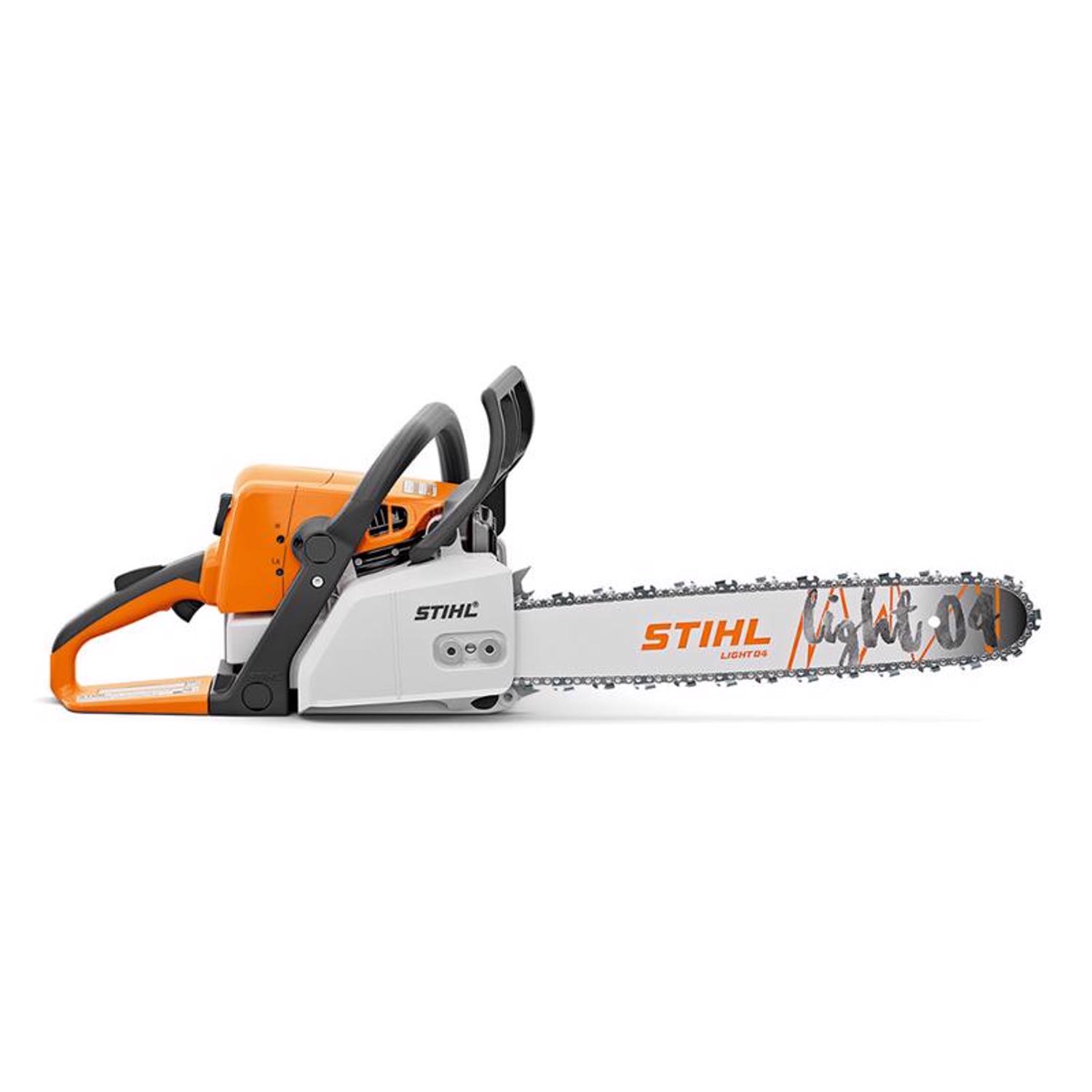
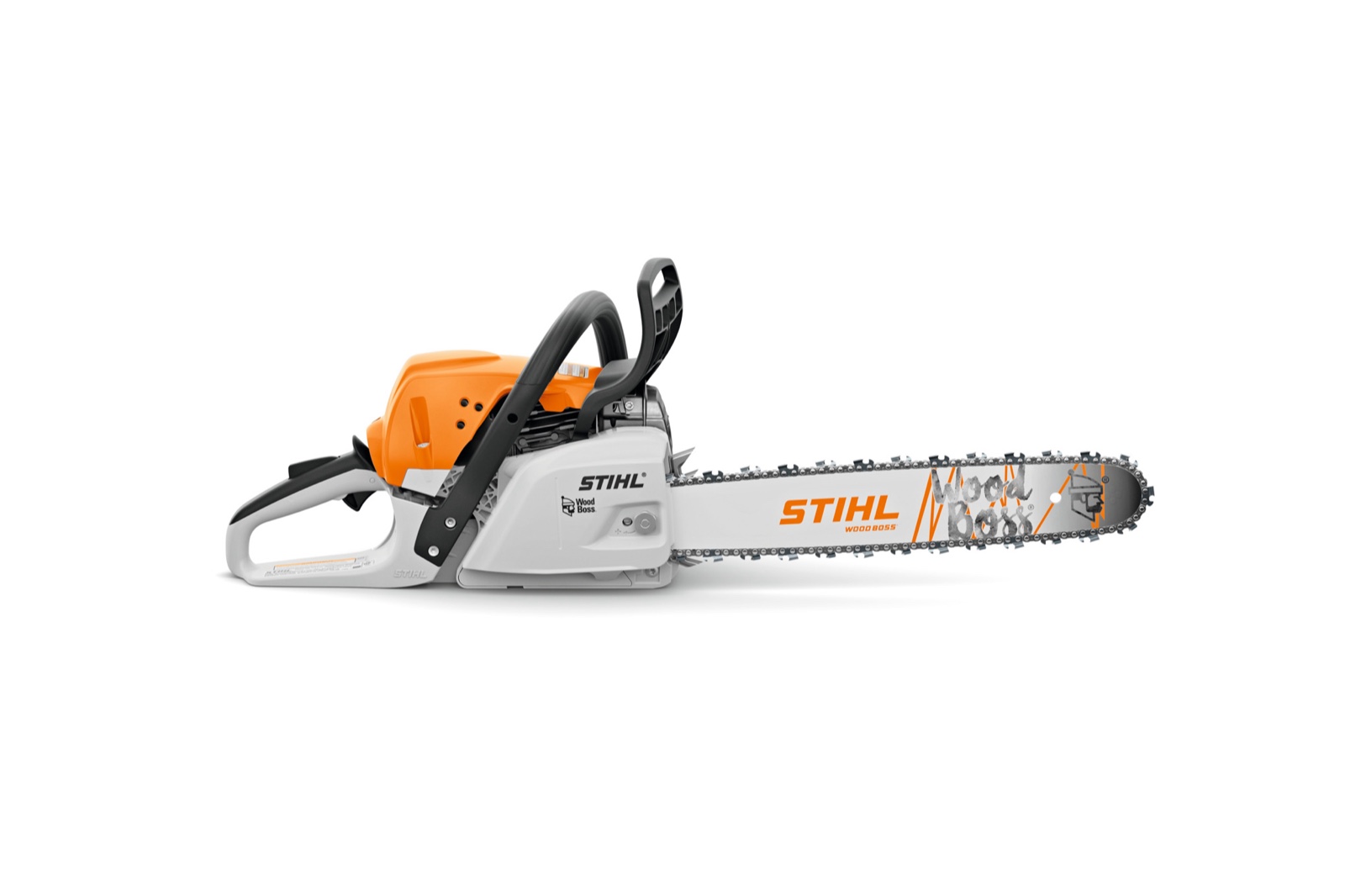
Stihl MS 251 Wood Boss

Stihl / Gas / Farm & Ranch

Stihl MS 251 Wood Boss

40cc class
45.6cc
2.2 kW rated
18 in
cuts to about 16 in
10.6 lb
powerhead only, without fuel (12.6 lb with the 18" bar and chain)
~$430
approx., with 18" bar and chain
See it at Stihl

Price and availability on Stihl's site may differ.

Successor to the MS 250 and the cheapest Stihl that a firewood cutter can live with: 45.6cc and 2.2 kW on an 18-inch bar for $430, at 10.6 lb dry. Long-term owners in firewood circles report six years of trailer loads with nothing worse than plugs and filters, and describe it as easy starting with power to spare for its size. The dissent is consistent too — it is a plastic clamshell saw where the MS 261 has a magnesium crankcase, it loses revs under sustained load in big softwood, and the factory chain dulls fast and burns if you lean on it. There are also scattered reports of piston failure inside the first weeks with warranty claims refused. Treat it as a two-to-four-cord-a-year saw: past that the 261 costs $330 more and lasts the difference.

Best for: Landowners cutting two to four cords a year who want real .325" firewood capability without stepping up to pro-saw prices.

Specifications

Engine class
40cc class (by displacement)
Engine
45.6 cc
Single-pass cut
about 16 in (bar minus 2)
Chain
.325" pitch / .063" gauge (26 RM3)
Weight
10.6 lb, powerhead only, without fuel (12.6 lb with the 18" bar and chain)
Use case
Farm & Ranch
Warranty
1-year consumer / 3-month professional (Stihl policy effective Jan 1, 2026)
Model
MS 251

Manufacturer figures except the engine class and single-pass cut, which are derived here. What each spec means

  • 45.6cc, 18" bar, $430
  • Replaces the MS 250
  • Clamshell, not a pro chassis

What owners like

  • 2.2 kW and a .325"/.063" chain — proper firewood gearing, not a narrow-kerf homeowner chain
  • 10.6 lb powerhead is light for 45cc; owners report full days without arm fatigue
  • Long-term owners in firewood forums report multi-year service on filters and plugs alone
  • 20% better fuel economy and about half the emissions of the MS 250 generation it replaces
  • $430 is roughly a third of what a pro 50cc Stihl costs

Common complaints

  • Plastic clamshell engine against the MS 261's magnesium crankcase — it will not take long, dirty workdays the same way
  • Owners report it drops revs and can die under sustained load in softwood
  • Factory bar and chain are the weak point: dulls and burns quickly when pushed
  • Scattered reports of piston failure in the first weeks with warranty claims denied
  • No M-Tronic — altitude and seasonal changes mean carburetor tinkering

What owners say

Read from owner discussions, long-term write-ups and dated retail reviews; nothing here was measured on this site.

The Wood Boss is the cheapest Stihl a firewood cutter can genuinely live with, and the owners who are happy with it stay happy for a long time. The reference report is a father and son who supplied two houses with hickory and oak firewood for almost twenty years on an MS 250 and a 251, both with 18-inch bars, never needing a skip chain because both saws would pull a full-house chain. Hardware-store staff who sell both say everybody who buys the cheaper MS 170 comes back for this one. Owners who keep it alongside bigger saws describe it as the light saw they grab for a quick job — fell under 12 inches, limb the big stuff once it is on the ground.

The faults are consistent and mostly knowable in advance. It floods at the slightest excuse; the rule owners repeat is never more than three pulls on choke, and the recovery drill is to put it in run, hold full throttle, pin it down and pull it twenty or thirty times. Cold winter starting is a separate and real complaint. Eighteen inches of bar is the ceiling and several owners say even that costs cutting speed — anyone asking about 20 inches and up gets told to buy a bigger saw instead, and one dealer told a buyer not to fell anything over 10 inches with it. There is a visible tail of early failures: a seized engine at two years in hardwood-only use, a blown starter on a new saw, and one owner simply tired of small parts loosening and falling off. Oiling complaints cluster too — scorching bars, thick oil seeping around the sprocket cover, an oiler that pumps with the bar off but does not deliver with it on. If you are buying new, the version with the tool-less chain tensioner is the one experienced owners tell you to skip.

Where it sits is clear from what owners do next. Versus the MS 250 it replaced, the 251 is the better buy for two concrete reasons — a pleated canister air filter that actually seals where the 250's felt filter let trash past, and the deletion of the quick-adjust bar whose moulded plastic hook used to total the saw when it snapped. Versus the MS 271 and 291 Farm Boss, a dealer will push you up if you are felling regularly. Versus the MS 261, owners are unanimous that the 261 is the saw worth saving for if you cut past a few cords a year: same rough weight, a magnesium case, far more torque under the bar. And the cross-shop that comes up most often is Echo — the CS-4910 and the CS-590 Timberwolf, which owners repeatedly say they wish they had bought instead at this price, partly for the five-year consumer warranty and partly because they do not need coaxing to start. Owners who keep the 251 and want more out of it fit a 7-tooth rim sprocket from an MS 211 or convert to 3/8 bar and chain, which several describe as transforming how it cuts.

What owners like

  • The long-service reports are the strongest argument for it. One owner and his father supplied two houses with firewood — mostly hickory and oak — using an MS 250 and a 251 with 18-inch bars for almost twenty years, never needed a skip chain because both saws would pull a full-house chain, and only ever had to take their time on really dense wood. Another says it cuts like a house afire and handles 2-foot-plus trees, hickory included.
  • It is the saw shop staff steer people to. An employee at a hardware chain that sells Stihl says everyone who buys the MS 170 comes back and buys the Wood Boss, and that he would tell a buyer to save up and get it from the start. Owners of both agree: the 170 is lighter and easier all day, but the 251 "doesn't generally care what he is cutting or how big".
  • Owners who use it the way it is sold describe it as the saw they reach for without thinking. One who inherited his from his father uses it to fell under 12 inches and to limb bigger trees once they are down, calls it light and the saw he grabs for a quick job, and has a 291 and a 362 in the same shed.
  • The upgrade from the MS 250 is real and specific, not marketing. A former dealer mechanic points to the air filter: the 250's clip-on felt filter is notorious for not sealing and letting trash past, while the 251 uses a pleated canister that twists on a quarter turn. The 251 also dropped the 250's quick-adjust bar with the delicate moulded plastic hook that, when it broke, effectively totalled the saw. It is a strato engine with roughly 20% better fuel economy than the generation it replaced.
  • It responds well to cheap, well-known modifications. Owners fit a 7-tooth rim sprocket from an MS 211 to raise chain speed, and the conversion that gets the most enthusiasm is going from the factory .325 to 3/8 bar and chain — one owner calls it a night-and-day difference and says it then cuts a 14-inch log like butter, at the cost of a little chain speed. Non-safety .043-gauge 16-inch 3/8 low-profile chains are available from third parties for owners who do not want Stihl's green chain.
  • Parts, diagrams and dealer coverage are everywhere, which matters on a saw this common. Owners trade exact part numbers in these threads — the .325 x 7 spur sprocket, the needle bearing that often needs replacing with it, the WTE-series carburetor — and point each other at the illustrated parts list rather than guessing.

Common complaints

  • It floods on the slightest provocation, and this is the single most repeated complaint. The rule owners pass around is blunt: the 250 and 251 are incredibly easy to flood, so never pull more than three times on choke. The recovery is a known drill — switch to the run position, hold the trigger at full throttle, pin the powerhead down with a knee and pull it over twenty to thirty times to push air and almost no fuel through the cylinder. One buyer's new saw would not start at the dealer either; the shop fought it for half an hour and the saw then kept dying at idle for the first few hours of use.
  • Hard winter starting comes up independently of flooding. The owner who praises how it cuts also says it has frankly been a pain to start in winter, and the broader complaint from owners of several brands is that Stihl's starting procedure is unforgiving — one put it as needing a black belt in two-strokes to get about half the line-up going.
  • There are real failures inside the first couple of years. One owner cutting nothing but hardwood had the engine seize at two years. Another blew the starter on a new 251 and says that for the money he was not impressed and should have bought an Echo. A third says he is tired of the little miscellaneous parts breaking or working loose and falling off, and went shopping for an Echo as a replacement primary saw.
  • Bar length is where owners draw a hard line. Eighteen inches is the practical ceiling and several say even that costs you cutting speed; the advice to anyone asking about 20, 24 or 25 inches is to buy a bigger saw rather than hang a longer bar on this one. A dealer told one buyer he would not recommend the 251 for felling anything over 10 inches in diameter. An owner in Poland bucking 25-inch birch found it really struggling, and one doing a lot of cutting said plainly that the saw lacks power and moved up.
  • Oiling and bar heat generate their own cluster of owner posts: a bar getting hot enough to burn the embossed markings off, a new saw dropping thick black oil and seeping around the sprocket cover instead of throwing a spray, and an oiler visibly pumping with the bar off but somehow not getting oil into the bar with it on. These are separate owners describing the same symptom pattern.
  • If you buy the C-BE version with the tool-less tensioner, know what you are getting. One owner threw the chain on the first small tree he cut and wrote the saw off entirely as a result; the replies split between people saying the system is fine if you read the manual and people saying to buy the parts to convert it to conventional bar nuts. The general advice in these threads from experienced owners is to avoid the easy-tension and easy-start conveniences on any Stihl.

Questions owners ask

It flooded and now it will not start at all. How do owners clear it?

The drill gets posted every time. Flip the saw to the run position — not high idle, not choke — make sure the ignition is on, hold the trigger at full throttle, pin the powerhead down securely with a knee and pull it over twenty to thirty times. That pushes a great deal of air and almost no fuel through the cylinder and clears it; be ready for the saw to actually fire somewhere around a dozen pulls in. The prevention is the part owners stress hardest: the 250 and 251 flood extremely easily, so never pull more than three times on full choke, and switch to half choke the moment it burps.

Can I fit a 20-inch or longer bar for a few big trees?

Owners say no, repeatedly and without much patience. Eighteen inches is the ceiling and several argue even that costs you noticeable cutting speed; one who asked about a 24-inch bar with a skip chain for a handful of big trees was told flatly that if he wants to run a 25-inch bar he needs an MS 400 or larger. The people who run 18 inches successfully — including the pair who cut hickory and oak for two decades — pair it with a sharp full-chisel chain and accept taking their time in dense wood. Anyone bucking 25-inch hardwood with it reports the saw really struggling.

The bar and chain get scorching hot. Is the oiler bad?

Several owners describe exactly this, including one whose bar got hot enough to burn the embossed markings off while the oiler appeared to be working. The pattern worth checking is the one two owners both hit: the oiler visibly squirts plenty with the bar removed, but oil never reaches the bar once it is mounted — so look at the oil port alignment and the bar's oil hole, not just the pump. One owner found thick black oil dribbling out and seeping around the sprocket cover instead of throwing a spray, and a full teardown and clean did not fix it. Chain tension and bar condition matter too: owners point to burrs on the bar rails, which widen the bar beyond the chain and create drag, and recommend dressing them flat with a file.

Is the MS 251 actually better than the older MS 250 people keep recommending?

A former dealer mechanic who worked on both says yes and gives two reasons. The 250's air filter is a clip-on felt type notorious for not sealing properly and letting debris past, while the 251 uses a pleated canister that twists on a quarter turn. And the 251 dropped the 250's quick-adjust bar with the delicate moulded plastic hook that effectively totalled the saw when it broke. Technically the 251 is a strato design with about 20% better fuel economy; the 250 breathes more freely, which is why some old hands still prefer it, but owners say the difference in the cut is hard to feel unless you are very experienced.

Is it enough saw for four or five cords a year?

It is at the edge. Owners cutting two to four cords report years of service on filters, plugs and chains. Past that the complaints change tone: one owner doing a lot of cutting with eight trees waiting said the saw simply lacks power and went shopping with a $1,500 budget; another found 25-inch birch a struggle. The answer owners give most often is to keep the 251 as the small saw and add 10cc or more above it, and the saw they name is the MS 261 — same ballpark weight, magnesium case, noticeably more torque so it does not bog. The Echo CS-590 comes up just as often as the cheaper route to the same capability.

Which chain and gauge should I run on it?

The factory setup is .325 pitch on .063 gauge with Stihl's green safety chain, and owners' first move is usually to get the dealer to swap to the yellow full-chisel chain, which cuts faster but dulls quicker and is less tolerant of dirt — semi-chisel is the better choice if your wood is dirty. Keeping at least two sharp spare chains and a spare bar is advice that comes up in nearly every thread about this saw, because a bound bar ends your day otherwise. Owners who want more speed convert to 3/8 pitch with a 7-tooth rim sprocket and describe the result as a different saw; third-party .043-gauge 3/8 low-profile chains exist for anyone who does not want safety chain at all.

Drawn from 12 owner threads and long-term reviews, kept on file with this entry.
Compare the Stihl MS 251 Wood Boss

Nearest alternatives

More from Stihl
Stihl MS 250

Stihl / Gas

~$430

Stihl MS 250

40cc class
45.4cc
engine
18 in
bar
10.1 lb
bare

Budget-minded firewood cutters who want the most cutting power per pound and per dollar in Stihl's homeowner line and will tolerate old-school starting ritual.

Homeowner4/5 Ace Hardware
Stihl MSA 220 C-B

Stihl / Battery

~$450

Stihl MSA 220 C-B

40cc class (by bar)
36V
pack
16 in
bar
10.4 lb
bare

Property owners already in (or committing to) Stihl's AP battery system who want a quiet 16-inch saw for storm cleanup and firewood under 14 inches.

Farm & Ranch
Stihl MSA 200 C-B

Stihl / Battery

~$410

Stihl MSA 200 C-B

40cc class (by bar)
36V
pack
14 in
bar
6.4 lb
bare

Owners already stocked with AP batteries who want a light, quiet saw for limbing and storm work rather than a day's production cutting.

Farm & Ranch

Sources for this entry