Stihl Chainsaws
Stihl has 13 saws on ChainsawRanker, priced from $220 to $2,680. The highest-rated Stihl pick is the Stihl MS 170 at 4.5★. Compare the full lineup below.

Stihl
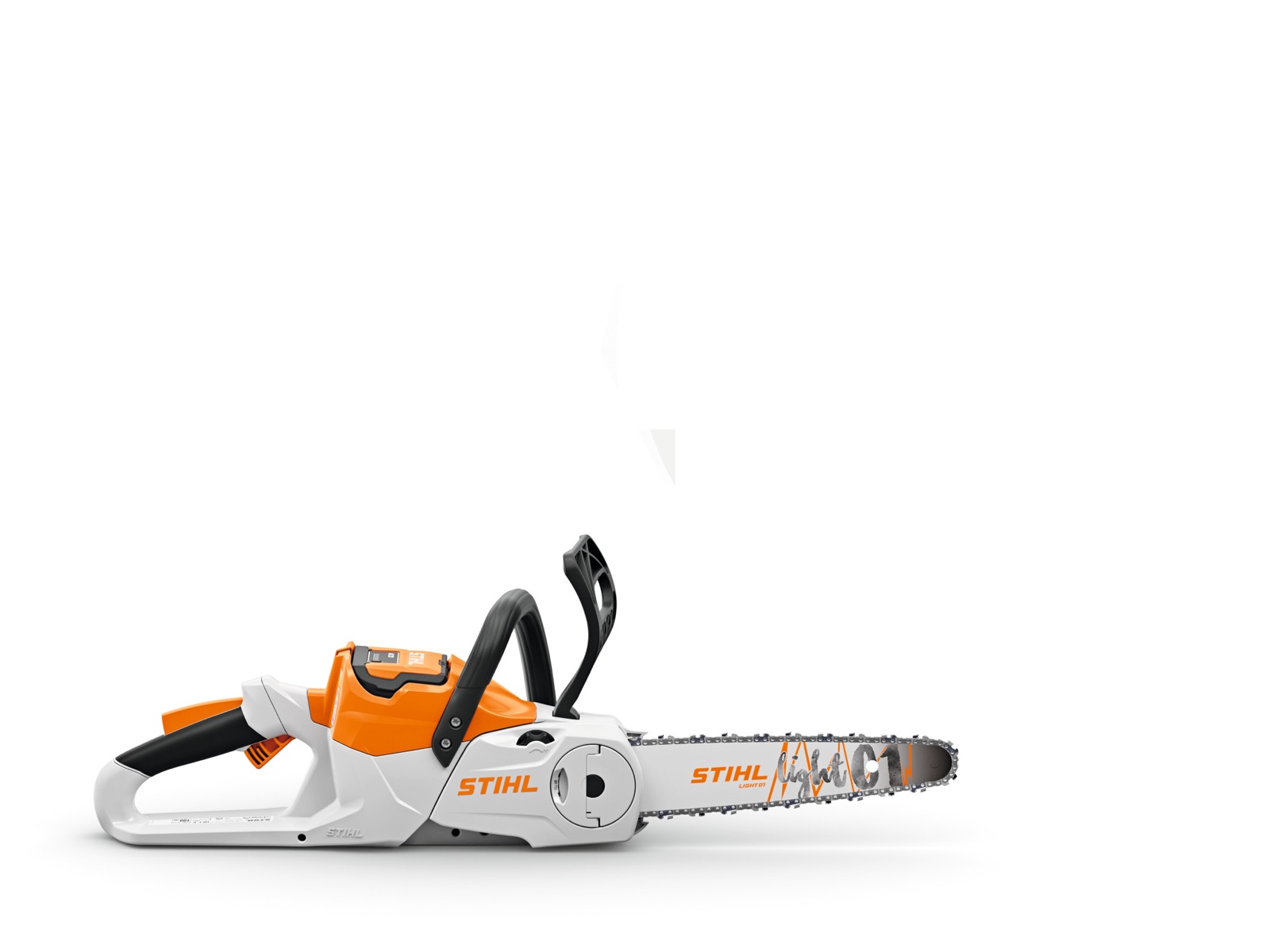
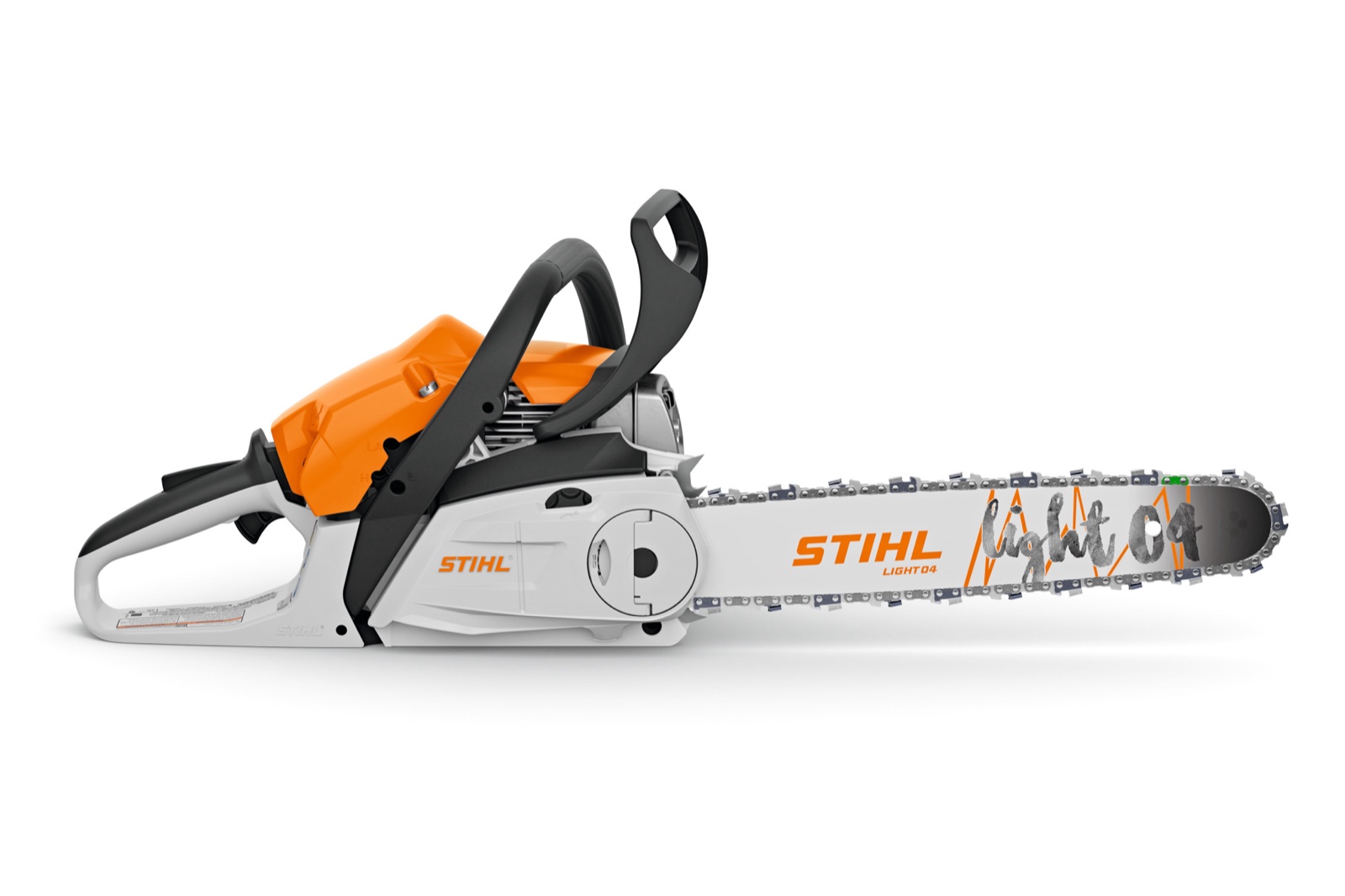
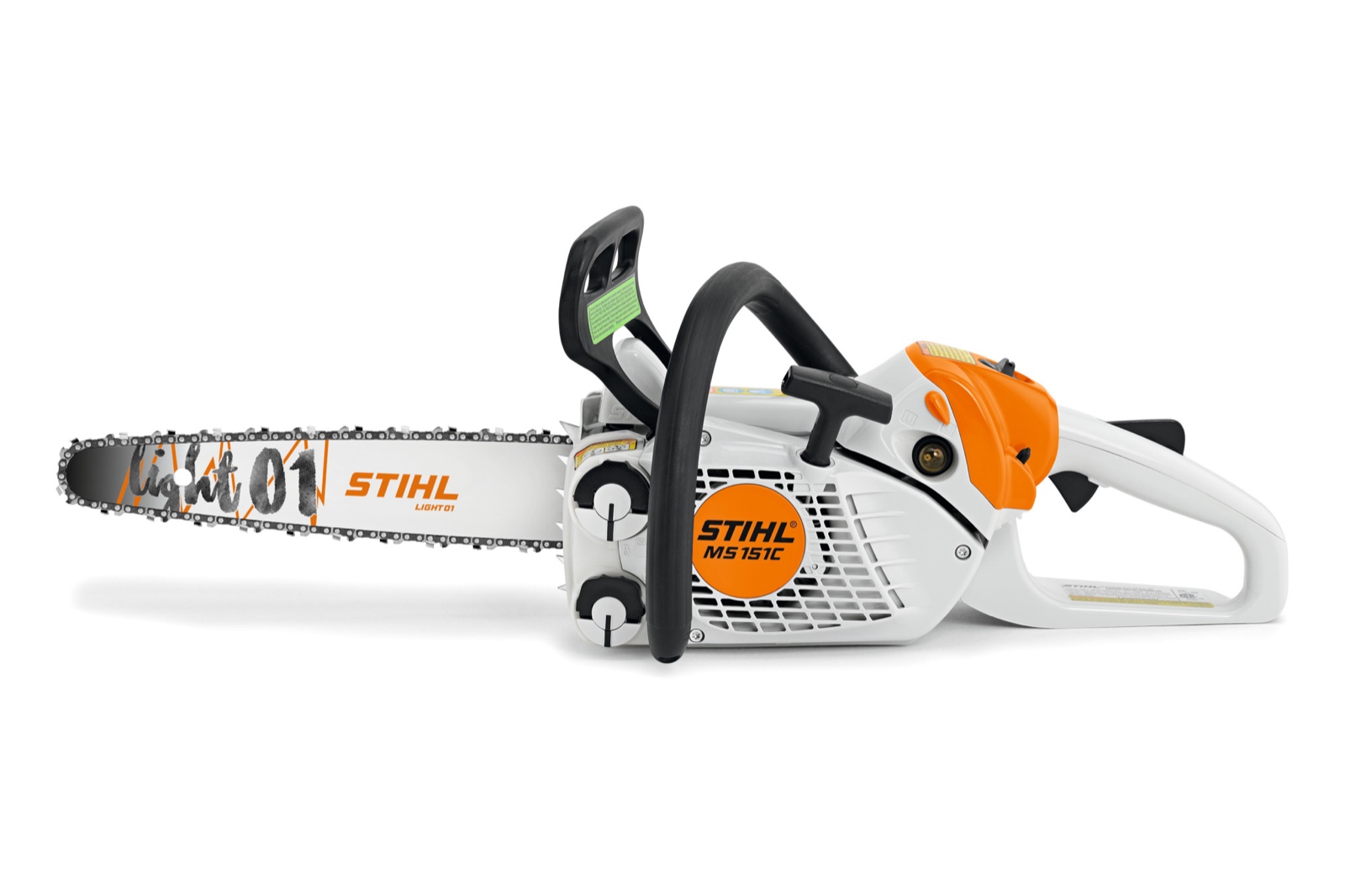
Stihl MS 170
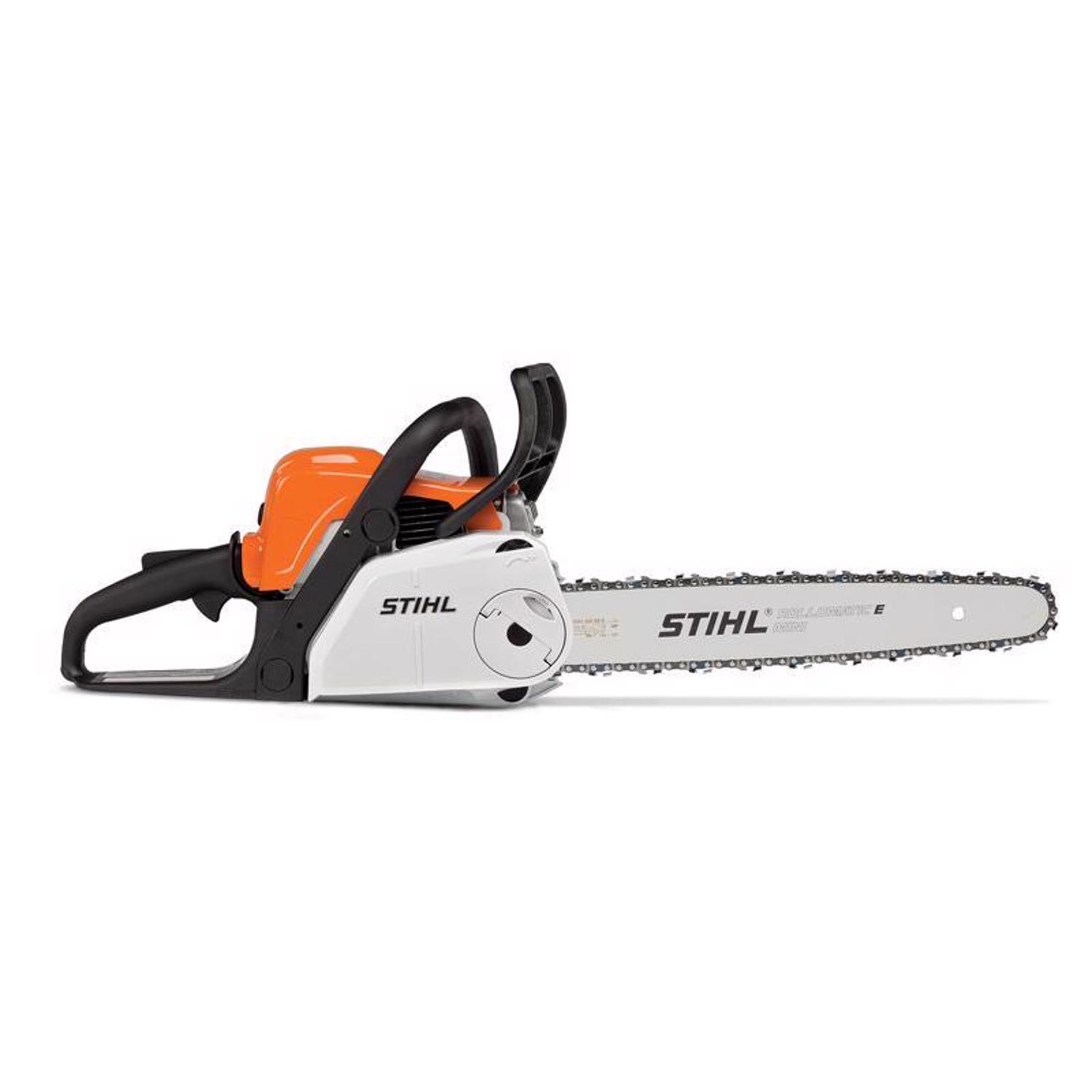
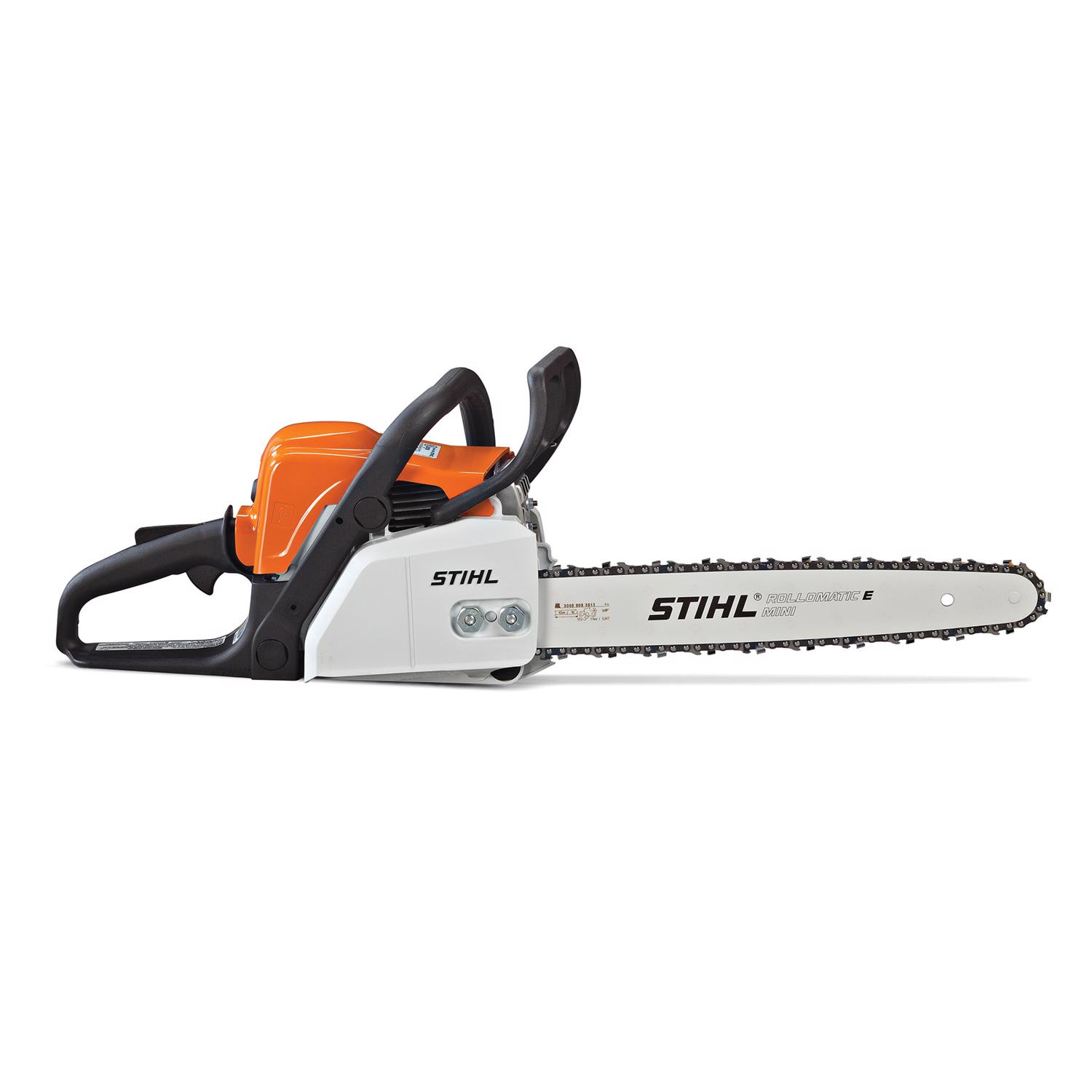
The cheapest way to get a real Stihl in your garage, and the saw dealers hand to first-time buyers who need to clean up storm limbs a few weekends a year. At 8.6 pounds for the powerhead it's genuinely easy to run all afternoon, and the 4,400+ Ace Hardware reviews averaging 4.5 stars back up the 'thousands of happy owners' vibe you see in forum threads. But owners are blunt about the ceiling: this is a light pruning and limbing saw, not a firewood saw, and it gets slow and sluggish once logs pass about 10-12 inches. The cost-cutting shows up close — a basic carburetor, minimal anti-vibration, and a bar-swap chain tensioner instead of the side-access adjuster on pricier models. Stihl has also started rolling out the updated MS 172 alongside it, so the 170 is a proven but aging design. For under $230 with a 16-inch bar, most homeowners decide the limitations are a fair trade.

Stihl
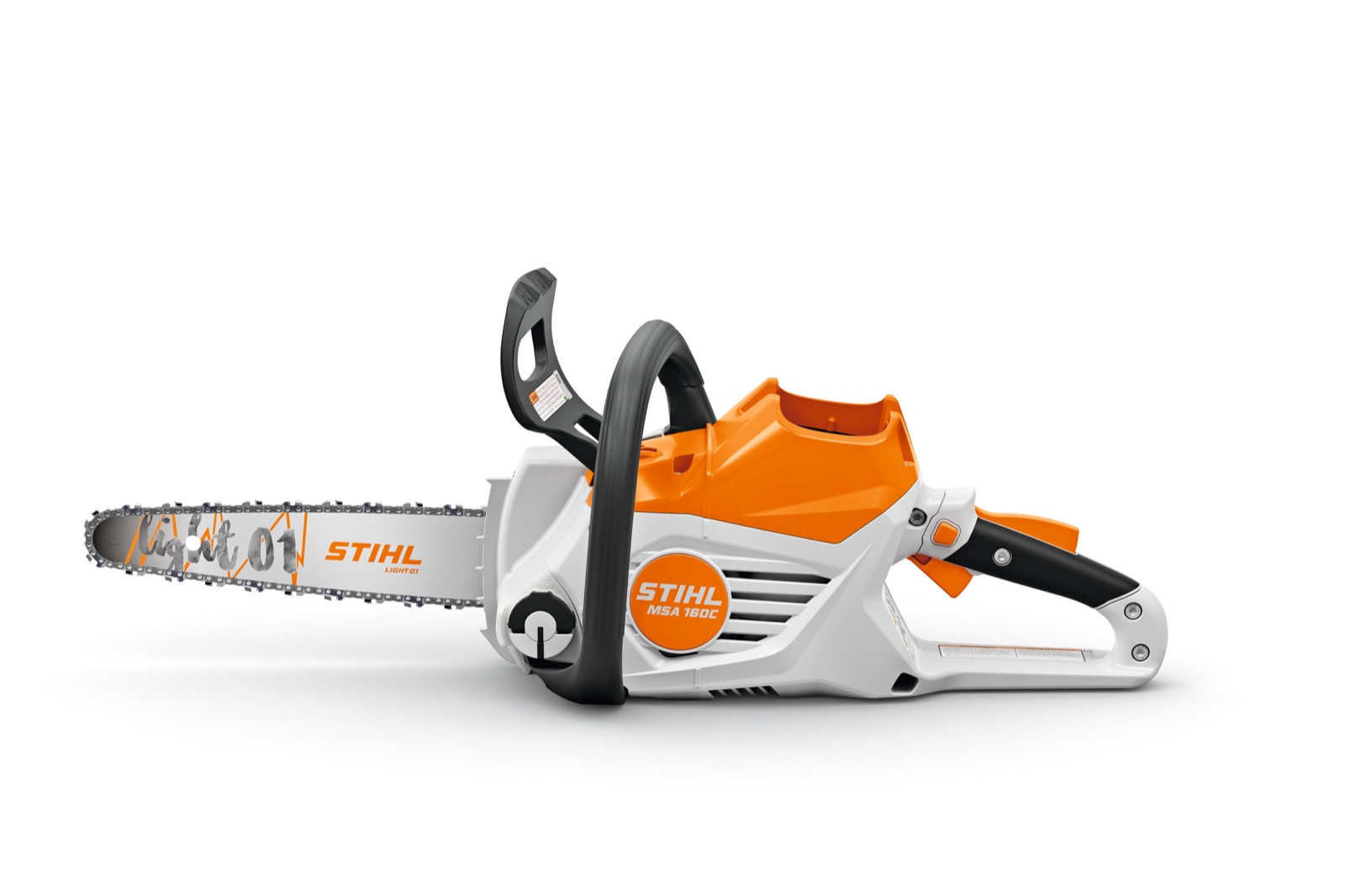
Stihl MS 180 C-BE
The MS 170's more comfortable sibling — same compact class, but with the Easy2Start recoil system and a tool-free chain adjuster that make it the pick for owners who hate yanking pull cords and fishing for scrench wrenches. The Easy2Start spring assist genuinely works; reviewers note the cord pulls about two-thirds easier than a standard recoil, which is why this saw shows up so often in recommendations for older owners and smaller-framed users. The 31.8cc engine has a touch more grunt than the 170, and owners have cut plenty of firewood with it, though it's still happiest under 14-inch wood. The gripes cluster around the convenience features themselves: some old-school owners actively dislike the EZ tensioning wheel, and there are recurring reports of new chains stretching and derailing until you learn to re-tension obsessively during the first tanks. At $319.99 you're paying about $100 over the MS 170 purely for convenience — a trade the 1,300+ Ace reviewers largely endorse at 4.5 stars.

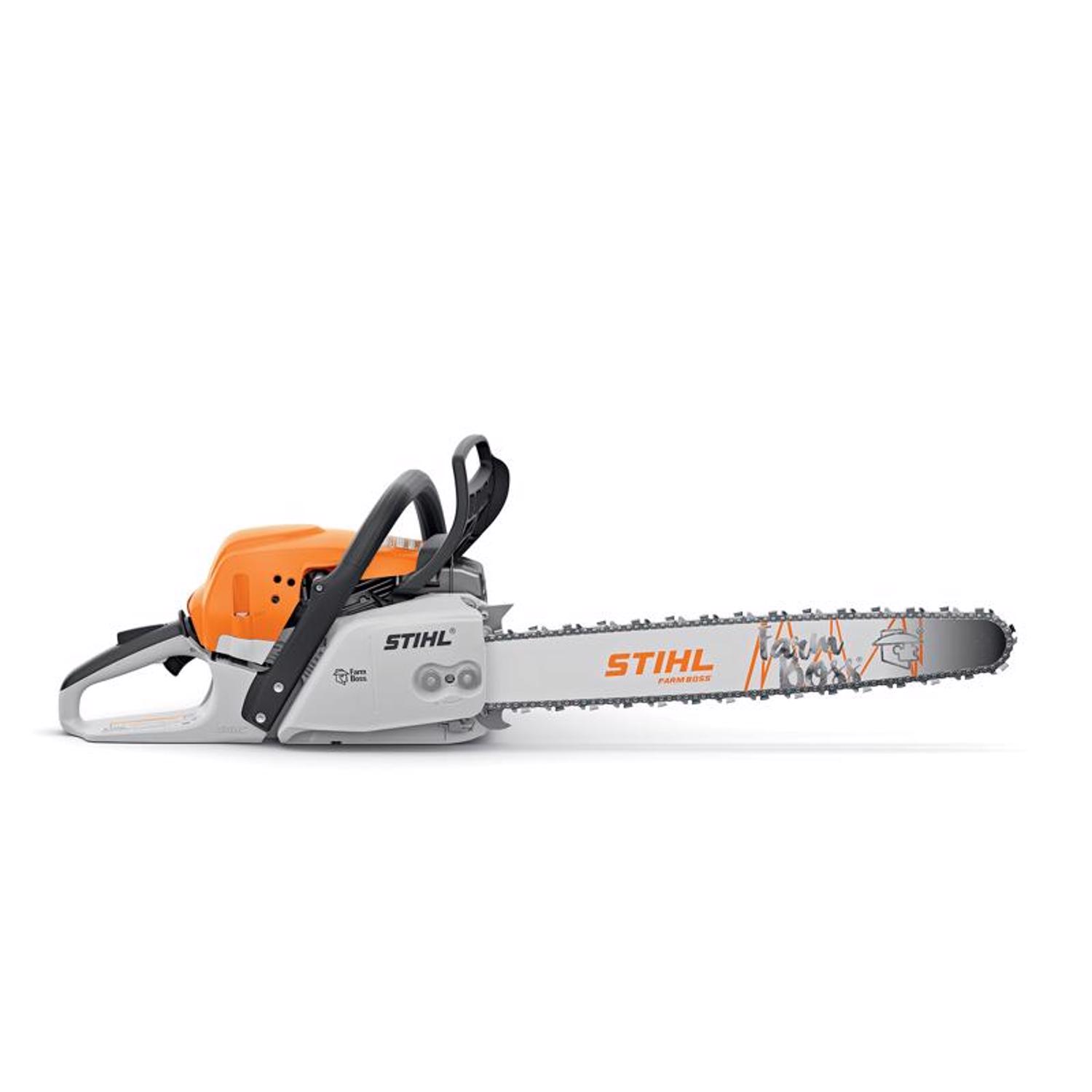
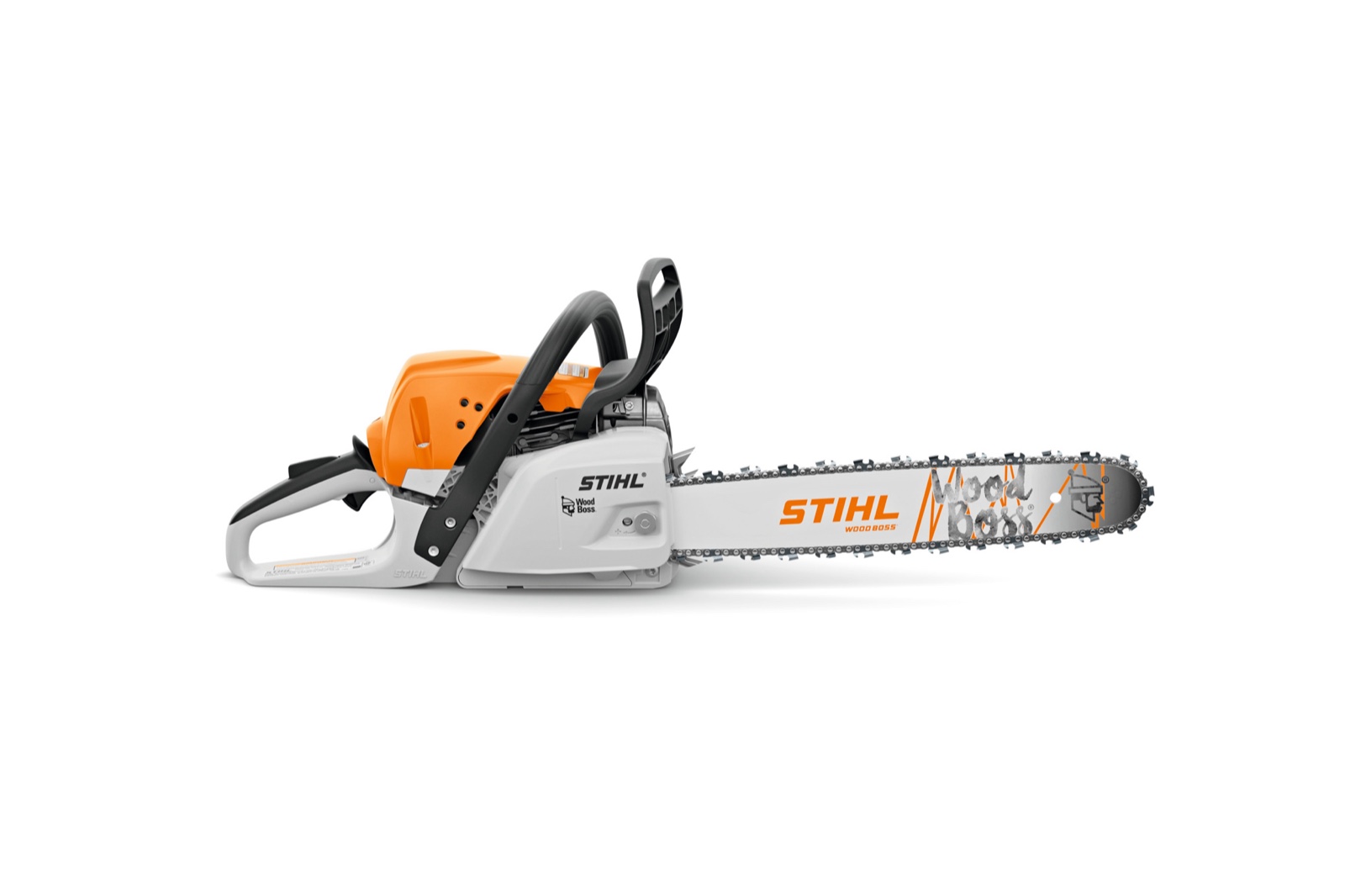
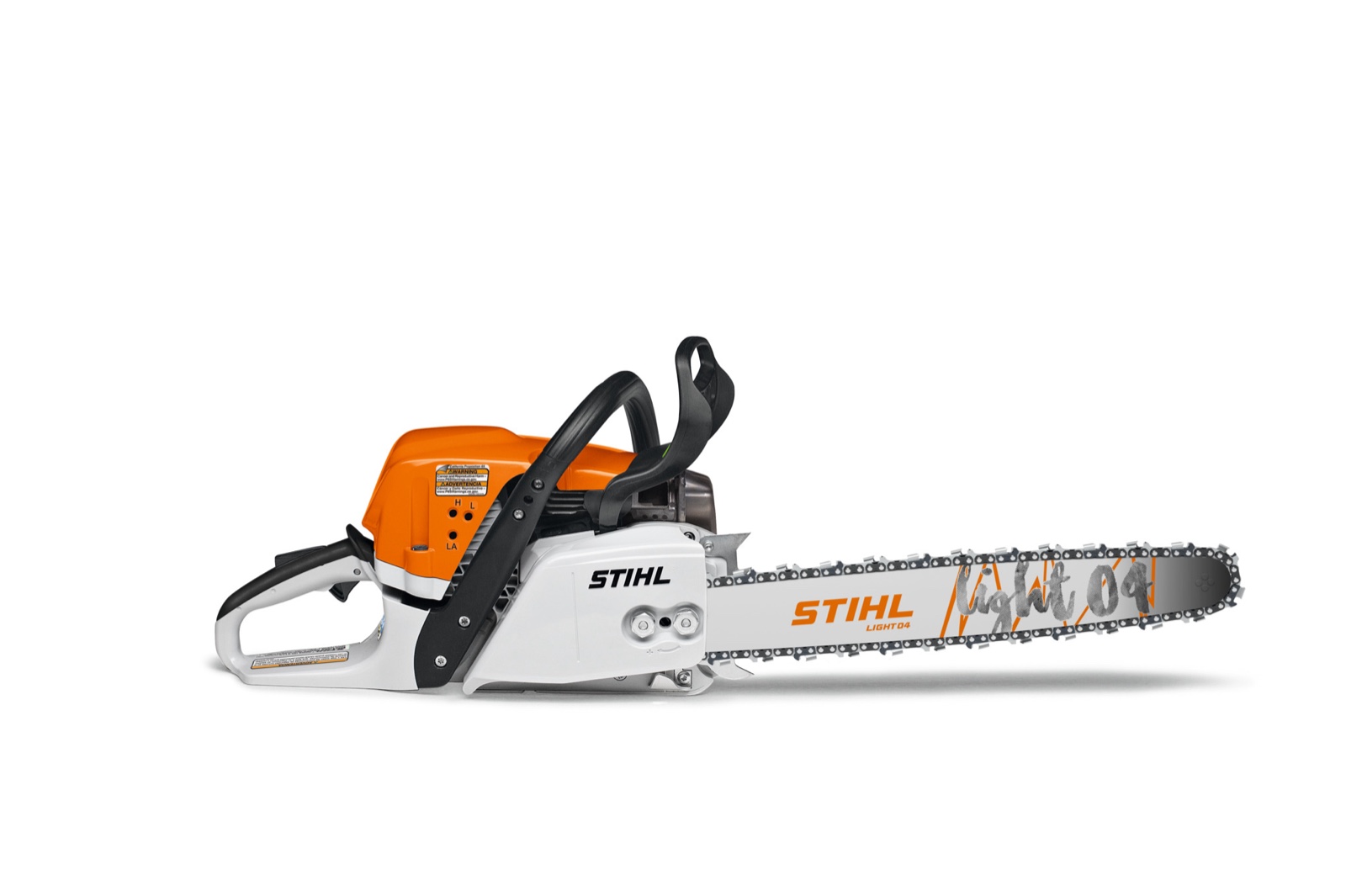
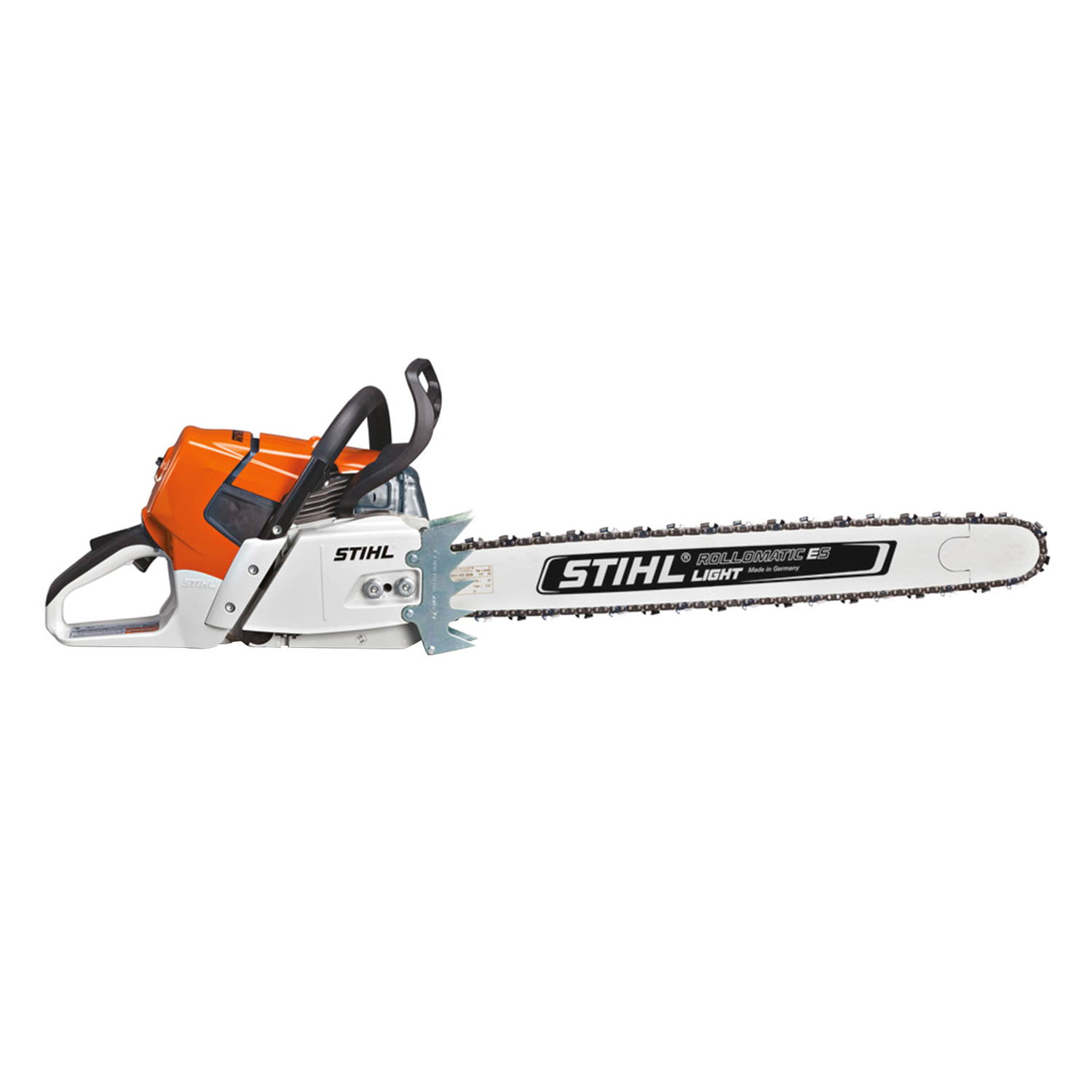
The Farm Boss is probably the most-recommended 'my first serious saw' in America, and its 4.5-star average over 2,850+ Ace reviews shows the formula works: 50.2cc, a 20-inch bar, modern spring anti-vibration that owners say leaves their hands fresh after a full day, and a fuel-efficient engine that runs 20% longer per tank than the MS 270 it replaced. There's a whole ArboristSite thread literally titled 'Why do so many guys bad mouth the MS 271' — the answer is that pros dismiss it as a heavy clamshell homeowner saw with mediocre power density (12.3 lbs for only 2.6 kW, about what a 10-pound pro 50cc saw makes). Both sides are right. It's slower than an MS 261 and not rebuildable the way a pro saw is, and OEM top-end parts are expensive with little aftermarket support. But for a landowner cutting a few cords a year, it's smooth, dependable, and roughly half the price of the pro alternative — which is exactly why dealers can't keep them on the wall.

Stihl
Stihl MS 250
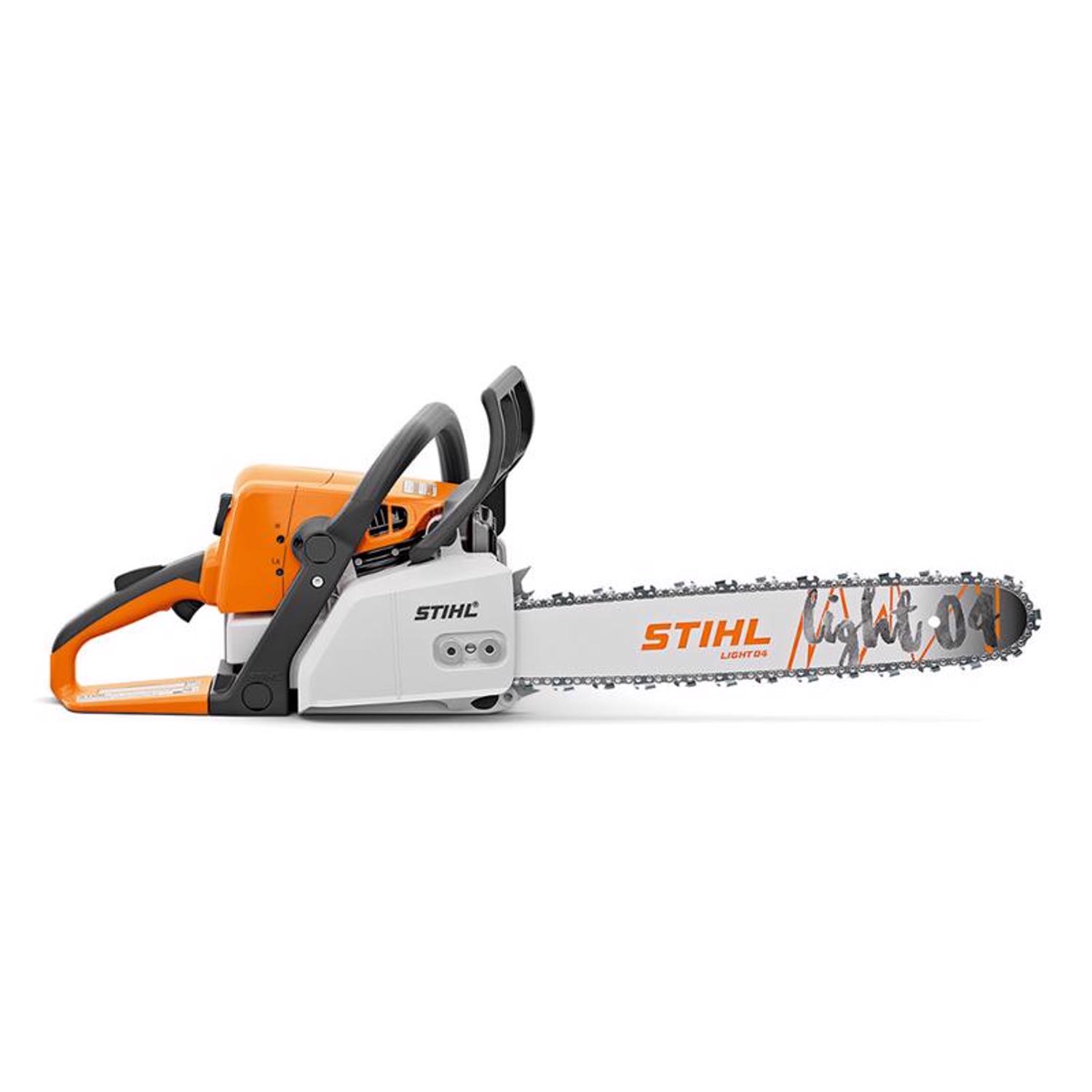
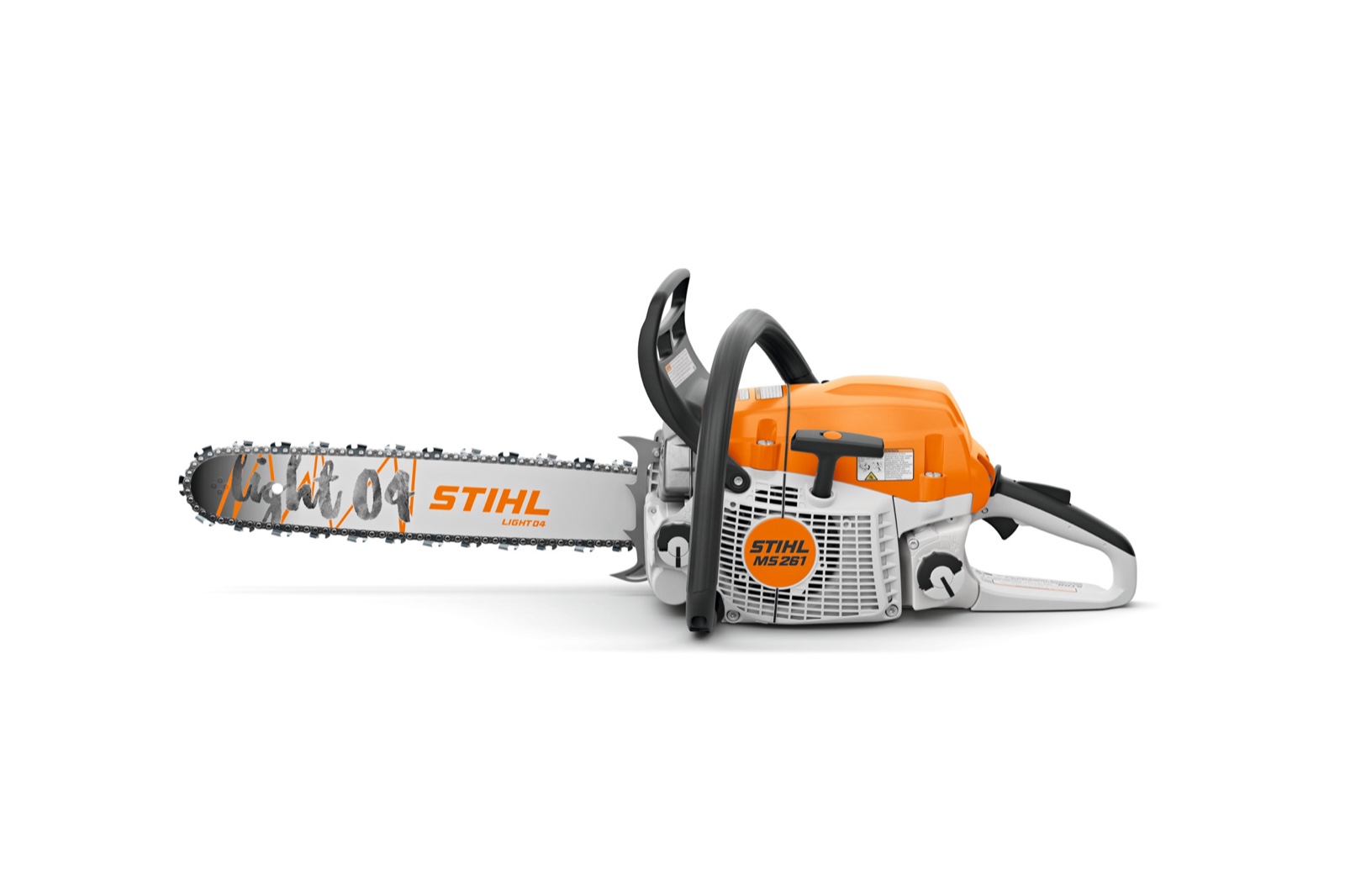
A 25-year-old design that refuses to die because the math still works: 45.4cc pulling an 18-inch bar from a 10.1-pound powerhead, for under $450. Firewood cutters love the power-to-weight — it out-cuts every saw below it in the Stihl lineup by a wide margin and handles real firewood duty the 170/180 can't. The catch is that it's an old-school saw in every sense: no fuel primer, dated air filtration, and a reputation on OPE forums for being cold-blooded and hard-starting when the carb gets finicky, with more than one owner saying 'when it runs well it's a great saw' through gritted teeth. The anti-vibration system is also a generation behind, so your hands feel more buzz than on the spring-mounted farm saws. Its 4.0-star average across 2,600+ Ace reviews is the lowest of Stihl's homeowner line — starting complaints drive most of the one-star reviews — but the owners who learn its ritual keep them running for decades.

Stihl
Stihl MS 291
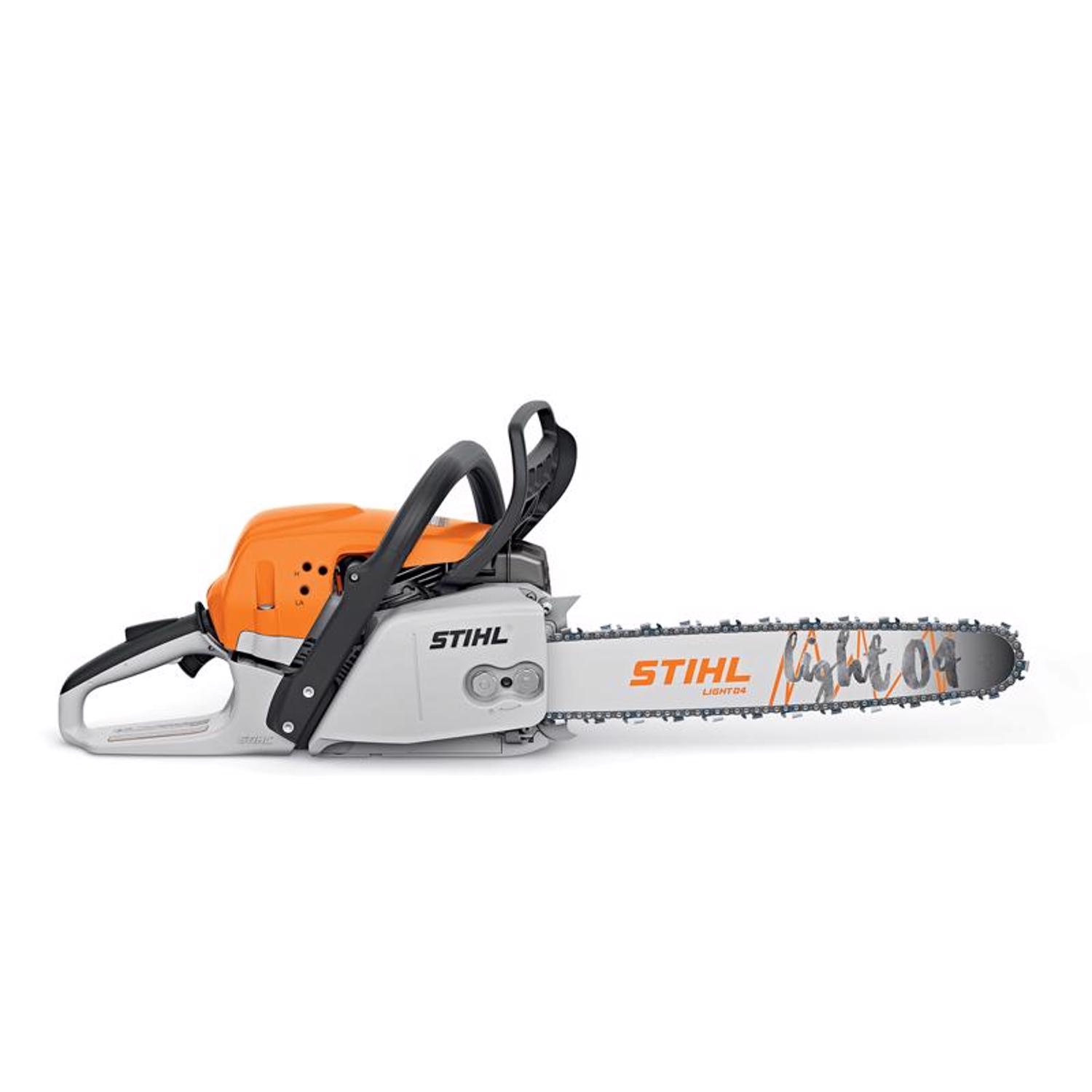
The MS 291 is the Farm Boss's bigger brother — same 12.3-pound clamshell chassis, but bored out to 55.5cc and 2.8 kW, which buys you a quarter horsepower and noticeably better pull on a 20-inch bar in hardwood. ArboristSite regulars who like this class generally steer buyers here over the 271: it's essentially the same saw with more engine, and the fuel-sipping design and five-times-longer air filter life carry over. The criticisms carry over too. Pros still call it a heavy homeowner clamshell, OEM parts (especially the top end) are expensive, and there's essentially no aftermarket support — one owner grumbled his 291 spends too much time on the bench. The real debate is value: at $619.99 you're only $80 from where used MS 362s and other pro saws start appearing, which is exactly the 'new 291 vs used 362' thread that keeps recurring on the forums. If you're set on new with a warranty, though, it's the strongest saw in Stihl's farm line.

Stihl
Stihl MS 362 C-M
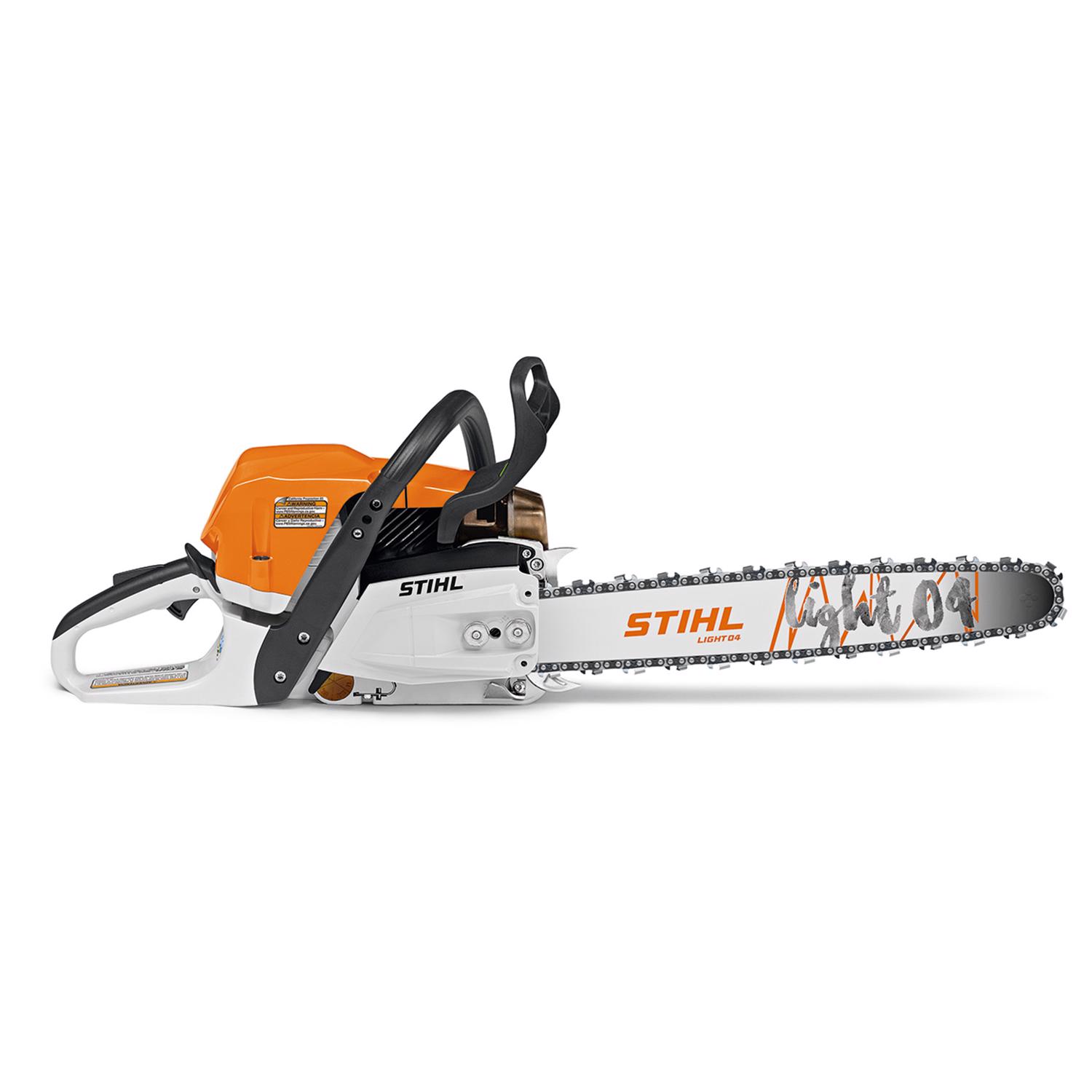
The entry point to Stihl's real pro saws, and the model forum veterans call the ideal all-day firewood saw: a magnesium-case, fully rebuildable 59cc engine making 3.5 kW from the same 12.3-pound powerhead weight as the plastic farm saws below it. The M-Tronic engine management is the quiet hero — it self-tunes for altitude, temperature, fuel, and a dirtying filter, so there's no carb screwdriver ritual, and owners consistently describe it as easy-starting and smooth. The honest knock from ArboristSite is that it's no longer the power-to-weight king: bury a 20-inch bar in big oak and it works for it, and the 462 makes vastly more power for barely half a pound more, which is why 'just save up for the 462' is a stock reply in every 362 thread. Pricing has also crept past $1,100, roughly double a Farm Boss. It remains the sweet spot for cutters who want pro durability and serviceability in a mid-size package — just know the pros above it cast a long shadow.

Stihl
Stihl MS 462 C-M
The saw that made West Coast fallers trade in their 044s and 461s: 72.2cc and 4.4 kW in a 13.2-pound powerhead that Stihl bills as the lightest it has ever built in this class, and owners on ArboristSite describe with phrases like 'monster torque' and 'game changer'. The M-Tronic metering keeps it in perfect tune from sea level to mountain jobs, and users bucking hardwood with 25- and 28-inch bars report it never feels short of breath — several admit their 660-class saws now sit unused because the 462 does the work at two pounds less. Complaints are scarce and mostly economic: the price has marched steadily upward (Ace lists the 25-inch at $1,619.99), and weekend cutters frequently confess they love it but reach for it less than expected because it's simply more saw than most firewood requires. A few owners cross-shop the lighter MS 400 and wonder if 66cc would do. As a do-everything big saw for felling and heavy bucking, though, forum consensus is about as unanimous as chainsaw forums get: no buyer's remorse.

Stihl
Stihl MS 500i
The first fuel-injected chainsaw ever sold, and the one saw that makes grown professionals gush: 79.2cc, 5.0 kW, and a 13.9-pound powerhead give it what Stihl claims is the best power-to-weight ratio on the market. The injection system replaces the carburetor entirely — it reads air pressure and temperature and meters fuel electronically, so it lights off in a couple of pulls hot or cold and owners report instant, hesitation-free throttle response that carbureted saws can't match. ArboristSite owner threads are full of people who sold their other big saws after buying one; more than one homeowner splurger calls it the best saw they've ever run. The gripes are specific and consistent: it drinks fuel hard, fine dust can sneak past where the plastic filter housing attaches, a handful of high-hour owners report warm-stall quirks, and the price has ballooned roughly $500 since launch to about $1,779.99 with a 25-inch bar. There's even a contrarian 'flagship saw disappointing' thread — but it's an island in a sea of five-star sentiment. If money were no object, this is the saw most of the forum says they'd grab.

This is the 90cc benchmark — the saw West Coast fallers and Alaskan-mill users on ArboristSite treat as the default answer for big wood. The M-Tronic computer handles tuning at any altitude or on any fuel, and owners consistently report it pulls a 28-32 inch bar buried in fir or oak without complaint while weighing 16.4 lbs, genuinely good power-to-weight for the class. The recurring debate in owner threads is whether you actually need it: MS 462 owners argue their saw does 90% of the work at 3 lbs less, and most firewood cutters concede the 661 only earns its keep in timber over 30 inches or on a mill. Real gripes: the price has climbed to roughly $1,850, it drinks fuel fast in long cuts, and Stihl's gas-saw warranty is a stingy 1 year consumer / 3 months commercial. Dealer-only distribution means no retailer review aggregates exist, but forum consensus over a decade is about as unanimous as chainsaw opinions get.

Stihl
Stihl MS 881 Magnum
The biggest production chainsaw you can buy new — 121.6cc and 8.6 hp — and owner threads are honest that almost nobody needs one. The people who do (slabbing-mill operators, storm crews facing 4-foot trunks, big-timber fallers) describe torque that simply doesn't stall: it pulls .404 chain on a 36-41 inch bar through hardwood at a steady, unhurried pace. Milling forums treat it as the safe choice over the 661 for 36-inch-plus slabs because it stays out of the RPM range where smaller saws cook themselves. The gripes are what you'd expect: 21.4 lbs before you add a 3-foot bar, a cold-start flooding ritual owners learn the hard way, an old-school carburetor (IntelliCarb, not M-Tronic) that may need seasonal retuning, and a price around $2,680 that makes used MS 880s tempting. Chain speed is modest, so it feels slow limbing — this is a torque instrument, not a firewood saw.

Stihl
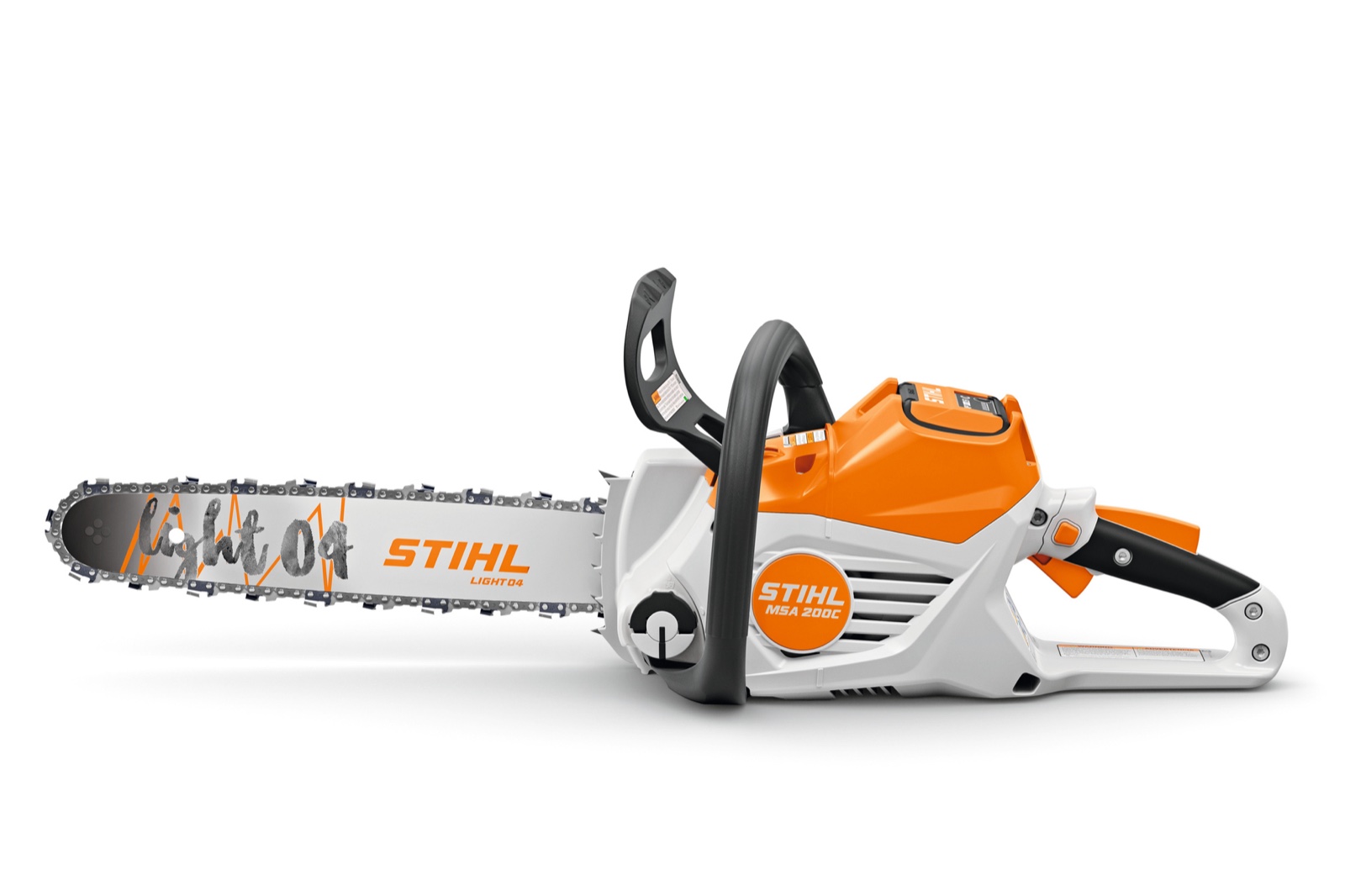
Stihl MSA 220 C-B
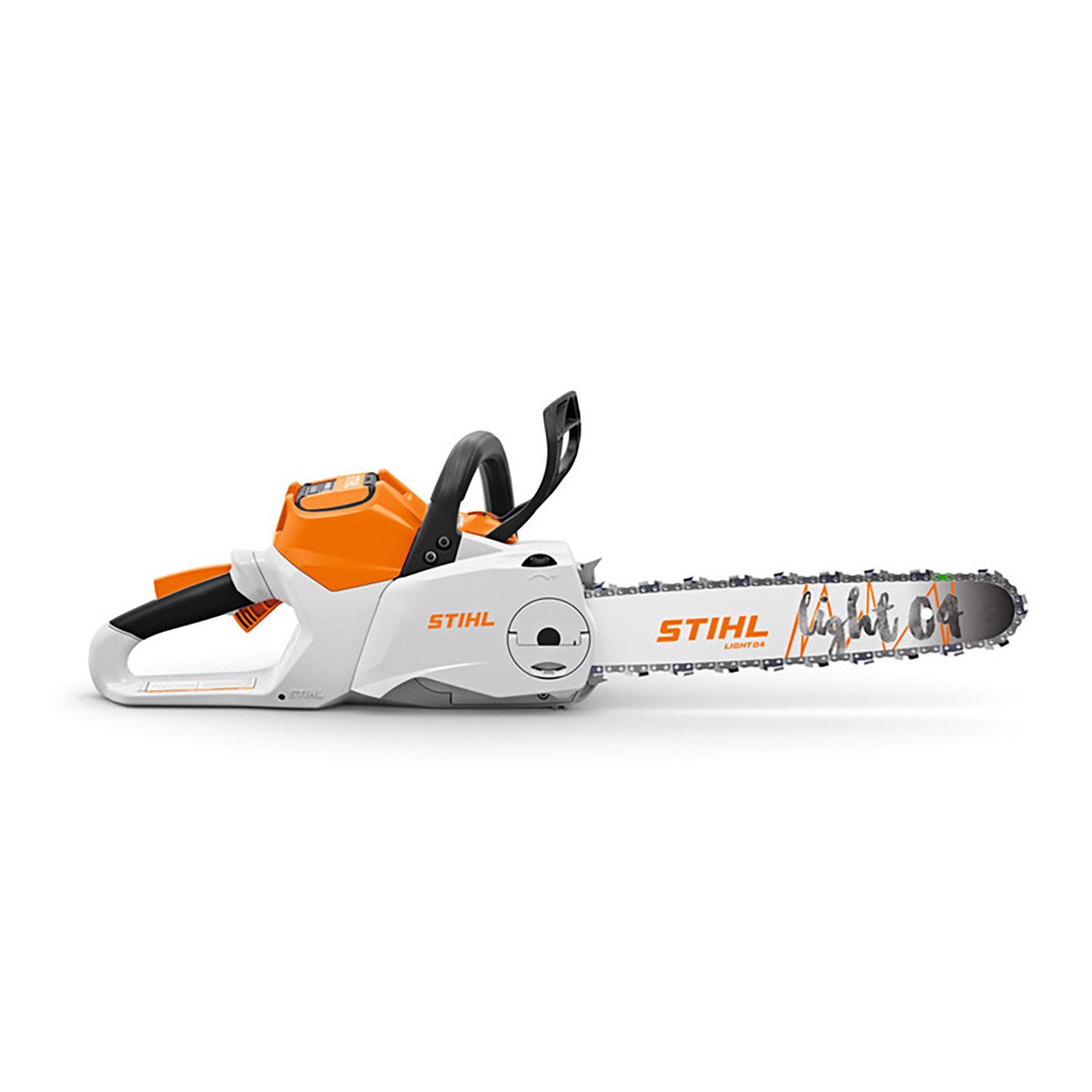
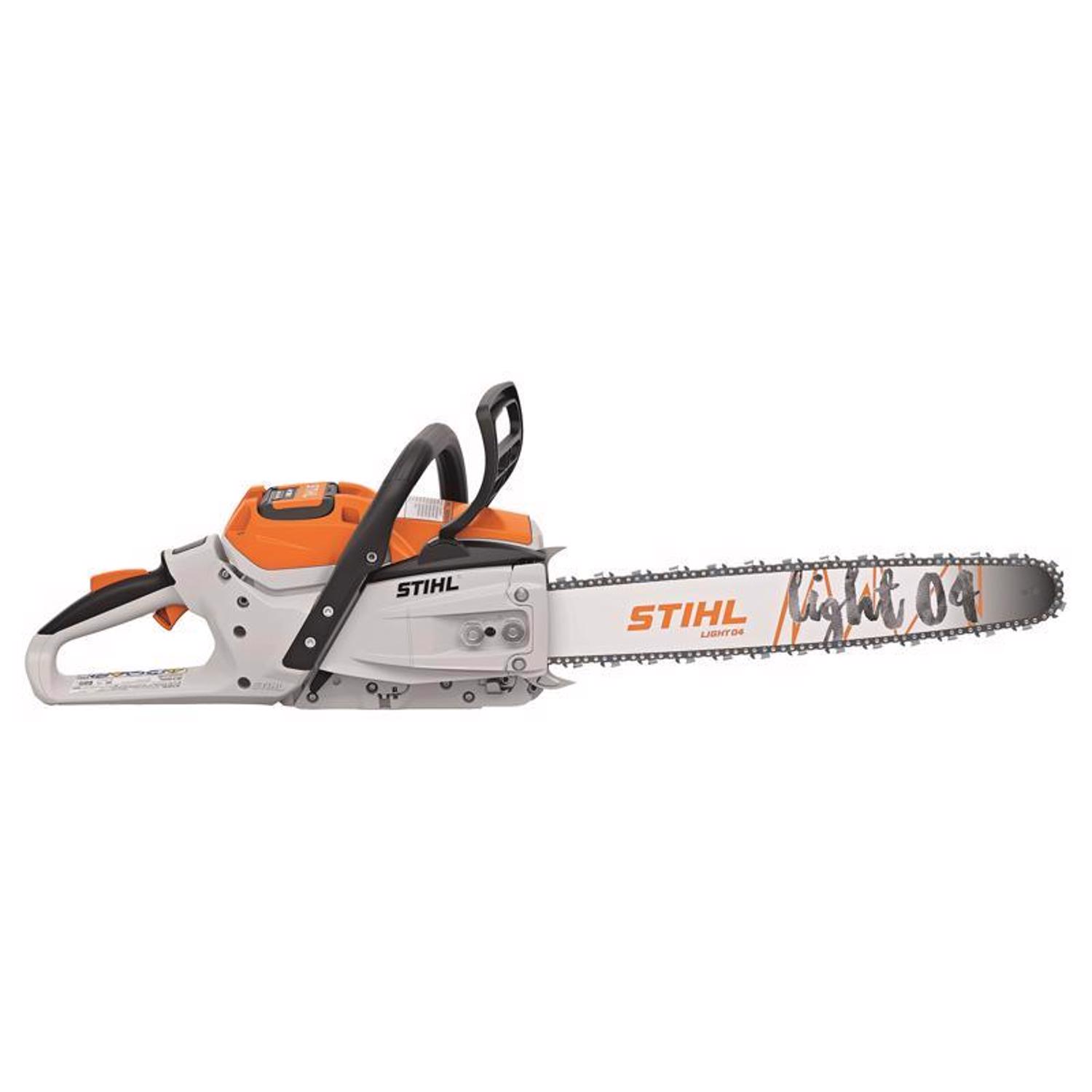
Stihl's strongest AP-system saw short of the pro MSA 300, and the one dealers steer serious property owners toward. With the 281 Wh AP 300 S pack it runs a 16-inch bar at a genuinely quick 78 ft/s chain speed, and Pro Tool Reviews clocked up to 48 minutes of trigger time (Stihl claims 40). Owners like the tool-less quick tensioner and that the battery drops into Stihl's blowers, trimmers, and pole saws. The catch is the math: the saw is $450 bare, but the AP 300 S battery is another $320 and the AL 301 charger about $120, so a real kit lands near $890 — roughly double a comparable Greenworks or Echo kit. Owner gripes beyond price: runtime drops fast bucking hardwood over 12 inches, the fine-kerf Picco chain dulls quickly in dirty wood, and a minority of threads report stingy or clogged oilers. If you're already invested in AP batteries it's an easy call; if not, the system buy-in is the whole conversation.

Stihl
Stihl MSA 300 C-O
Stihl's flagship battery saw and the first one working crews describe as an honest gas replacement — Stihl rates it at 2.5 kW, comparable to its 50cc MS 271, and it runs a full-house .325 pro chain rather than a homeowner profile. It has real professional touches: three power modes with an LED display, an oil-flow sensor that warns you before you cook a bar, magnesium housing, and an IPX4 weather rating. The sticker shock is the story in every owner thread: $860 for the bare saw, and the 337 Wh AP 500 S battery plus AL 500 charger push a working kit to about $1,555 — gas MS 261 money with change left over. Owners also note the roughly 44-minute max runtime means commercial crews need two or three $400+ batteries to work a full day, and at 14 lbs with pack it's no lighter than the gas saw it replaces. For noise-restricted municipal work and emission-free fleets it has no real Stihl alternative; for everyone else the math is hard.

Stihl
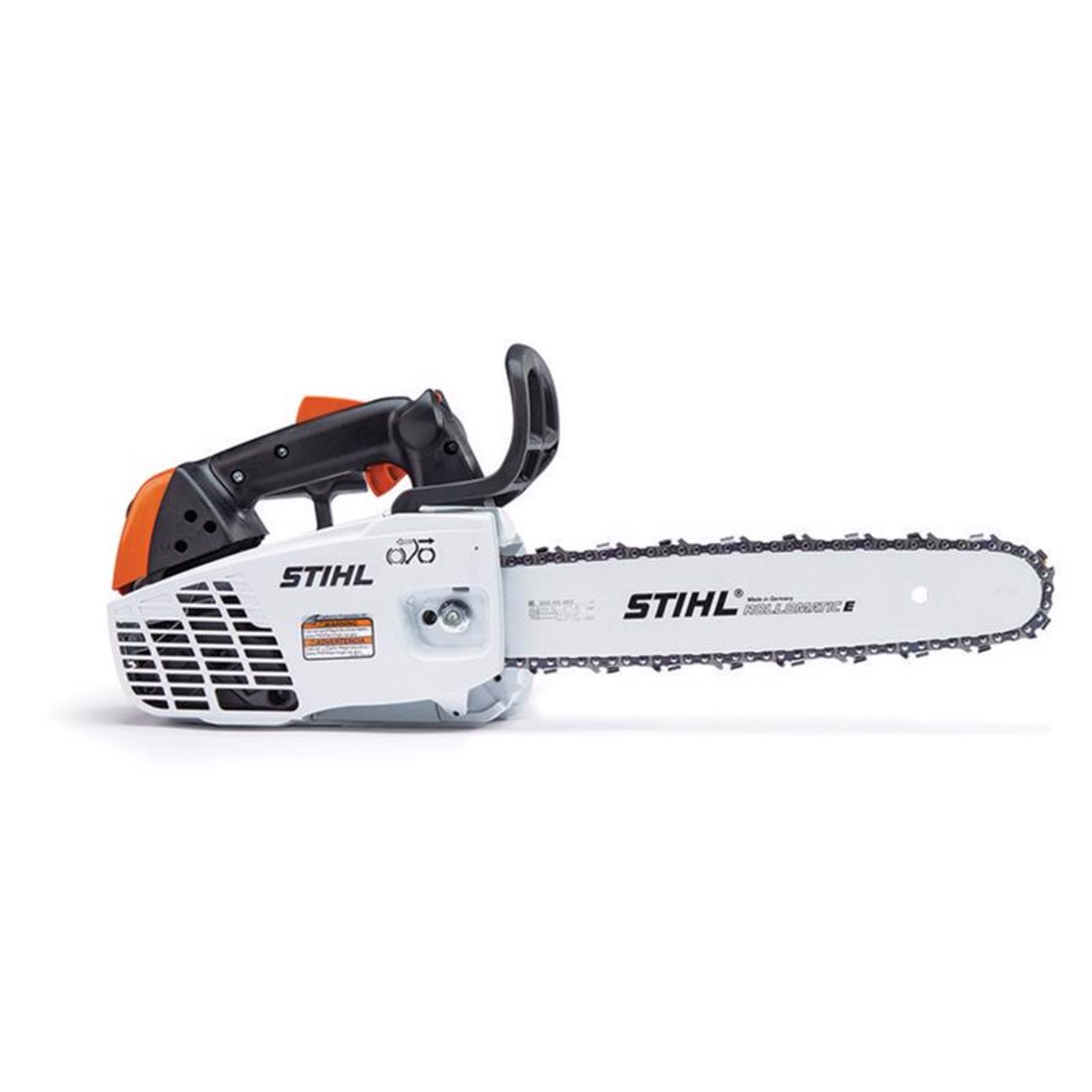
Stihl MS 194 T
Stihl's entry-level in-tree saw, slotting under the MS 201 T at $509.99 list — and the forum verdict is blunt: "a budget climbing saw with a disappointing amount of torque." That's the climber's take; the flip side is a smooth 2-MIX engine, 7.3 lbs on the powerhead, and the 1/4-inch PM3 chain, which cuts glassy-smooth on pruning wood and is a genuine advantage for fine ornamental work. Owners who advance the timing and open the muffler report it "pretty well catches up to the MS 201 T," which tells you the potential is tuned out at the factory. As a Stihl it's dealer-only, so there's no retail review aggregate to cite, but resale value and dealer support are the usual Stihl strong suits. Watch-outs from owner threads: the automatic oiler has no manual backup, the 1/4-inch chain means you're buying loops from the dealer rather than any hardware store, and parts don't interchange with the older MS 192/193 T it replaced. Stihl labels it for professional in-tree use only and it isn't sold in California. Homeowner-arborists love it; production climbers pay up for the 201.