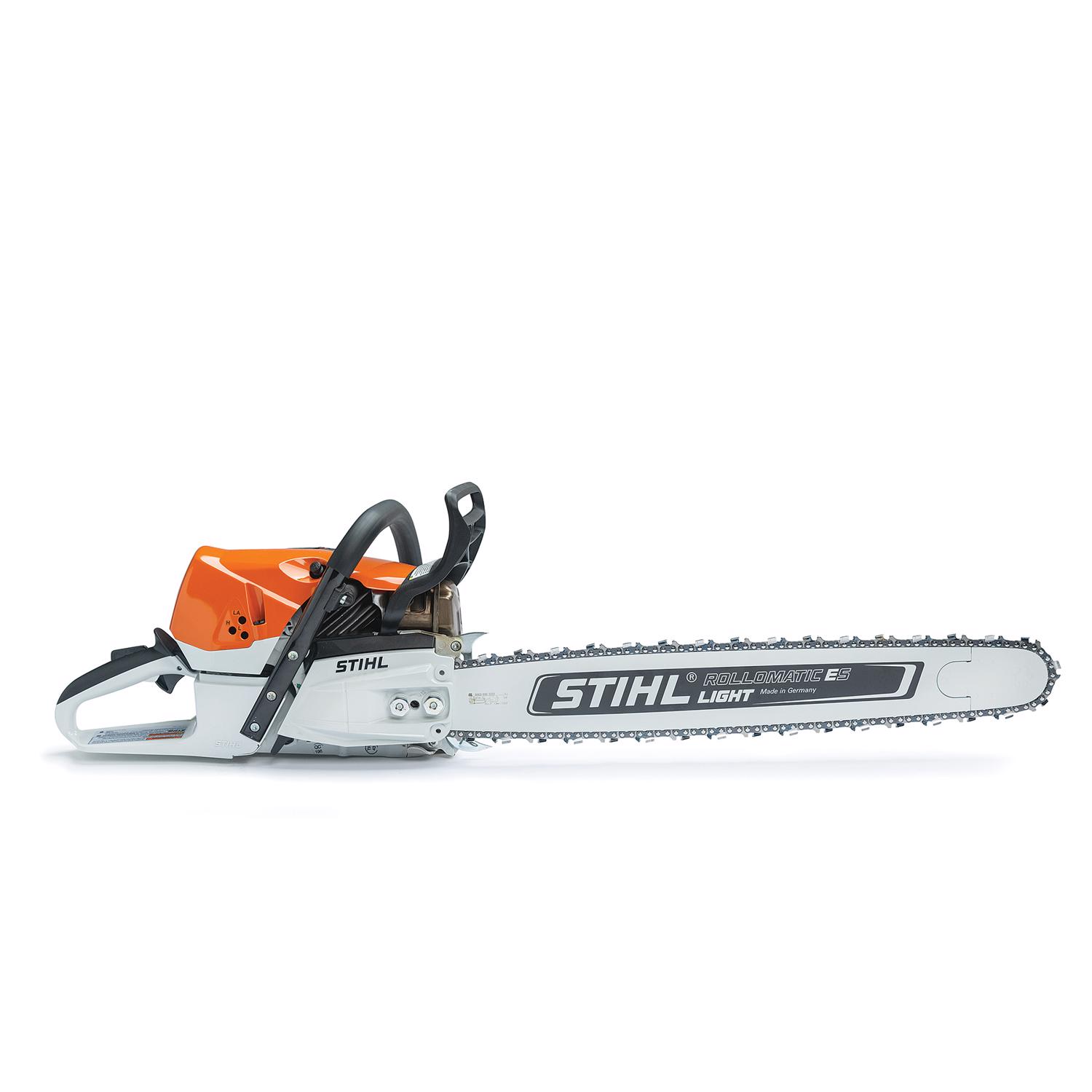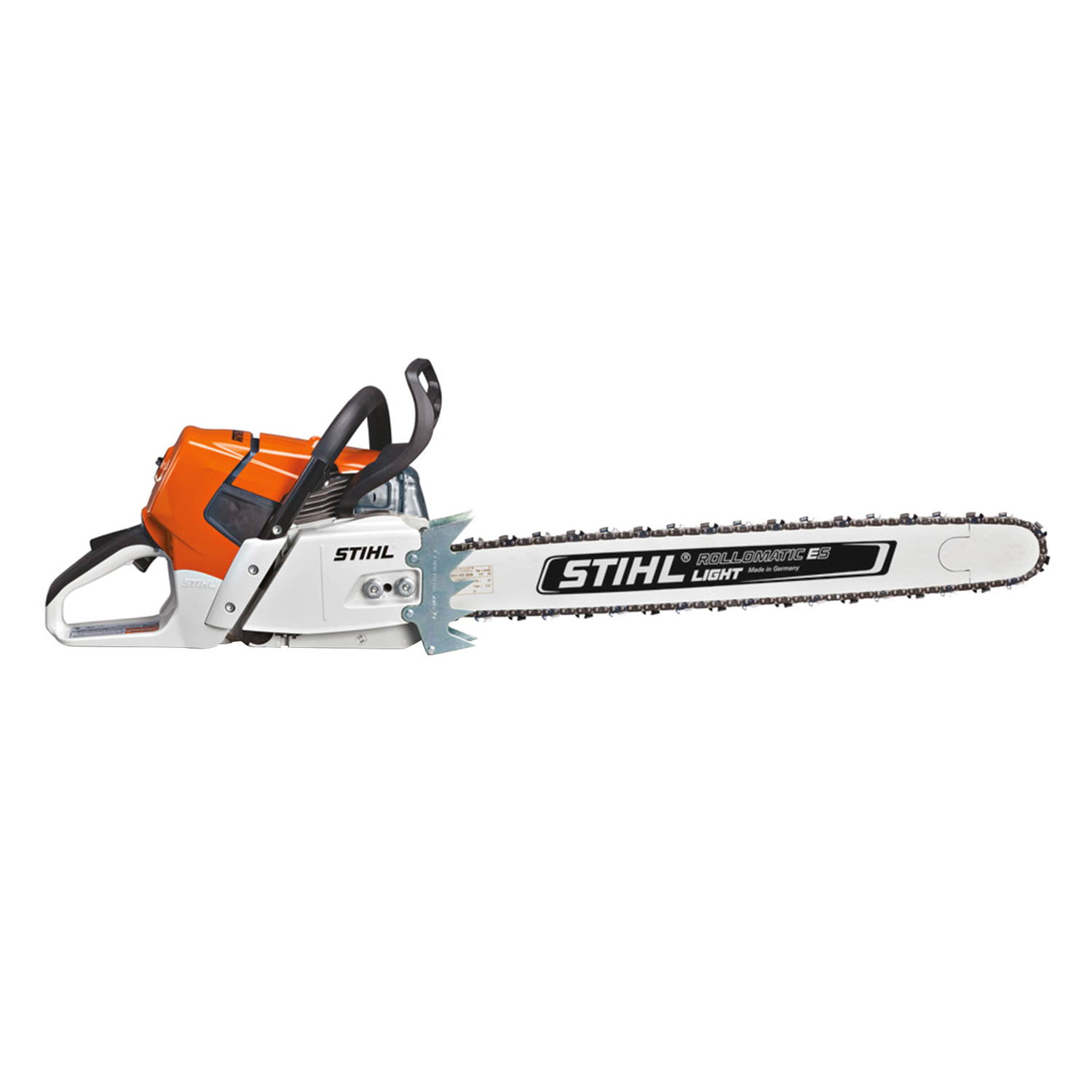
Stihl MS 500i

Stihl / Gas / Professional

Stihl MS 500i

70cc+ class
79.2cc
5 kW rated
25 in
cuts to about 23 in
13.9 lb
powerhead only
~$1,780
approx., with 25" bar and chain
See it at Stihl

Price and availability on Stihl's site may differ.

The first fuel-injected chainsaw ever sold, and the one saw that makes grown professionals gush: 79.2cc, 5.0 kW, and a 13.9-pound powerhead give it what Stihl claims is the best power-to-weight ratio on the market. The injection system replaces the carburetor entirely — it reads air pressure and temperature and meters fuel electronically, so it lights off in a couple of pulls hot or cold and owners report instant, hesitation-free throttle response that carbureted saws can't match. Owner threads are full of people who sold their other big saws after buying one; more than one homeowner splurger calls it the best saw they've ever run. The gripes are specific and consistent: it drinks fuel hard, fine dust can sneak past where the plastic filter housing attaches, a handful of high-hour owners report warm-stall quirks, and the price has ballooned roughly $500 since launch to about $1,779.99 with a 25-inch bar. There's even a contrarian 'flagship saw disappointing' thread — but it's an island in a sea of five-star sentiment. If money were no object, this is the saw most of the forum says they'd grab.

Best for: Professional fallers and buy-once enthusiasts who want the fastest, hardest-pulling saw in Stihl's line and can stomach flagship pricing.

Specifications

Engine class
70cc+ class (by displacement)
Engine
79.2 cc
Bar range
16-36 in
Single-pass cut
about 23 in (bar minus 2)
Chain
3/8" pitch / .050" gauge (33 RS3)
Weight
13.9 lb, powerhead only
Use case
Professional
Warranty
1-year consumer / 3-month professional (Stihl policy from Jan 1, 2026)
Model
MS 500i

Manufacturer figures except the engine class and single-pass cut, which are derived here. What each spec means

  • World's first fuel-injected chainsaw
  • Best power-to-weight on the market
  • 5.0 kW felling-class flagship

What owners like

  • Electronic fuel injection — no carburetor at all; starts in 2-3 pulls and auto-adapts to altitude and temperature
  • 5.0 kW from a 13.9 lb powerhead — Stihl claims the best power-to-weight ratio on the market
  • Instant throttle response owners say no carbureted saw can match
  • Runs bars from 16" to 36", covering everything from bucking to serious felling
  • Owner threads report multi-year reliability — 'always starts, never let me down' is the common refrain
  • Strong resale value; used 500is barely depreciate

Common complaints

  • Heavy fuel consumption is the most repeated owner complaint — plan on carrying extra mix
  • Documented gripe about fine dust entering around the plastic air-filter attachment point
  • Price has climbed roughly $500 since launch to ~$1,780, prompting even fans to hesitate
  • Some high-hour owners report warm-start stalling quirks after several years
  • Injection system is dealer-only territory — no backyard carb fixes if the electronics act up

What owners say

Read from owner discussions, long-term write-ups and dated retail reviews; nothing here was measured on this site.

Among owners, the 500i has close to cult status. The phrase that recurs is that it rips: owners talk about the torque cleaning up old elm and ash on the farm, one three months and six cords in with a 661, 460 and 440 already in the shed calls it the best saw money he has ever spent, and several report hardly touching their 660 or 362 any more because the 500i covers both. Being fuel-injected rather than autotune is a selling point in its own right for owners who are suspicious of M-Tronic electronics or simply done tuning carburetors between sea level and the mountains. In practice owners run it on anything from 25 to 36 inches, and the one upgrade they all push is a lightweight bar — an owner who swapped a standard 25-inch Rollomatic ES for the ES Light version says the saw stopped being nose-heavy and carried almost horizontally, a difference he hadn't expected from about a pound.

The costs are consistent. It drinks fuel, which the milling crowd notices most. It runs hot, and that shows up two ways: an owner ripping maple with a 36-inch bar found the fuel in his tank boiling and the saw sputtering as if dry, and a dealer told another buyer outright that these saws overheat when used for light limbing rather than under load. A wildland crew running them flat out reports the filter is filthy within a tank and fits a MaxFlow filter and ported muffler just to hold temperatures down. There is also a genuine reliability tail on a saw this expensive: an injector that failed within about four hours and dumped fuel out the muffler, a brand-new one that holed a piston inside a month, a spark plug that blew out and took the threads with it. None of that is the typical experience, but it is the risk you're carrying — and with no carburetor to rebuild, the fix is always a dealer's.

Owners say buy it if you are regularly burying a 28 to 36-inch bar, or if you want one big saw and will accept the fuel bill. Owners who already have a 462 or 400 mostly say they don't need it; several warn it is far too much saw to be the only saw, and the standing advice is to keep something light — a 261, a 201 — for limbing so your back survives the day. Against the 661 the split is clear: owners who run both ported say the 661 has far more grunt from 28 inches up, while the 500i is lighter, faster to the throttle and gets used more. And watch the price: it has swung hundreds of dollars inside a month and varies that much between dealers in the same area, so it's worth buying new only when the warranty is close to the used price.

What owners like

  • Owners do not hedge about the cutting. "The 500 just plain rips" and "the torque it has is awesome" is the general register; one owner three months and six cords in, with a 661, 460 and 440 already in the rack, calls it the best saw money he has ever spent
  • It displaces other saws. Owners report hardly touching their 660 or 362 once the 500i arrived because it covers both, and a professional running one daily pairs it with a small climbing saw and nothing in between
  • It is injected rather than autotune, which matters to owners who are wary of M-Tronic — there are no carburetor screws to chase from sea level to 8,000 feet, and owners who spent a decade with a little orange screwdriver in the woods say the electronic saws just work
  • Bar range is genuinely wide in practice: owners run 25, 28, 32 and 36-inch bars on it, and one says it pulls a 36 with no problem at all outside production work
  • The aftermarket is deep and owners use it — West Coast bark box mufflers, MaxFlow filters, clutch covers that improve chip clearance in pine and oak, stiffer felling suspension kits, and porting that one owner quotes as taking a 500i from about 7.2 hp stock to roughly 9.3
  • Used ones hold up and hold value: an $800 marketplace example was abused through a summer and autumn and held up great, and owners happily pay four figures for used ones with unknown history

Common complaints

  • Fuel consumption is the complaint every owner makes eventually. One owner breaking down logs for his sawmill sums it up as loving the saw but "OMG does it go through gas" — plan on carrying extra mix
  • Heat and vapour lock are real. An owner with a 36-inch bar buried in maple had the saw sputter like it was out of fuel and found the gas in the tank actually boiling; his fix was canned premix instead of winter-blend non-ethanol fuel. A dealer separately warned a buyer that these saws overheat when used for limbing and light work and want to be run under load
  • The air filter loads up fast. A wildland fire crew running them hard says the particle buildup under the filter is ridiculous and the saws are dirty within a tank, where their old 461s with a filter mod never were — they run a MaxFlow filter and ported exhaust just to keep temperatures reasonable
  • There is a real failure tail on an expensive saw. One tree-company owner had the injector fail inside about four hours of run time with fuel pouring out of the muffler; another bought a second one new and it went through a piston within a month (covered under warranty, but still); a third had a spark plug blow out and strip the threads in the housing
  • Pricing is volatile and dealer-dependent. One owner watched his dealer's price go from $1,480 to nearly $1,800 within a month, and two dealers in the same region quoted $1,280 and $1,879 for the same saw — it pays to ring around

Questions owners ask

Is the 500i an M-Tronic saw?

No, and owners who avoid M-Tronic on purpose make that distinction. The 500i is fuel-injected — there is no carburetor, no choke ritual and nothing to tune, and it compensates for altitude and temperature by itself, which owners who cut from sea level to 8,000 feet say is the whole point. The flip side is that there's no carburetor to rebuild in the field, so if the electronics misbehave it's a dealer job.

What is vapour lock and should I expect it?

An owner with twenty years around saws had his 500i start sputtering like it was out of fuel with a 36-inch bar buried in a maple; when he stopped to refuel, the gas in the tank was boiling. Owners link it to fuel choice and heat rather than a defect — he switched to canned premix and the problem went away, having previously run winter-blend non-ethanol fuel. If yours stumbles under sustained heavy load on a hot day, try fresh premix before chasing parts.

Which bar should I run on it?

Owners converge on 25 or 28 inches for general work and strongly recommend the lightweight bar version. One owner who ran a standard 25-inch bar alongside a 36 found the 25 almost as nose-heavy as the long bar, fitted a 25-inch ES Light instead and says the saw now carries almost perfectly horizontally. It will pull 32 and 36 inches, though owners who need that length often reach for a 660 or 661 instead.

Is it too much saw to be someone's only saw?

Opinions split and both sides are worth hearing. Some owners say it's a great all-rounder and fine as a one-saw setup; more say it's way too much saw for most jobs and point out that a 500i owner is still better off with something light for limbing — one has a 20-inch bar recommendation for anyone who thinks a 28 feels like a beast. Owners who already run a 462 or 400 generally report they didn't need a 500i.

How reliable is the fuel injection in practice?

Mostly very, with a tail that matters because of the price. Owners report multi-year ownership with no drama, including one ported from new four years in. Against that, a tree-company owner had the injector fail inside about four hours with fuel pouring out of the muffler, and another's brand-new second saw holed a piston inside a month under warranty. That's the main argument owners make for buying new rather than used — the extra few hundred buys you the warranty.

What do owners change on a stock 500i?

The common list is a bark box muffler, a MaxFlow or modified air filter (crews running them hard find them filthy within a tank), a clutch cover that clears chips better in pine and oak, a lightweight bar, and a stiffer felling suspension kit — more than one owner wonders aloud why the factory anti-vibration mounts are so soft. Porting is the big one: one owner quotes roughly 7.2 hp stock against about 9.3 ported. If you change the muffler, ask a dealer about recalibration rather than guessing.

Drawn from 6 owner threads and long-term reviews, kept on file with this entry.

Compare the Stihl MS 500i

Nearest alternatives

More from Stihl
Stihl MS 661 C-M Magnum

Stihl / Gas

~$1,850

Stihl MS 661 C-M Magnum

70cc+ class
91.1cc
engine
20 in
bar
16.4 lb
bare

Professional fallers, firewood cutters in 30-inch-plus timber, and chainsaw-mill operators who need sustained torque.

Professional
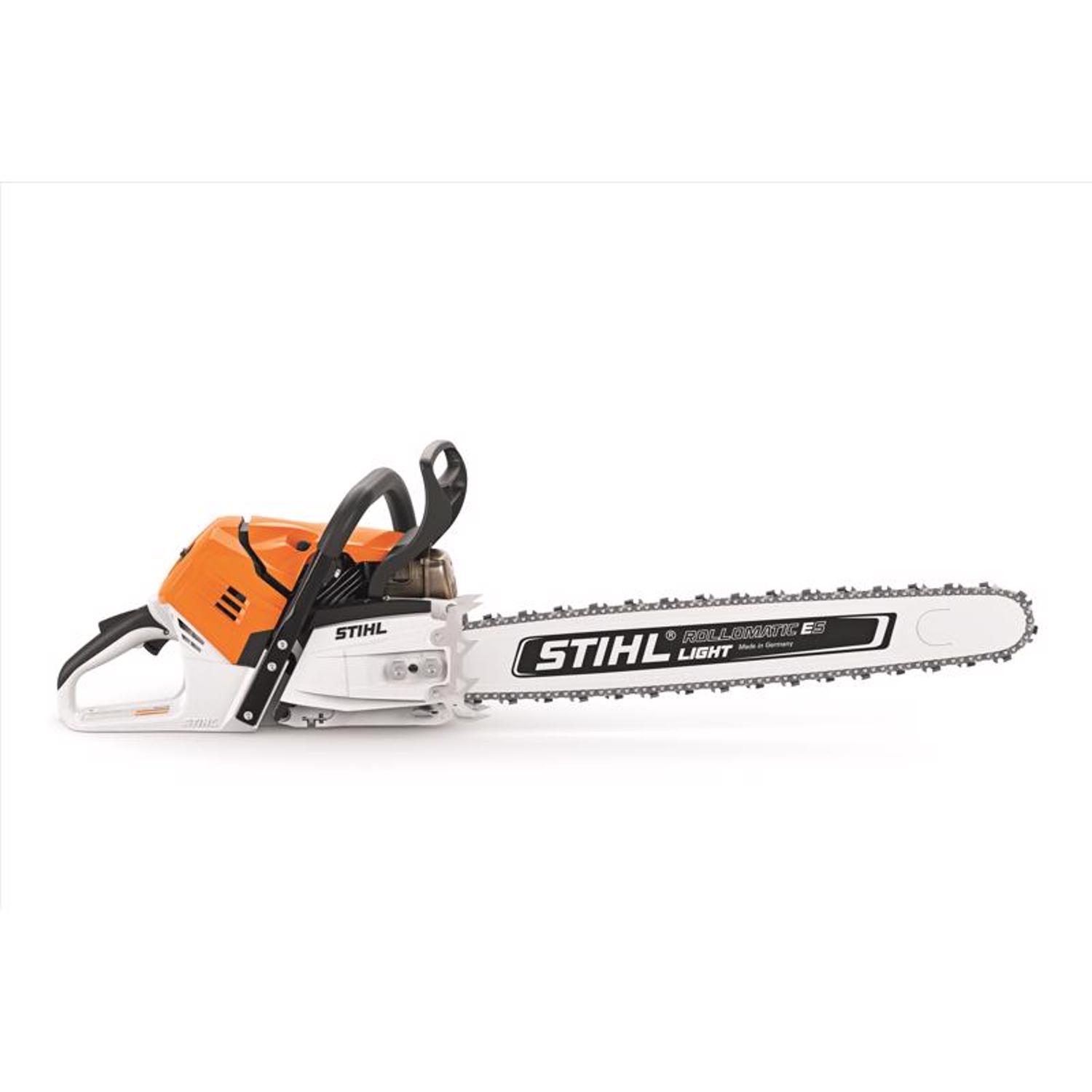
Stihl MS 462 C-M

Stihl / Gas

~$1,670

Stihl MS 462 C-M

70cc+ class
72.2cc
engine
25 in
bar
13.2 lb
bare

Professional fallers and serious cutters handling big timber who want 70cc-class power at a 60cc-class carry weight.

Professional
Stihl MS 881 Magnum

Stihl / Gas

~$2,680

Stihl MS 881 Magnum

70cc+ class
121.6cc
engine
36 in
bar
21.4 lb
bare

Chainsaw-mill operators slabbing 36-inch-plus logs and pro crews that regularly face trunks too big for a 90cc saw.

Professional

Sources for this entry