Stihl
Stihl MSA 300 C-O
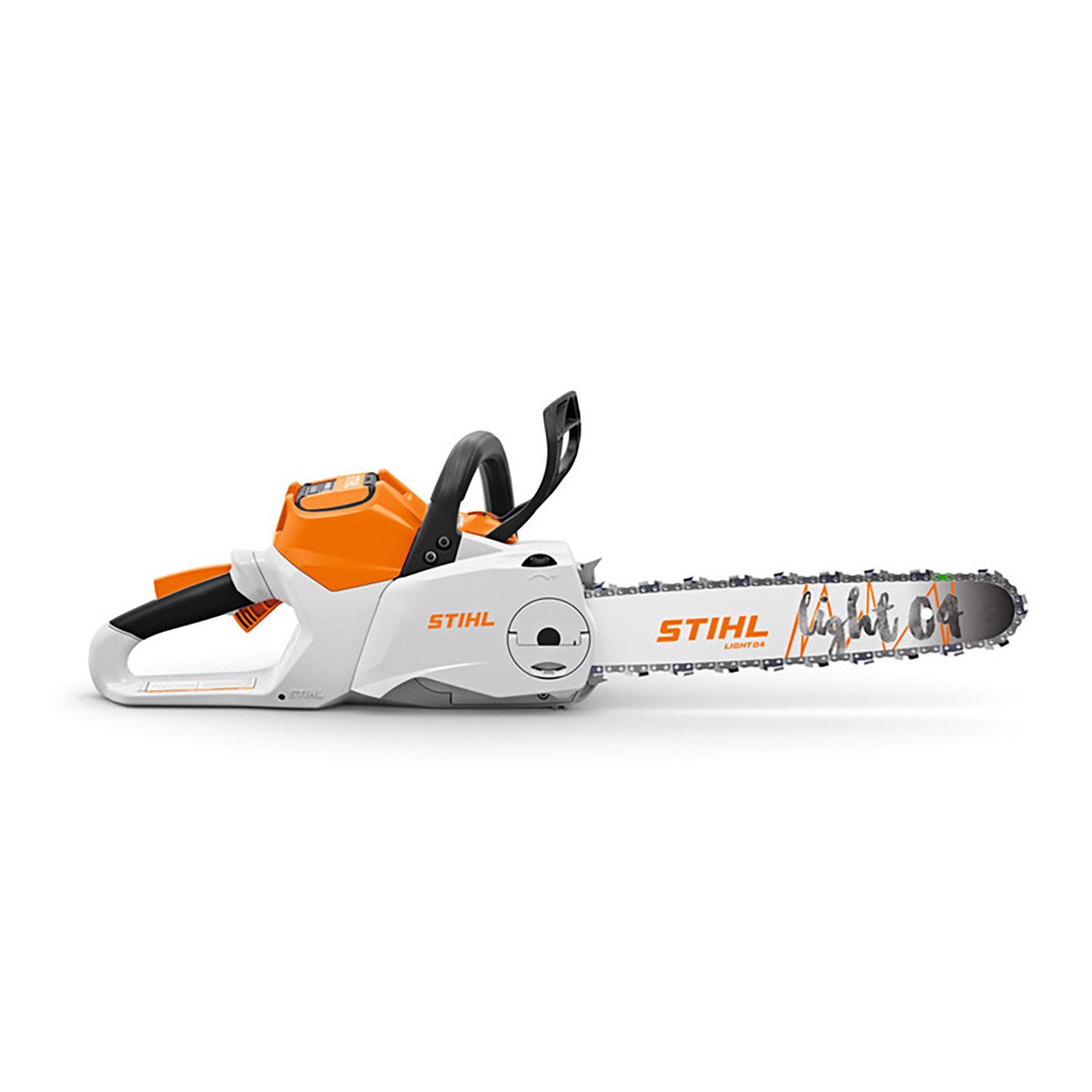
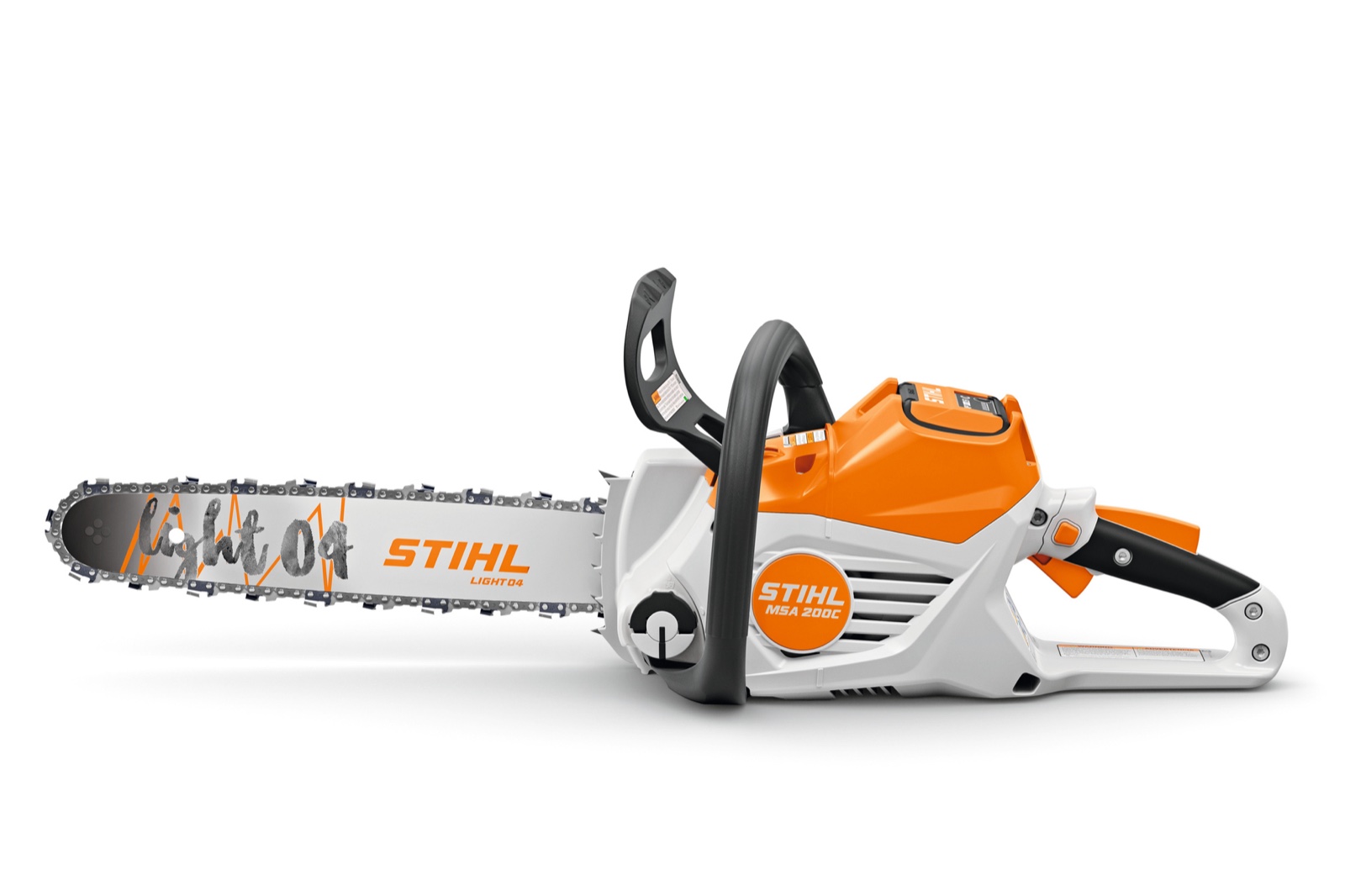
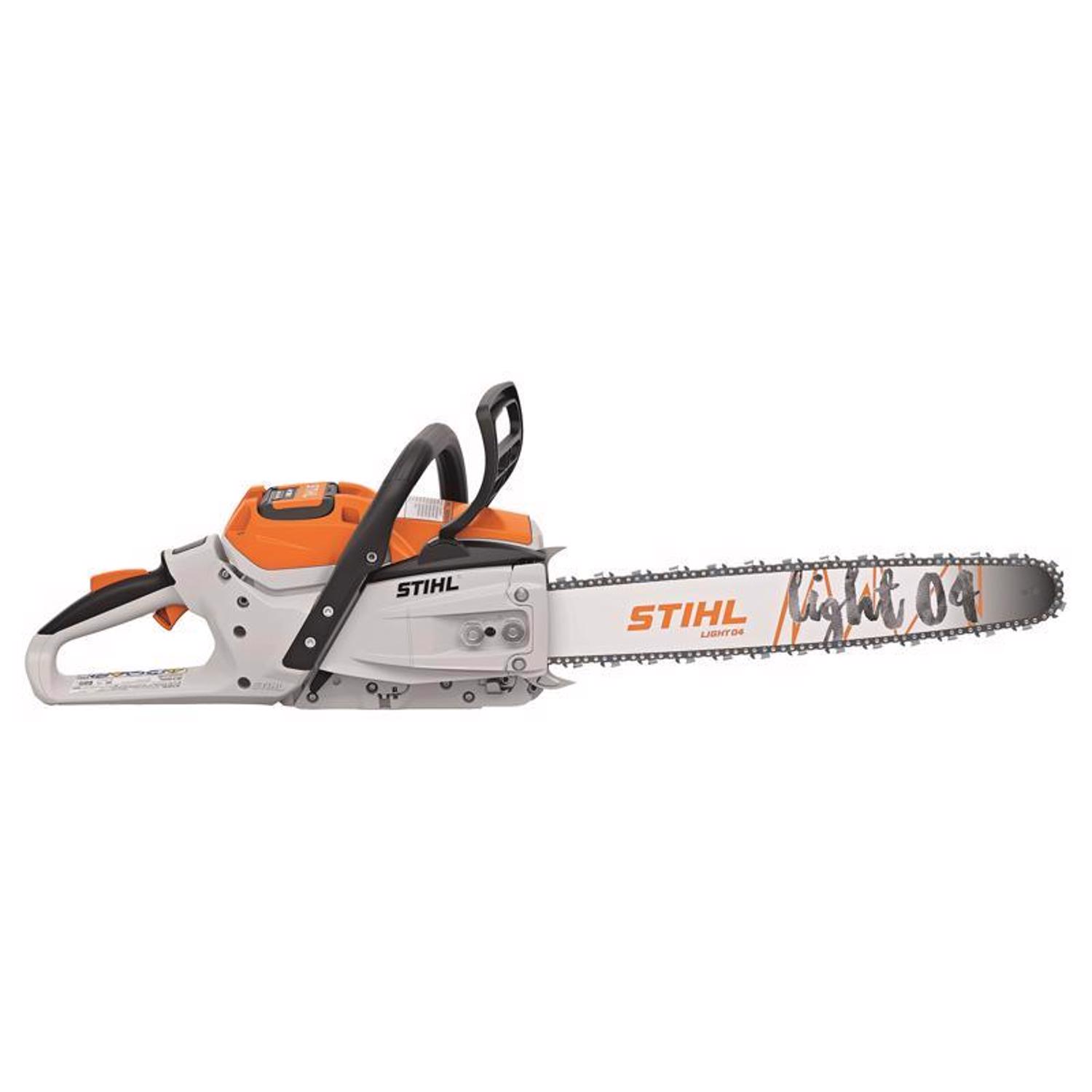
Stihl's flagship battery saw and the first one working crews describe as an honest gas replacement — Stihl rates it at 2.5 kW, comparable to its 50cc MS 271, and it runs a full-house .325 pro chain rather than a homeowner profile. It has real professional touches: three power modes with an LED display, an oil-flow sensor that warns you before you cook a bar, magnesium housing, and an IPX4 weather rating. The sticker shock is the story in every owner thread: $860 for the bare saw, and the 337 Wh AP 500 S battery plus AL 500 charger push a working kit to about $1,555 — gas MS 261 money with change left over. Owners also note the roughly 44-minute max runtime means commercial crews need two or three $400+ batteries to work a full day, and at 14 lbs with pack it's no lighter than the gas saw it replaces. For noise-restricted municipal work and emission-free fleets it has no real Stihl alternative; for everyone else the math is hard.
Specifications
Highlights
Pros
- ✓2.5 kW output Stihl itself compares to the gas MS 271 — real 50cc-class cutting
- ✓Oil-flow sensor catches dry-bar situations before they ruin a bar and chain
- ✓Three selectable power modes stretch runtime for limbing versus felling
- ✓Up to 44 minutes of cutting on the 9.4Ah AP 500 S pack
- ✓IPX4-rated, magnesium-housed, and built for daily commercial abuse
- ✓Runs .325 RS3 Pro chain — not a low-profile homeowner chain
Cons
- ✗A working kit (saw + AP 500 S + AL 500) runs about $1,555 — more than a gas MS 261 setup
- ✗Full-day commercial use realistically requires multiple $400+ batteries
- ✗14.1 lbs with pack — no weight savings over the gas saws it replaces
- ✗2-year battery-product warranty is short given the system investment
- ✗Dealer-only; no retailer review aggregate exists to sanity-check long-term reliability
Related chainsaws
More from Stihl →
Stihl
Stihl MSA 220 C-B
Stihl's strongest AP-system saw short of the pro MSA 300, and the one dealers steer serious property owners toward. With the 281 Wh AP 300 S pack it runs a 16-inch bar at a genuinely quick 78 ft/s chain speed, and Pro Tool Reviews clocked up to 48 minutes of trigger time (Stihl claims 40). Owners like the tool-less quick tensioner and that the battery drops into Stihl's blowers, trimmers, and pole saws. The catch is the math: the saw is $450 bare, but the AP 300 S battery is another $320 and the AL 301 charger about $120, so a real kit lands near $890 — roughly double a comparable Greenworks or Echo kit. Owner gripes beyond price: runtime drops fast bucking hardwood over 12 inches, the fine-kerf Picco chain dulls quickly in dirty wood, and a minority of threads report stingy or clogged oilers. If you're already invested in AP batteries it's an easy call; if not, the system buy-in is the whole conversation.

Stihl
Stihl MS 462 C-M
The saw that made West Coast fallers trade in their 044s and 461s: 72.2cc and 4.4 kW in a 13.2-pound powerhead that Stihl bills as the lightest it has ever built in this class, and owners on ArboristSite describe with phrases like 'monster torque' and 'game changer'. The M-Tronic metering keeps it in perfect tune from sea level to mountain jobs, and users bucking hardwood with 25- and 28-inch bars report it never feels short of breath — several admit their 660-class saws now sit unused because the 462 does the work at two pounds less. Complaints are scarce and mostly economic: the price has marched steadily upward (Ace lists the 25-inch at $1,619.99), and weekend cutters frequently confess they love it but reach for it less than expected because it's simply more saw than most firewood requires. A few owners cross-shop the lighter MS 400 and wonder if 66cc would do. As a do-everything big saw for felling and heavy bucking, though, forum consensus is about as unanimous as chainsaw forums get: no buyer's remorse.

Stihl
Stihl MS 500i
The first fuel-injected chainsaw ever sold, and the one saw that makes grown professionals gush: 79.2cc, 5.0 kW, and a 13.9-pound powerhead give it what Stihl claims is the best power-to-weight ratio on the market. The injection system replaces the carburetor entirely — it reads air pressure and temperature and meters fuel electronically, so it lights off in a couple of pulls hot or cold and owners report instant, hesitation-free throttle response that carbureted saws can't match. ArboristSite owner threads are full of people who sold their other big saws after buying one; more than one homeowner splurger calls it the best saw they've ever run. The gripes are specific and consistent: it drinks fuel hard, fine dust can sneak past where the plastic filter housing attaches, a handful of high-hour owners report warm-stall quirks, and the price has ballooned roughly $500 since launch to about $1,779.99 with a 25-inch bar. There's even a contrarian 'flagship saw disappointing' thread — but it's an island in a sea of five-star sentiment. If money were no object, this is the saw most of the forum says they'd grab.