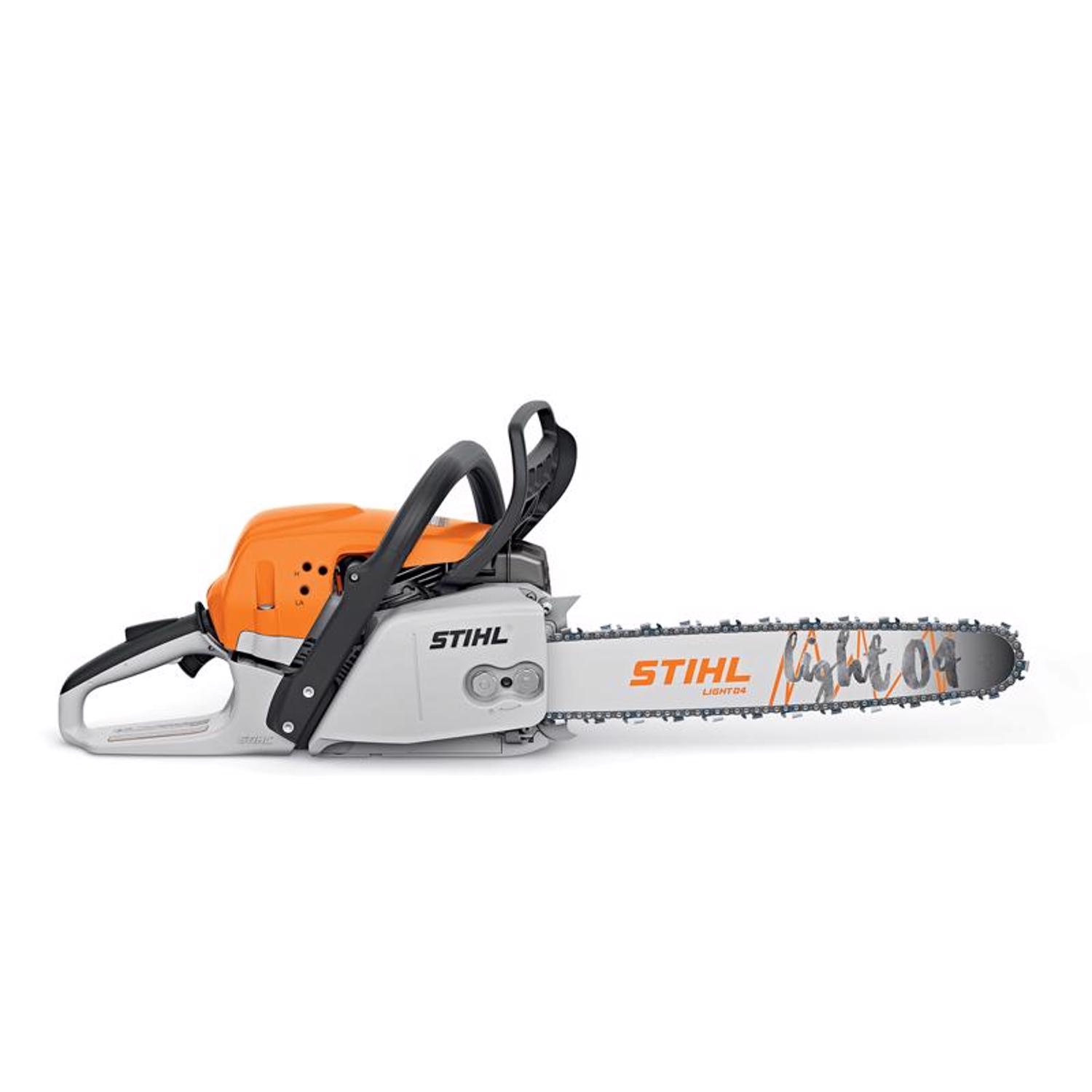
Stihl MS 271 Farm Boss

Stihl / Gas / Farm & Ranch

Stihl MS 271 Farm Boss

50cc class
50.2cc
2.6 kW rated
20 in
cuts to about 18 in
12.3 lb
powerhead only
~$540
approx., with 20" bar and chain
See it at Stihl

Price and availability on Stihl's site may differ.

4.5/5 across 2,856 reviews on Ace Hardware. Nobody reviews saws here; that number is theirs.

The Farm Boss is probably the most-recommended 'my first serious saw' in America, and its 4.5-star average over 2,850+ Ace reviews shows the formula works: 50.2cc, a 20-inch bar, modern spring anti-vibration that owners say leaves their hands fresh after a full day, and a fuel-efficient engine that runs 20% longer per tank than the MS 270 it replaced. There's a whole owner thread literally titled 'Why do so many guys bad mouth the MS 271' — the answer is that pros dismiss it as a heavy clamshell homeowner saw with mediocre power density (12.3 lbs for only 2.6 kW, about what a 10-pound pro 50cc saw makes). Both sides are right. It's slower than an MS 261 and not rebuildable the way a pro saw is, and OEM top-end parts are expensive with little aftermarket support. But for a landowner cutting a few cords a year, it's smooth, dependable, and roughly half the price of the pro alternative — which is exactly why dealers can't keep them on the wall.

Best for: Rural landowners and firewood cutters who want a dependable 50cc/20-inch workhorse without paying pro-saw money.

Specifications

Engine class
50cc class (by displacement)
Engine
50.2 cc
Bar range
16-20 in
Single-pass cut
about 18 in (bar minus 2)
Chain
.325" pitch / .063" gauge (26 RM3)
Weight
12.3 lb, powerhead only
Use case
Farm & Ranch
Warranty
1-year consumer / 3-month professional (Stihl policy from Jan 1, 2026)
Model
MS 271

Manufacturer figures except the engine class and single-pass cut, which are derived here. What each spec means

  • America's default farm saw
  • 20% longer run time per tank
  • 4.5 stars, 2,856 Ace reviews

What owners like

  • Proven all-rounder for felling and firewood — 50.2cc comfortably runs 16"-20" bars
  • Advanced anti-vibration mounts noticeably reduce fatigue; a top owner-praised feature after long cutting days
  • Fuel-efficient engine runs 20% longer between refills than the MS 270 it replaced
  • Pre-separation air filtration stretches filter cleaning intervals in dirty wood
  • 4.5-star average across 2,856 Ace Hardware reviews — one of the biggest verified track records of any farm saw
  • $539.99 is roughly half the cost of Stihl's pro 50cc-class saws

Common complaints

  • Heavy for its output — 12.3 lbs powerhead for 2.6 kW; pro saws make more power at less weight
  • Clamshell engine construction: pros consider it a throwaway design rather than a rebuildable saw
  • Little aftermarket parts support and expensive OEM top-end parts if it does wear out
  • Noticeably slower in big hardwood than an MS 261/362 despite similar displacement
  • Scattered owner reports of fussy chain-brake behavior and denied warranty claims

What owners say

Read from owner discussions, long-term write-ups and dated retail reviews; nothing here was measured on this site.

The Farm Boss is the default answer to "what's my first serious saw," and owner threads show why: 50cc, a 20-inch bar, and a dealer who will actually fix it. Owners managing 8-10 acres, cutting a few cords a year and clearing storm damage consistently report it does the job without drama, and one three-year owner living off grid calls it fantastic. Tree services in hurricane country run them alongside Husqvarna Ranchers because they are cheap to replace and cheap to run, and a climber who owns a 500i deliberately takes the 271 up the tree instead because dropping it hurts less.

The two faults worth knowing before you buy are the oiler and the saw's intolerance of neglect. The oiler is fixed-output and a recurring source of burned bars: one owner has gone through several bars and two sprockets in three years and says his has never oiled correctly, with oil visibly collecting behind the sprocket instead of reaching the rails. Owners chasing it get tangled in the inner side plate question, since Stihl apparently built the 271 in more than one configuration and dealers will say the saw doesn't need the plate at all. The other story is a 2016 saw that scored its cylinder around 300 hours on cheap ethanol gas, bargain oil and an air filter that was never once cleaned — the shop called it owner neglect, which is the honest answer, but it tells you this is a clamshell engine that wants clean air and decent fuel rather than a saw you can ignore. Smaller gripes are consistent too: no captive bar nuts, chain brakes that stop the engine or grind, and a saw that feels heavier in the hands than its spec sheet suggests after a first full day.

Owners say buy it if you cut a few cords a year, want a warranty and a dealer, and would rather spend the difference on wood than on a saw. If you cut weekly, step up to the rebuildable 261 — owners who have both are unambiguous that it is lighter, stronger and better built — and if you want to mill, don't: the standing advice is that a 271 will burn up doing it. Cross-shopping is mostly against the Echo CS-590 and Husqvarna 450/455 Rancher, where owners consider the saws close enough that dealer support decides it.

What owners like

  • Owners buy it for the service counter as much as the saw. The story repeats itself: go to the big-box store, wait for someone to unlock the cage around a competitor's saw, then walk into the local Stihl shop, shake the repair guy's hand and leave with a Farm Boss — owners describe having three or four Stihl dealers in town against a thirty-minute drive for anything else
  • On the work it was bought for, owners are satisfied: one calls it a dawg on nine acres with plenty of power for what he does, another three years and a lot of firewood in calls it a fantastic saw, and tree crews cleaning up after a hurricane were running 271s and 291s rather than pro saws
  • It is the saw owners are willing to risk. A climber who owns a 500i still takes the 271 up a tree whenever he can, purely because it is cheap to replace if it drops
  • Cheap to hot-rod — owners port the exhaust and open the carburetor up for more rpm, which is part of why some of those contractor saws sound louder than stock
  • Owners who have tried both lengths prefer it on an 18-inch bar, and that's the length Stihl recommends in some markets; it pulls a 20 but the saw feels livelier and better balanced shorter

Common complaints

  • The oiler is the signature 271 complaint. It is not adjustable, and owners report plenty of oil pooling behind the sprocket with none reaching the bar — one off-grid owner burned up his first bar early, has replaced bars several times and the sprocket twice in three years of cutting about five cords, and says it has never seemed to oil properly. Diagnosis is muddied by the inner side plate question: owners found Stihl built multiple versions of the 271 and dealers will tell you the saw neither has nor needs the plate
  • Chain brake and clutch gremlins show up on new and used saws alike: one brand-new 271 revved to full throttle on startup and smoked the brake, another dies the moment the brake is engaged and makes a metal-on-metal grinding noise at idle
  • It punishes neglect. One owner's 2016 saw scored its cylinder and lost half its compression at roughly 300 hours on 87-octane ethanol gas, occasional cheap two-stroke oil and an air filter he never cleaned; the shop blamed him, and his takeaway was that he would not pay the Stihl premium again
  • No captive bar nuts — an owner who has lost two nuts off the saw is openly annoyed that his much cheaper electric saw has them and this one doesn't
  • Owners who own a 261 as well don't pretend the 271 is in the same class: the 261 is lighter, makes more power, and has magnesium cases, a magnesium clutch cover and a metal rather than plastic oil pump. One long-time owner's verdict is that the only thing separating the 271 from the rest of the homeowner line is stickers and marketing, and an owner coming off a 64cc Makita calls the 271 underpowered with a 20-inch chain

Questions owners ask

18-inch or 20-inch bar on a Farm Boss?

US dealers ship it with a 20, but owners generally prefer 18. Stihl's reps in some markets won't recommend a 20 on this saw at all, and owners who have run both say it is noticeably livelier and better balanced on the shorter bar. One owner who fitted a heavy 20-inch bar and chain ended up with a saw that bogged and a chain that kept seizing. If you mostly cut under 16 inches, the 18 is the better everyday setup.

Why isn't my 271 oiling the bar?

It's the most common 271 problem and there's no adjustment screw to turn — the oiler is fixed output. Owners chasing it find oil collecting above and behind the sprocket rather than in the bar rails, so start by cleaning the oiler port, the bar groove and the oil holes in the bar itself, and check the bar is seated correctly. Owners also discovered Stihl built several versions of this saw and some genuinely don't use an inner side plate, so don't assume a missing plate is your fault before asking a dealer.

Is the MS 261 worth the step up?

Owners who have both say yes if you cut regularly. The 261 is lighter, makes more power at the same displacement, and swaps the 271's plastic oil pump and clamshell construction for magnesium cases and a serviceable pro layout — one owner who bought a 261 after shopping 271s says he couldn't be happier. If you cut a few cords a year the 271 is the better value; if a saw is in your hands most weekends, the 261 is the one that survives it.

What fuel and maintenance does it actually need?

Clean air and decent fuel, and owners are emphatic after seeing a saw score its cylinder at 300 hours on ethanol gas, cheap oil and a filter that was never cleaned. Clean the filter on a schedule rather than when it looks bad. On fuel, owners split: canned premix is the safest thing for a saw that sits, but one owner points out he'd have paid for a new saw by now at $30 a gallon and runs mid-grade gas with a stabiliser and good two-stroke oil instead.

Can I mill with a 271?

Owners say no. Milling runs the saw at full load for the whole length of a cut rather than the few seconds a bucking cut takes, and the standing advice to 271 owners who want to mill lumber is that the saw will burn up doing it. If milling is the goal, owners point you at 90cc-class powerheads instead.

Drawn from 6 owner threads and long-term reviews, kept on file with this entry.

Compare the Stihl MS 271 Farm Boss

Nearest alternatives

More from Stihl
Stihl MS 291

Stihl / Gas

~$620

Stihl MS 291

50cc class
55.5cc
engine
20 in
bar
12.3 lb
bare

Firewood cutters and landowners who want the most power available in Stihl's farm-and-ranch line while staying under pro-saw pricing.

Farm & Ranch4/5 Ace Hardware
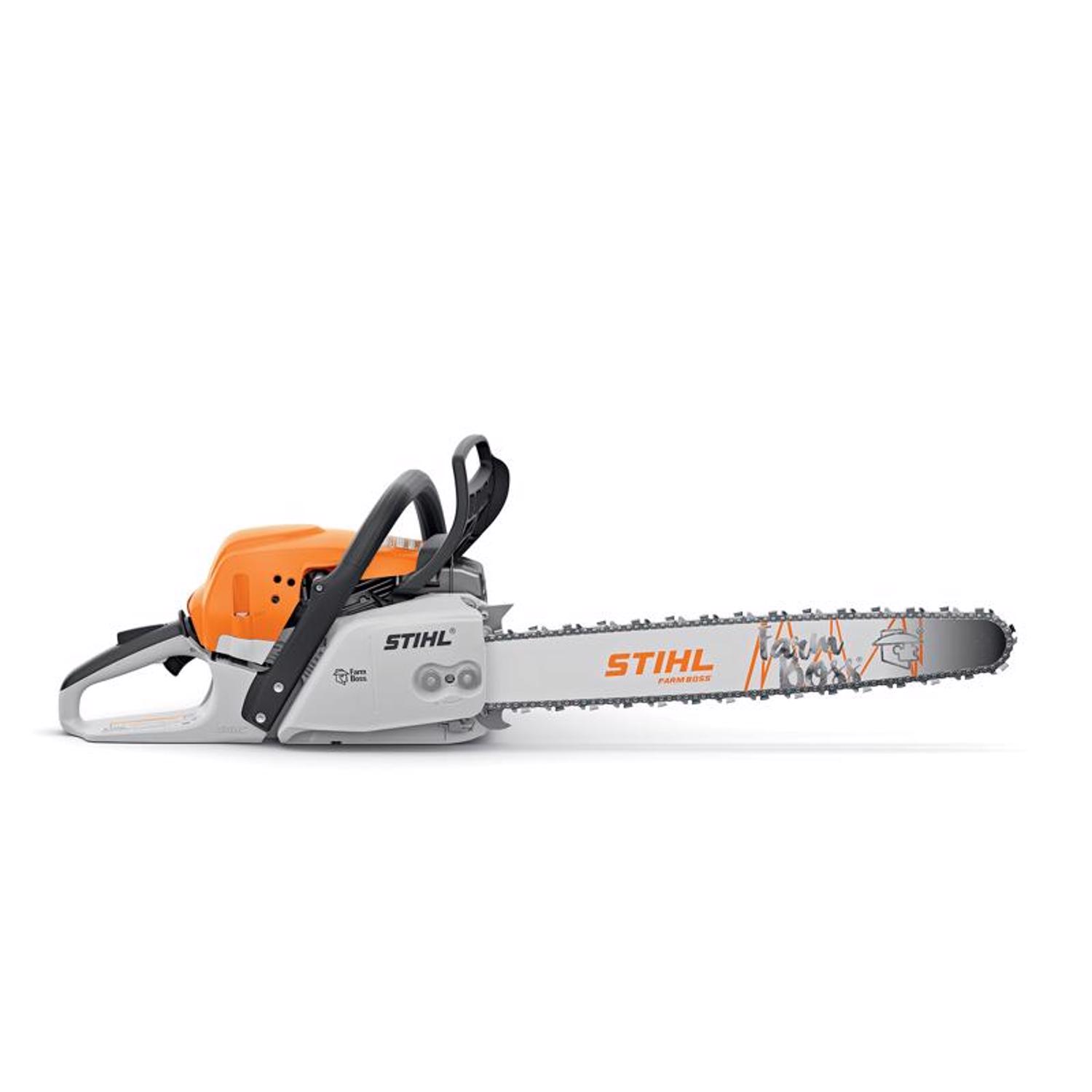
Stihl MS 261 C-M

Stihl / Gas

~$760

Stihl MS 261 C-M

50cc class
50.2cc
engine
16 in
bar
10.9 lb
bare

Firewood cutters past four cords a year, arborists and crews who want one 50cc saw that can be rebuilt instead of replaced.

Professional
Stihl MS 311

Stihl / Gas

~$760

Stihl MS 311

50cc class
59cc
engine
18 in
bar
13.8 lb
bare

Farm and acreage owners who find an MS 311 discounted below the MS 391 and will keep a 16- or 18-inch bar on it.

Farm & Ranch

Sources for this entry