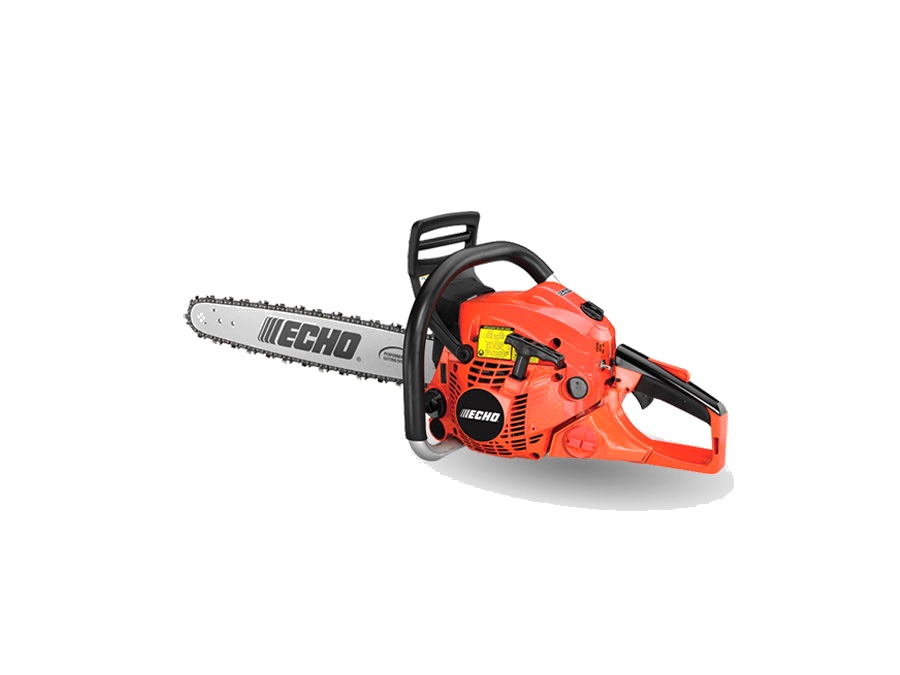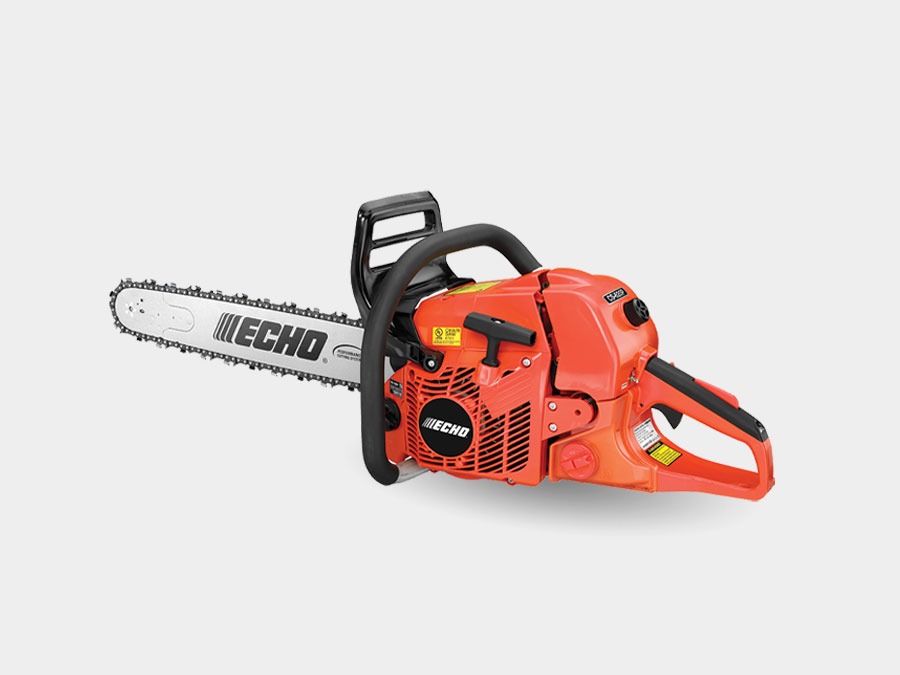
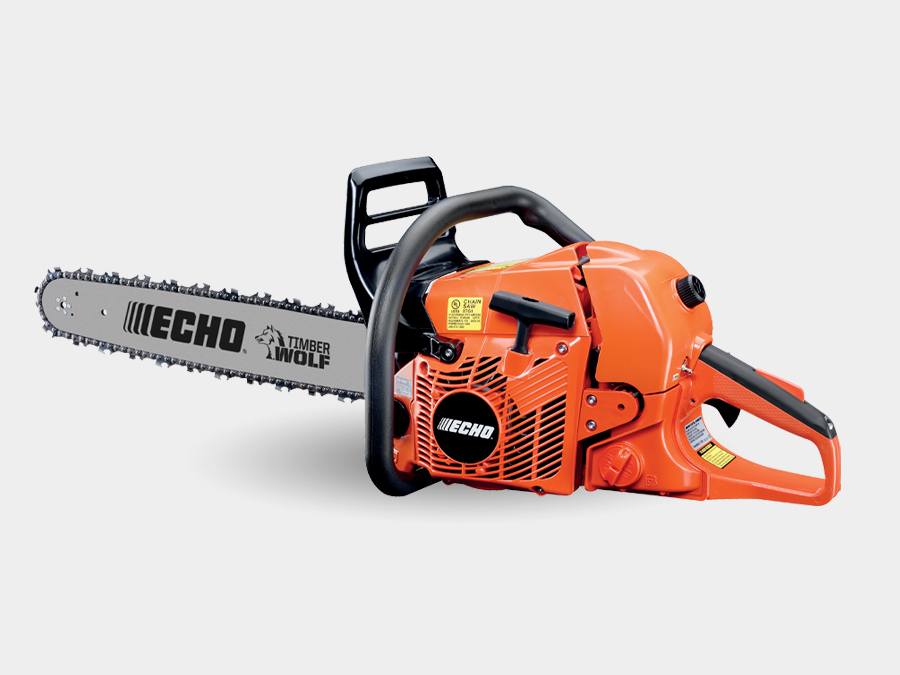
Echo CS-590 Timber Wolf

Echo / Gas / Farm & Ranch

Echo CS-590 Timber Wolf

50cc class
59.8cc
3 kW rated
20 in
cuts to about 18 in
13.2 lb
powerhead only (dry)
~$480
approx., with 20" bar and chain
See it at Echo

Price and availability on Echo's site may differ.

4.6/5 across 1,665 reviews on Home Depot. Nobody reviews saws here; that number is theirs.

Ask any firewood forum for the best chainsaw value in America and the Timber Wolf comes up in the first three replies: 59.8cc of genuine 60-class grunt for about $449 at Home Depot, with a 5-year consumer warranty, and a 4.6-star aggregate across more than 1,600 reviews. Owners routinely run 24-inch bars on it and report it pulls them without complaint, and a decade of production means the failure modes are well mapped — which is to say, there mostly aren't any. The honest knocks: at 13.2 lbs for the powerhead it's a chunk heavier than modern 60cc pro saws, it takes a few more cold-start pulls than a comparable Husqvarna, and the factory semi-chisel chain goes dull fast enough that most owners swap to Oregon 72LPX full-chisel immediately. The carb ships with EPA limiter caps that leave the low-speed circuit lean, so the tinkerer ritual is caps off, retune, muffler mod — after which owners say it embarrasses saws costing $200 more. It lacks the magnesium crankcase and refinement of Echo's X-Series, but for felling and bucking firewood on a budget this is the default answer.

Best for: Firewood cutters and rural landowners who want maximum 60cc capability per dollar and don't mind the weight.

Specifications

Engine class
50cc class (by displacement)
Engine
59.8 cc
Bar range
18-24 in
Single-pass cut
about 18 in (bar minus 2)
Chain
3/8" pitch / .050" gauge (72LPX)
Weight
13.2 lb, powerhead only (dry)
Use case
Farm & Ranch
Warranty
5-year consumer / 1-year commercial
Model
CS-590

Manufacturer figures except the engine class and single-pass cut, which are derived here. What each spec means

  • 4.6 stars across 1,665 reviews
  • Pulls a 24-inch bar
  • The firewood-value benchmark

What owners like

  • 59.8cc / 3.0 kW for ~$449 — no other 60cc saw comes close on price
  • Comfortably runs 18- to 24-inch bars, covering real felling work
  • 4.6-star Home Depot aggregate across 1,665 reviews after a decade on sale
  • 5-year consumer warranty on what is essentially a semi-pro engine
  • Massive parts availability and a well-documented mod path (limiter caps, muffler)
  • Automatic clutch-driven oiler and side-access tensioner keep field maintenance simple

Common complaints

  • 13.2 lb powerhead is noticeably heavier than modern 60cc pro saws like the CS-620P or MS 362
  • Cold starts take more pulls than Husqvarna equivalents — owners develop a choke ritual
  • Factory semi-chisel chain dulls after a handful of hardwood cuts; plan on a full-chisel swap
  • EPA limiter caps leave the low-speed carb circuit lean from the factory
  • Plastic-case construction and dated anti-vibe versus X-Series and pro-brand rivals

What owners say

Read from owner discussions, long-term write-ups and dated retail reviews; nothing here was measured on this site.

Ask a room of firewood cutters what saw to buy and the Timber Wolf arrives in the first three answers, usually followed by somebody saying they bought one and never looked back. Owners call the 590 and 620 pair some of the best saws ever made, and the reasoning is unglamorous: a magnesium split case rather than a plastic clamshell, 60cc of grunt, bars up to the 27 inches Echo's own manual allows, a long consumer warranty, and a street price that drops to $400 or less whenever Echo runs one of its frequent sales. One owner returned a brand-new Husqvarna 455 Rancher unfuelled after reading what other owners had to say and bought the Echo for a hundred dollars less. Six-year, decade-long and wood-boiler-duty reports all land the same way.

Two faults come up over and over. First, it floods, and new owners get genuinely stuck — threads exist of saws that never fired once out of the box, of plugs pulled five times in two days, of owners who now start theirs with the throttle held. The fixes owners share are mundane: check that the stop switch is actually up, drain and refill with known-good fuel, pull the plug and empty the cylinder, and in one case drip a little oil into the bore before trying again. Buying from a dealer who fuels it and starts it for you removes most of this. Second, chain tension: two separate owners report the chain going slack every 15 to 20 minutes, or nearly every cut, with new covers and bars and the bolts properly tight. Beyond that it is the honest 60cc farm-saw stuff — it is heavy at 13.2 lb, it drinks fuel, it gets hot if you hold it wide open in big wood for half a tank, and it is not a milling saw.

Where it lands: owners put it at four cords a year as a laser through anything under 20 inches, and at 20 to 35 cords a year they tell you to go pro or run a 50cc and a 70cc pair instead. Weight is the single most common reason people move on — two long-term owners went shopping for something 10 to 11 lb to carry on trails and limb overhead, while keeping the 590 for bucking where its weight and dogs do the work for you. Owners who want it to punch harder pull the limiter caps, tune with a tach and open the muffler up; one rebuilt his with CS-620P parts and says it now runs with 70cc saws. Against the CS-620P the consensus is that the 590 gives up about half a horsepower and a metal handlebar, which most buyers decide is worth the $200 saved on bars, chains and safety gear.

What owners like

  • It is the default answer in owner threads for a firewood saw, to the point that people buy one sight unseen and are not sorry — one shopper bought a Husqvarna 455 Rancher, read owner opinion that evening, returned it unfuelled and bought the 590 for $100 less
  • Discounts are frequent and deep. Owners report walking out at $410 and $375 during 15 and 25 percent Echo sales, $425 new, $300 for a groundsman's side-work saw, and $280 for new-in-box stock at a liquidation warehouse
  • Echo's manual rates it for guide bars up to 27 inches, and owners run 20 and 24 inches routinely; the advice for the long end is a skip chain, a religiously clean bar groove, and accepting it is not an every-day setup
  • It is a magnesium split-case saw, not a clamshell, which is the specific reason owners pick it over the Husqvarna Rancher series, the Stihl MS 250/271 and Echo's own CS-4920 — and why parts and whole-saw rebuilds are practical years later
  • Long-haul reports are strong: six years described as bomb-proof, nearly a decade used as a felling saw for side work, several years feeding a wood boiler before the first hint of trouble, and one owner who says he is rough on equipment and cannot kill his Echos
  • Owners who want more find a well-mapped path: pull the limiter caps and tune with a tach, open the muffler, and in one case rebuild with CS-620P parts — that owner says it then runs with 70cc saws

Common complaints

  • It floods easily and the starting routine defeats people. Owners report brand-new saws that would not fire at all, plugs pulled five times in two days, and the fix one found was draining the tank and dripping a couple of drops of oil into the cylinder; others start theirs by holding the throttle, or by pulling the plug and emptying fuel out of the bore
  • Chain tension will not hold for some owners. Two separate reports describe the chain going slack after 15 to 20 minutes, or after nearly every cut, on a saw with a new clutch cover, bar and a broken-in chain and the bolts torqued down hard
  • At 13.2 lb it wears people down, and the complaint comes specifically from happy long-term owners: two separate Timberwolf owners went looking for a 10 to 11 lb saw because carrying this one on trails and lifting it overhead to limb had become the limiting factor
  • It drinks fuel. One owner estimates it burns roughly twice what his 35cc Echo does over a long day, and another notes it really eats fuel once broken in and run hard
  • It is a 60cc farm saw and the limits show at the edges — an owner running big pieces at constant high revs found it too hot to touch near the engine inside half a tank and stretching chains fast, and an Alaskan mill owner on a 15-inch sycamore log measured about a minute to cut six inches

Questions owners ask

My brand-new 590 will not start at all. What do owners actually do?

Work on the assumption it is flooded, not broken. Owners check that the stop switch is up first, which is counterintuitive on these and has caught people out; then pull the plug, dump any fuel out of the cylinder, reinstall and pull with the throttle held. One owner who had gone through five plug removals in two days got his going by draining the tank and dripping a couple of drops of oil into the cylinder, and it started hot or cold afterwards. If you bought from a dealer, the simplest answer is to let them fuel it and start it.

Is it really worth running a 24-inch bar on it?

Echo's own manual allows up to 27 inches, and owners run 24 regularly, but they qualify it: use a skip chain toward the top of the range, consider enlarging the oil passage, and keep the bar groove scrupulously clean. One owner filming a 28-inch skip setup got told plainly that it was struggling and would need a lot of help to be competent at that length. The common sweet spot owners settle on is 20 inches, with 18 if you mostly buck smaller wood.

Why will my chain not stay tight?

You are not alone — two separate owners report the chain going slack after 15 to 20 minutes or after nearly every cut, one of them with a new clutch cover, a new bar and a chain that was well past break-in, tightening the bolts hard each time. Check that the tensioner pin is actually seated in the bar hole and that you are clamping the bar squarely, and expect the first few tanks on any new chain to need frequent attention. If it persists on a broken-in chain, it is worth a dealer looking at it under warranty.

How much fuel does it go through?

More than you expect, and more once it is broken in and being worked. One owner heading out for days of relief cutting was told to reckon on roughly double what his 35cc saw drinks — about a gallon and change for a long day on the small saw, so plan two for the 590. Owners also recommend carrying mix separately from straight gas so spare fuel stays usable.

Is it too heavy for limbing and carrying?

For a lot of owners, eventually yes. Two long-time Timberwolf owners went looking for a 10 to 11 lb saw specifically because hauling this one along trails and lifting it overhead to cut limbs had become the thing stopping them, and both kept the 590 for bucking. When you are working a log pile, owners point out the weight and the bumper spikes work for you — rest the bar in the cut and let the chain self-feed.

What should I do to it in the first few tanks?

The standard owner regimen: run premixed or ethanol-free fuel, run the tank dry for storage, keep the chain sharp and the groove clean, and after a few tanks pull the carb limiter caps and tune it with a tachometer. Opening up the muffler is the next step and is widely done; owners report it starts, idles and runs noticeably better afterwards. Watch the spark arrestor screen too — one owner's only issue in nearly a decade was it gumming up, and that was an easy fix.

Drawn from 6 owner threads and long-term reviews, kept on file with this entry.

Compare the Echo CS-590 Timber Wolf

Nearest alternatives

More from Echo
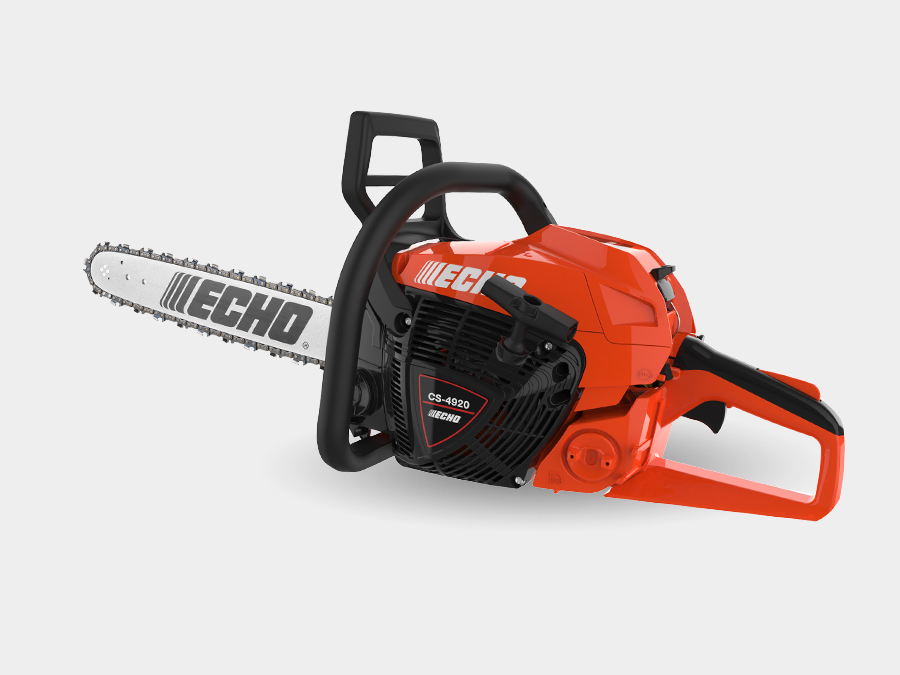
Echo CS-4920

Echo / Gas

~$429

Echo CS-4920

50cc class
50.1cc
engine
20 in
bar
11.1 lb
bare

Rural homeowners and small-acreage owners cutting regular firewood who want 50cc power without pro-saw pricing.

Farm & Ranch4.2/5 Walmart
Echo CS-501P

Echo / Gas

~$670

Echo CS-501P

50cc class
50.2cc
engine
18 in
bar
10.6 lb
bare

Pros and heavy firewood cutters who want 50cc power in the lightest possible powerhead and will use the aluminium-handle build.

Professional
Echo CS-620P

Echo / Gas

~$739

Echo CS-620P

50cc class
59.8cc
engine
20 in
bar
13.7 lb
bare

Pros and serious firewood cutters who want 60cc professional build quality without paying Stihl/Husqvarna prices.

Professional4.2/5 Home Depot

Sources for this entry