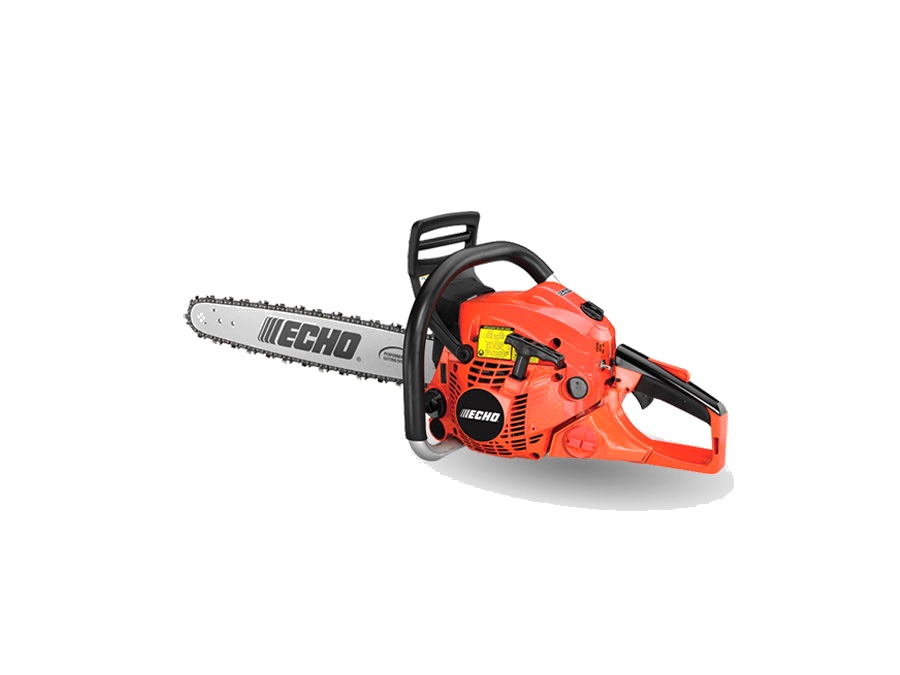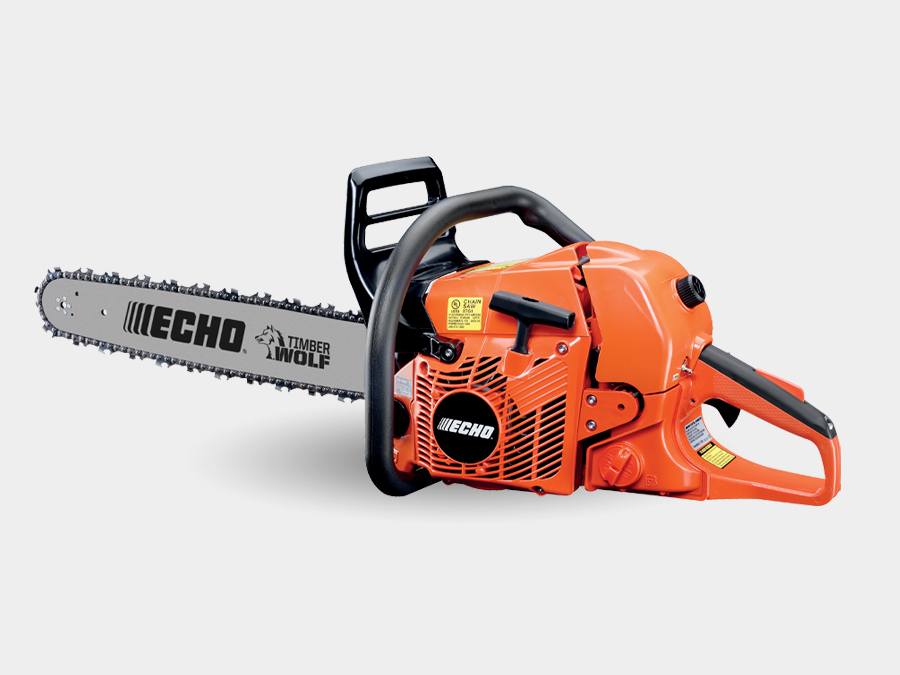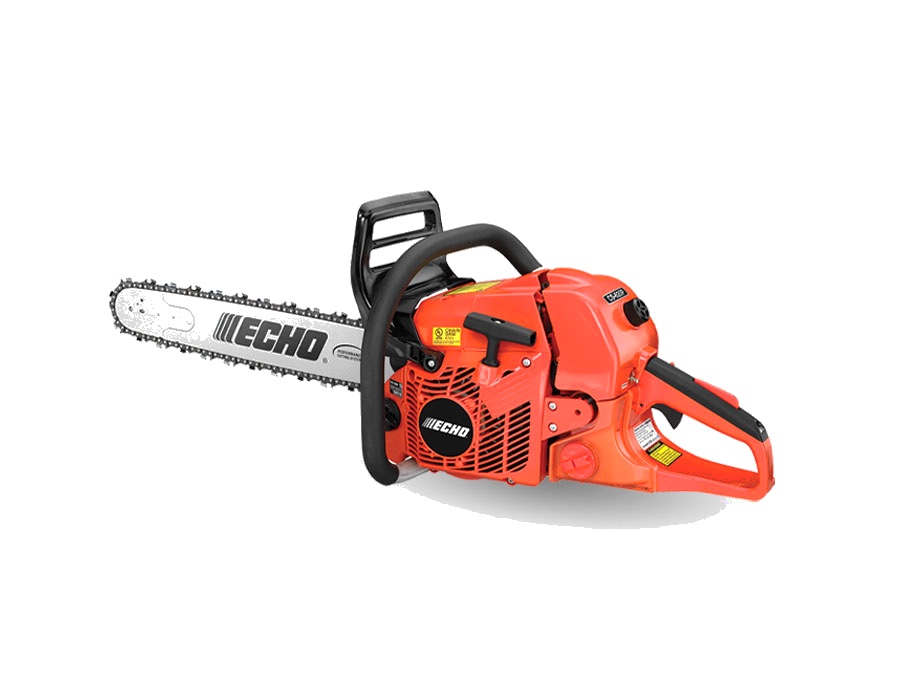
Echo CS-620P

Echo / Gas / Professional

Echo CS-620P

50cc class
59.8cc
3.3 kW rated
20 in
cuts to about 18 in
13.7 lb
powerhead only (dry)
~$739
approx., with 20" bar and chain
See it at Echo

Price and availability on Echo's site may differ.

4.2/5 across 147 reviews on Home Depot. Nobody reviews saws here; that number is theirs.

Echo's X-Series 60cc pro saw, and the recurring punchline among owners is some version of "I'd take a CS-620P over an MS 362 or 562XP every day, then spend the $200 I saved on my wife." The magnesium crankcase, 3.3 kW output, and torque curve that owners swear out-grunts every other 60cc saw make it a legitimate professional tool, and multiple users report it handles a 27-inch bar in green hardwood all day. Street price at Home Depot runs about $739 — still under the Stihl/Husqvarna equivalents — and unlike those brands it carries a 5-year consumer warranty. Its 4.2-star retail aggregate is dragged down by a real complaint: a subset of owners find it nearly impossible to cold-start after sitting, and the felt air filter arrangement gets called out as the one un-pro thing about the saw. It's also thirstier than the strato-charged competition. The mod crowd does a muffler mod, base-gasket delete, and retune and reports the saw becomes "flat out mean." If the CS-590 is the value pick, this is the same displacement grown up: lighter feel, harder pull, pro-grade guts.

Best for: Pros and serious firewood cutters who want 60cc professional build quality without paying Stihl/Husqvarna prices.

Specifications

Engine class
50cc class (by displacement)
Engine
59.8 cc
Bar range
16-27 in
Single-pass cut
about 18 in (bar minus 2)
Chain
3/8" pitch / .050" gauge (72LPX)
Weight
13.7 lb, powerhead only (dry)
Use case
Professional
Warranty
5-year consumer / 1-year commercial
Model
CS-620P

Manufacturer figures except the engine class and single-pass cut, which are derived here. What each spec means

  • Torque king of the 60cc class
  • Runs up to a 27-inch bar
  • $200+ under Stihl/Husky rivals

What owners like

  • 3.3 kW with a torque curve owners say out-pulls the MS 362 and 562XP in big wood
  • Magnesium crankcase, decompression valve, and X-Series build are genuinely professional grade
  • Handles bars from 16 to 27 inches — one saw covers bucking through real felling
  • Typically $200+ cheaper than equivalent Stihl/Husqvarna 60cc pro saws
  • 5-year consumer warranty is unheard of on a pro-tier saw
  • Responds dramatically to the well-documented muffler mod and retune

Common complaints

  • A vocal minority of owners report very stubborn cold starts after the saw sits
  • Felt air filter setup is widely disliked compared to Stihl's HD2 filtration
  • Drinks fuel faster than strato-engine rivals
  • 13.7 lb powerhead gives up a little agility to the newer 60cc generation
  • 4.2-star / 61%-recommend retail aggregate trails its own CS-590 sibling

What owners say

Read from owner discussions, long-term write-ups and dated retail reviews; nothing here was measured on this site.

The CS-620P is Echo's X-Series 60cc saw and the one people reach for when the CS-590 is nearly right but they want metal handlebars, a wrap-handle option and slightly more grunt. What owners praise is consistent: it starts, it pulls bars other 60cc saws complain about — the factory 27-inch is common and one owner runs 28 inches after a muffler mod — and it does so with a magnesium crankcase and parts that interchange heavily with the 590. Bargain rescues feature often: a $50 marketplace saw that fired on the second pull after a carb clean, a $110 one brought back with a piston and a gasket delete.

The honest criticisms are two. First, new-saw starting: one owner could not get a brand-new one to fire at all and it smelled flooded, and another took delivery at 6,000 feet with no dealer within 140 miles and could not start it, which is the situation worth planning for if you buy online rather than from a shop that will start it on the counter. Second, the design's age — owners quoting the spec sheets put it at 6.2 kg and 3.37 kW against a Husqvarna 560/562XP at 5.8 kg and 3.5 kW, and note bluntly that this model has been on sale for more than a decade and does not win on power-to-weight any more. What they give it in return is simplicity: fewer things to break, no electronics, and an owner who maintains his own saws can keep it alive indefinitely.

On capability, treat the long-bar reports with the context owners supply. The guideline they repeat is 18 to 20 inches for a 60cc saw and 20 to 24 for a 70cc, with softwoods allowing a size up; people running 24 and 27 inches on their 620Ps are doing it with sharp chains, skip or semi-skip to clear chips, a light touch and the revs kept up. An owner feeding a wood boiler with 36 to 48 inch logs says it gets through them but it takes a good long while, and the room's answer was that this is simply what a 60cc saw does. Several owners who have run both classes say they would buy a 70cc saw next instead, and pair it with a 50cc rather than owning a 60. For a land owner who wants one saw and will keep it for twenty years, this is still the pick — especially beside a small saw or a battery top-handle for the quick jobs, which is how most owners describe actually using theirs.

What owners like

  • Owners describe it as the saw that always starts and always has power — one wood-boiler owner who bought his brand new off marketplace for $400 says it starts beautifully, and an owner of the 590, 620, 680 and 7310 says his 620 handles 18 to 22 inch logs like a beast and has never needed the needles touched
  • It really will pull a long bar. Owners run the factory 27-inch happily, including with full-comp chain, and one with a muffler mod and retune runs 28 inches buried in hardwood; several keep both a 20 and a 27 so one saw covers limbing through felling
  • It responds dramatically to tuning, because the stock configuration is deliberately conservative — owners report large gains from a muffler mod and a retune alone, with base-gasket delete, intake work and full porting as further steps
  • Parts commonality with the CS-590 is a real cost saver: the 590 muffler fits, and used ones turn up for $15 to $42 against about $100 for a new OEM part. Owners describe building a 590 up into a 620 piece by piece, and swapping 620 parts onto a 590
  • It survives a bargain. Two owners bought broken examples for $50 and $110, one firing on the second pull after a carb clean, the other back in service after a piston, a gasket delete and a muffler port

Common complaints

  • Cold starts on a new saw are where it bites people: one brand-new 620P would not fire once out of the box and smelled flooded, and another arrived at 6,000 feet, would not start, and the nearest service dealer was 140 miles away
  • It is an old design and the numbers show it. Owners doing the comparison put the 620P at 6.2 kg and 3.37 kW against a Husqvarna 560/562XP at 5.8 kg and 3.5 kW, and point out this is a model that has been on sale for over a decade and does not stack up on power-to-weight with the current generation
  • 60cc is 60cc, and owners are blunt that 24 inches buried in hard wood is a big ask for any stock saw this size — the rule of thumb they repeat is 18 to 20 inches for 60cc, 20 to 24 for 70cc. One owner cutting 36 to 48 inch logs finds it gets through them, but takes a long while
  • Owners who run both sizes say they would not buy another 60cc saw: the weight gap to a 70cc 372-class saw is under a pound and the power difference is considerable, so a 50cc and a 70cc pair ends up covering the ground better

Questions owners ask

What bar length should I actually run?

Owners run everything from 18 to 28 inches on these, and the factory 27-inch is reported as no trouble even with full-comp chain. But the rule of thumb experienced cutters give is 18 to 20 inches for a 60cc saw, with softwoods allowing a size up, and going longer means a skip or semi-skip chain to clear chips, a sharp chain and a light touch. One owner converted his 27 down to an 18 with square-ground chain purely to make it easier to carry and manoeuvre for small and medium trees.

The cylinder head screw holes on my new top end are not threaded. Is it defective?

No — that is how Echo makes them. The supplied bolts are thread-cutting fasteners, and the same arrangement is used on the 590, 600 and 620. Owners thread the bolts in with cutting oil before final assembly, back them out, clean everything thoroughly and then build the saw up; a bottoming tap works equally well if you have one. Stihl does the same thing on some top ends.

Why do my chains dull so fast in big wood?

Owners with the same problem — 24-inch skip chains going off after 30 minutes straight in 3 to 4 foot hardwood — were pointed at heat and dirt rather than the saw. There is no oiler setting that cools that much surface area, free tree-service logs carry grit in the bark, and cutting with the tip buried is hard on both chain and nose sprocket. Knocking the bark off your cut line with a hatchet, exiting cuts through the bark rather than dragging it through, dipping the bar nose in used oil between cuts, and a quick 8 to 10 minute touch-up per tank all came recommended; the owner who tried the touch-up routine got three tanks out of a chain still sharp.

CS-620P or CS-590 Timber Wolf?

Owners who have run both say the 590 hangs with it — about half a horsepower less at the top, and it will pull a 24 and get away with a 28 as well. Both are magnesium crankcase saws; the 620 adds a metal handlebar where the 590 is plastic, a wrap-handle option, and generally more heavy-duty detailing. The repeated advice for occasional and small-acreage use is to buy the 590 and spend the $200 on safety gear, wedges, files and spare chains, since parts interchange if you later want to upgrade piece by piece.

Anything to know about buying one secondhand or online?

The failure mode owners hit is a saw that will not start with no dealer nearby — one took delivery at 6,000 feet and the nearest service shop was 140 miles away. Bought cheap and broken, they are good projects: $50 and $110 examples came back with a carb clean and a piston respectively, and used 590 mufflers fit for a fraction of the $100 OEM price. If you are not comfortable tuning and tearing into a saw, buy from a shop that will start it in front of you.

Drawn from 7 owner threads and long-term reviews, kept on file with this entry.

Compare the Echo CS-620P

Nearest alternatives

More from Echo
Echo CS-620PW

Echo / Gas

~$770

Echo CS-620PW

50cc class
59.8cc
engine
20 in
bar
14.1 lb
bare

Fallers and tree crews who need wrap-handle grip positions and will use the X Series build hard enough to justify it.

Professional
Echo CS-501P

Echo / Gas

~$670

Echo CS-501P

50cc class
50.2cc
engine
18 in
bar
10.6 lb
bare

Pros and heavy firewood cutters who want 50cc power in the lightest possible powerhead and will use the aluminium-handle build.

Professional
Echo CS-590 Timber Wolf

Echo / Gas

~$480

Echo CS-590 Timber Wolf

50cc class
59.8cc
engine
20 in
bar
13.2 lb
bare

Firewood cutters and rural landowners who want maximum 60cc capability per dollar and don't mind the weight.

Farm & Ranch4.6/5 Home Depot

Sources for this entry