Echo CS-2511T

Echo / Gas / Arborist

Echo CS-2511T

30cc class
25cc
1.1 kW rated
12 in
cuts to about 10 in
5.2 lb
powerhead only (dry)
~$599
approx., with 12" bar and chain
Check price on Amazon

We may earn a commission. Price and availability on Amazon's site may differ.

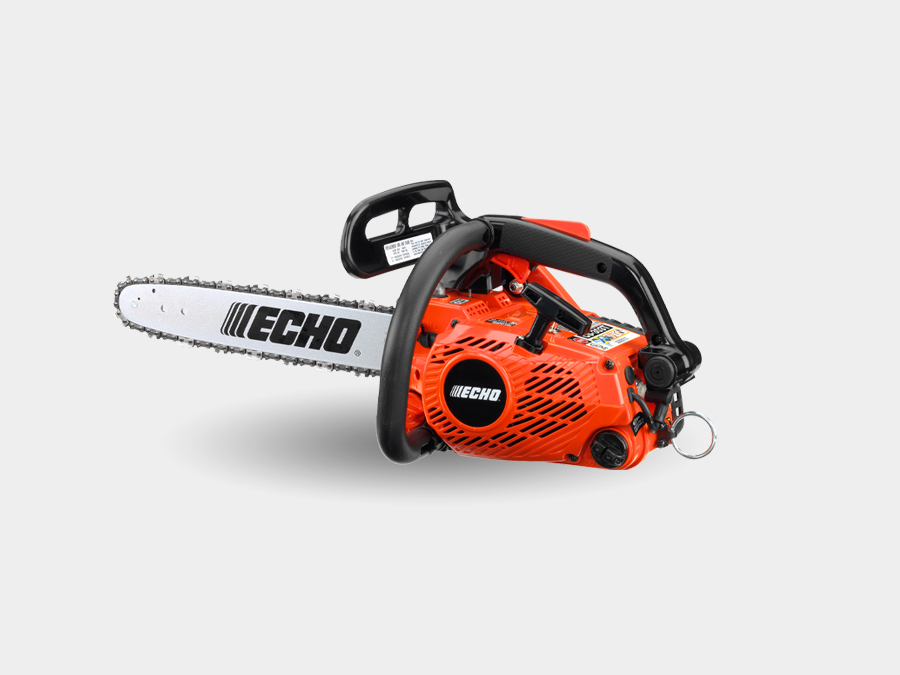
The lightest gas chainsaw sold in North America at 5.2 lbs, and the saw that made working climbers take Echo seriously — when it launched, arborist threads were full of "can't get one, they're back-ordered everywhere." Climbers love that after a full day aloft they aren't wrecked the way they are with a Stihl MS 201 T or Husqvarna T540 that weighs two-plus pounds more, and the 25cc X-Series engine punches above its 1.1 kW rating on small wood. It is a specialist though: reviewers note it slogs through anything much over 10 inches, and this is a pruning-and-tips saw, not a chunking saw. The documented gripes are specific: the tiny air filter clogs quickly and can let fines past (climbers add an O-ring fix), some units have had the oiler passage clog and stop feeding the bar until torn down and cleaned, and a few owners report heat-soak complaints after an hour of continuous running. Echo backs even this pro tool with its 5-year consumer warranty, and at roughly $599 it undercuts the T540 XP Mark III by over $100. Among lightweight top-handles, this is the class benchmark.

Best for: Working climbers and arborists who prioritize minimum weight aloft for pruning and small takedowns.

Specifications

Engine class
30cc class (by displacement)
Engine
25 cc
Bar range
12-14 in
Single-pass cut
about 10 in (bar minus 2)
Chain
3/8" low-profile pitch / .050" gauge
Weight
5.2 lb, powerhead only (dry)
Use case
Arborist
Warranty
5-year consumer / 1-year commercial
Model
CS-2511T

Manufacturer figures except the engine class and single-pass cut, which are derived here. What each spec means

  • 5.2 lbs — lightest gas saw in the US
  • Arborist cult favorite
  • Undercuts T540 XP by $100+

What owners like

  • 5.2 lb dry powerhead — the lightest gas-powered chainsaw sold in North America
  • Excellent power-to-weight from the 25cc X-Series engine for tips and pruning cuts
  • Climbers report dramatically less end-of-day fatigue versus the MS 201 T / T540 XP class
  • Oiler flow is strong for the class — higher than a Stihl MS 150 T per owner comparisons
  • 5-year consumer warranty on a professional climbing saw
  • About $599, undercutting every comparable pro top-handle

Common complaints

  • 1.1 kW means slow going in wood much over 10 inches — it is a pruning saw, full stop
  • Small air filter clogs fast and can pass fine dust; owners retrofit an O-ring seal
  • Documented cases of the oiler passage clogging and starving the bar until disassembled
  • Some owners report heat-soak complaints after an hour of continuous cutting
  • Tiny 6.4 oz fuel tank means frequent refueling on production days

What owners say

Read from owner discussions, long-term write-ups and dated retail reviews; nothing here was measured on this site.

This is the saw that made working climbers take Echo seriously. The pitch is simple — it is the lightest gas top-handle sold, roughly half the weight of the Stihls on the next peg at the dealer, and climbers describe it as feeling like a toy right up until the end of a full day in the tree. Owners who run Husqvarna and Stihl on the ground say they run Echo aloft purely on value; one uses his every day and expects to wear it out, and another calls it his go-to for any tree under 14 inches. For pruning, tips and working in close through bushy growth, nothing in the threads argues against it.

The catch is the factory bar and chain. On its stock 3/8 low-profile setup owners call it sluggish in deep cuts and prone to chatter, and the near-universal first move is converting it — either to 1/4-inch pitch with a conversion sprocket, or to Oregon's .325 SpeedCut Nano, alongside a muffler mod or a performance pipe and pulled limiter caps. Done, owners say it surpasses a Stihl MS 193 and lands a hair under a 201, and a ported one on 1/4 pitch out-runs a stock 200 or 201. Which raises the question owners keep asking out loud: why buy the plain T when the TN ships with the .325 nano bar and chain for less than the conversion kit costs. The conversion's price is chain supply — 65 drive links where the shelf stocks 64, scarce and dear, and nano bars with tolerances tight enough that one thrown chain ended a bar.

Live with it and the small annoyances are tuning fussiness (stalling after cuts until the idle is right, the high screw needing a nudge when the weather changes), no felling dogs from the factory so sap and debris pack onto the front case until you fit the single-side dogs Echo sells, and fuel caps awkward enough that owners hunt for Husqvarna flip caps and warn you to loosen them with the starter-rope handle. It is tougher than it looks — one survived a 20-foot drop out of a tree — and builders like Rip Saw and Egan have made a cottage industry of modded and piped versions, with waits running to 10 weeks or more. Owners talk about the Chinese 2511 clones too, mostly fondly for a hundred-odd dollars, but the people who use these for a living are blunt that a professional who needs a saw now does not substitute a clone, and clone owners themselves report throttle faults, melting brake-side plastic and having to remove the muffler guard to change a chain. Two last warnings from owners: this is a climbing saw, not a ground saw or a first saw, and because it is so small and light it is the one people stop respecting — exactly how hands get cut.

What owners like

  • Climbers call it the lightest top-handle on the market and about half the weight of the Stihls it sits beside at the dealer — the recurring reaction is that it feels like a toy until you have run it for a full day
  • It is the saw working climbers say they grab more than anything else they own: one uses his daily and expects to wear it out, another calls it his go-to for anything under 14 inches, and several who run Husqvarna and Stihl on the ground run Echo top-handles aloft on value alone
  • One-handed work in tight, bushy growth is where owners say it changes how you move in a tree — getting in close to a trunk through clusters of narrow branches is genuinely easier than with a heavier saw
  • It takes mods well and the path is well documented: pull the limiter tabs, open the muffler or fit a performance pipe, and richen after a few tanks. Owners report it then surpasses a Stihl MS 193 and lands just shy of a 201, and a ported one on 1/4-inch pitch will out-run a stock 200 or 201
  • Owners find it tougher than its weight suggests — one dropped his 20 feet out of a tree with no damage, and another who broke the top mount rebuilt it himself from a $60 parts saw

Common complaints

  • The factory 3/8 low-profile bar and chain is the saw's weak point and owners are harsh about it: sluggish in deep cuts out of the box, and one climber says it runs badly on 3/8 even when modified and loves to chatter. Converting to 1/4-inch pitch or Oregon's .325 nano setup is treated as the fix rather than an upgrade
  • After converting, chains get hard to buy. The 1/4-inch setup needs a 65 drive-link loop where the commonly stocked pole-saw chains are 64, and owners report the correct ones being scarce and expensive; the nano bars run very tight tolerances, and one owner who threw a chain could not reseat it at all and lost the bar
  • Idle and carb tune are fussy. Owners describe it stalling after cuts until the idle is dialled in, having to move the high screw when the weather shifts, and in one modded case dying instantly after every cut and only restarting on the trigger
  • It ships without felling dogs, and in sappy softwoods owners were getting debris packed onto the front case until they fitted the single-side dogs Echo sells for it
  • The fuel and oil caps are awkward enough that owners go looking for Husqvarna flip caps as a replacement — the trick is to loosen them with the starter rope handle, and ground crews who do not know that reach for a screwdriver and wreck them

Questions owners ask

Should I buy the plain 2511T or the TN?

Owners who have done the conversion say the TN, and say it fairly loudly — it ships with the .325 bar and nano chain for less than buying the aftermarket conversion kit, and one owner describes that setup as making it a whole new saw. The argument for the plain T is chain commonality: climbers who already own racks of 3/8 low-profile loops for other saws do not want a second standard in the truck.

What does the 1/4-inch pitch conversion actually do?

It swaps the aggressive stock 3/8 chain for one that takes a smaller bite, which sounds backwards but means the little engine is not loaded as hard — owners report it cuts smoother, bogs far less in bigger wood and feels more powerful. The parts are a conversion sprocket plus bar and chain, and owners also like the narrower bar nose for pruning. The downside is chain supply: you need 65 drive links where pole-saw chains are commonly 64, and they are hard to find and pricey.

Which mods are worth doing, and in what order?

Owners consistently say limiter caps out plus exhaust work first, and that removing the limiters alone does little unless you also free up the exhaust. A modified stock muffler, an aftermarket performance muffler or a pipe all get used; one owner rates the pipe's gain as noticeable as the bar-and-chain conversion. Retune afterwards, richen the high jet only after a few tanks are through it, and leave porting for later — builders are quoting 10 weeks or more and the saw will already surpass a Stihl MS 193 without it.

Why does mine stall after a cut or need a trigger start?

Idle tuning and fuel are the usual culprits. One owner traced persistent stalling after cuts to a mix with too much oil in it, another has to touch the high screw when the weather changes, and one who had just richened both screws by an eighth of a turn ended up with a saw that died instantly after every cut. Set the idle a touch higher than feels necessary while it breaks in, run clean correctly mixed fuel, and retune after any muffler work.

Does it need felling dogs?

Owners who cut pine and other sappy species say yes — without them, debris packs onto the front of the case. Echo sells single-side dogs that bolt on, and the owner who fitted them says the saw has been much easier to keep clean since. They turn up on the 355T too, where they sit slightly low and some owners trim them.

Is it a reasonable first saw or a ground saw?

No on both counts, and owners say so firmly. It is a top-handle built for climbing; people warn against using one on the ground, where both handles being close together is awkward and encourages one-handed cutting. The specific risk owners raise is that it is so small and light that operators stop respecting it — one 355T owner makes the same point and refuses to lend his out. If you want something small for ground work, owners point to a rear-handle saw, including Echo's own rear-handle versions of this size.

Drawn from 6 owner threads and long-term reviews, kept on file with this entry.

Compare the Echo CS-2511T

Nearest alternatives

More from Echo
Echo CS-2511P

Echo / Gas

~$600

Echo CS-2511P

30cc class
25cc
engine
12 in
bar
5.7 lb
bare

Ground crews, landscapers and older cutters who want top-handle lightness without the safety compromise of a top-handle.

Professional
Echo CS-303T

Echo / Gas

~$549

Echo CS-303T

30cc class
30.1cc
engine
12 in
bar
7.7 lb
bare

Working climbers who want Echo durability in a light pruning saw without the 2511T's premium.

Arborist
Echo CS-271T

Echo / Gas

~$500

Echo CS-271T

30cc class
26.9cc
engine
12 in
bar
6.6 lb
bare

Climbers and tree crews who want a dependable pro top-handle for pruning and tip work at the lowest price Echo sells one.

Arborist

Sources for this entry