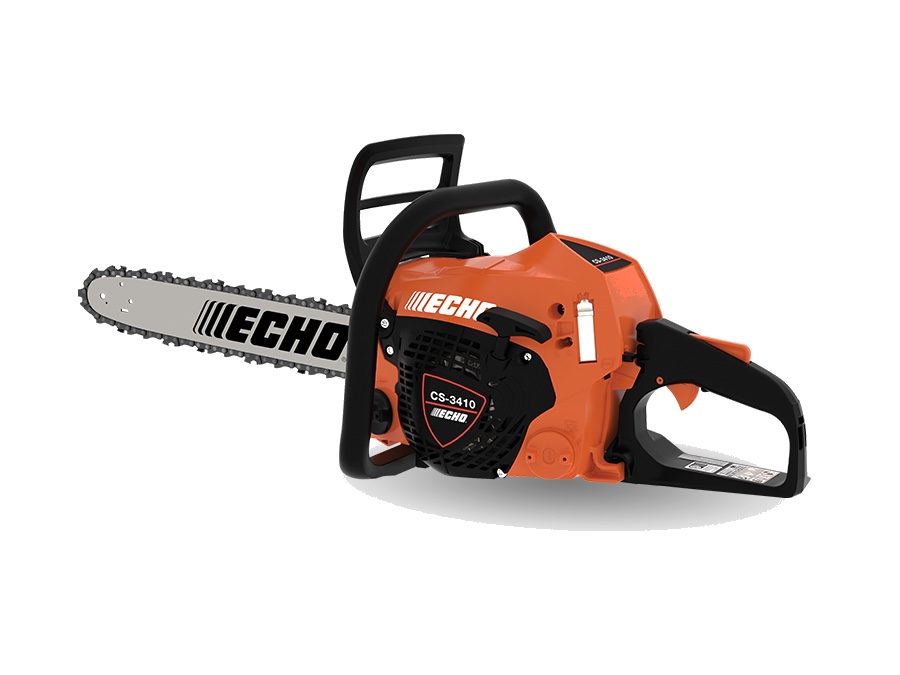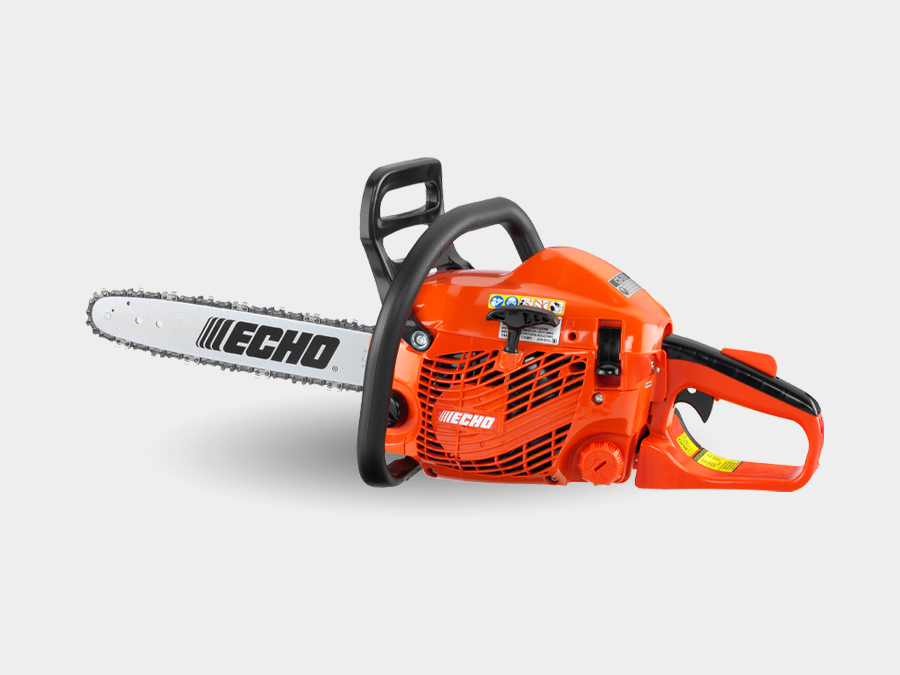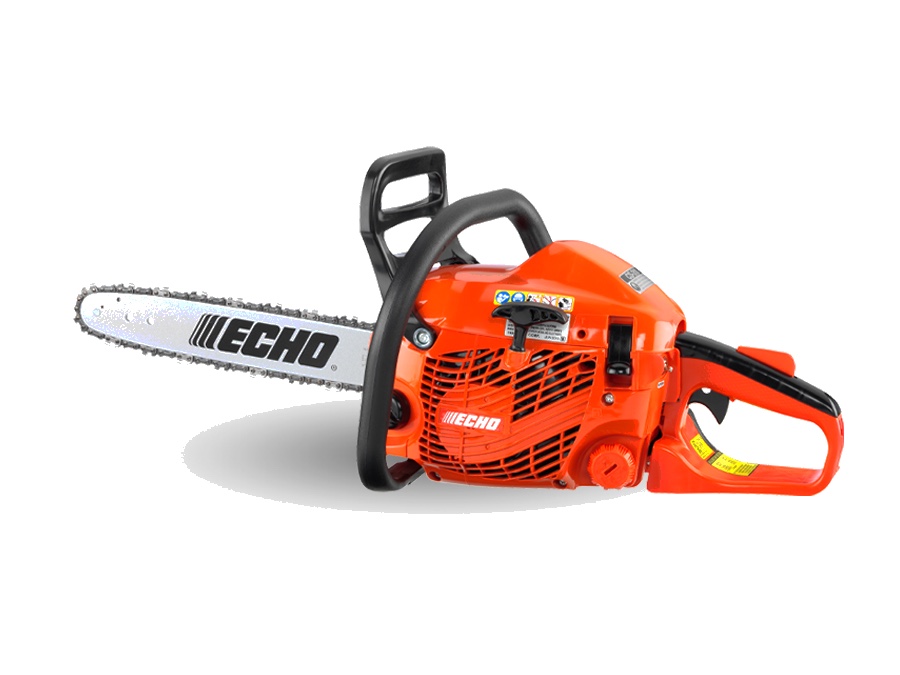
Echo CS-3510

Echo / Gas / Homeowner

Echo CS-3510

30cc class
34.4cc
16 in
cuts to about 14 in
8.2 lb
powerhead only (dry, without bar and chain)
~$300
approx., with 16" bar and chain
See it at Echo

Price and availability on Echo's site may differ.

3.9/5 across 413 reviews on Home Depot. Nobody reviews saws here; that number is theirs.

Echo's step up from the CS-310, and the one worth taking if you are cutting more than storm limbs: 34.4cc in an 8.2 lb powerhead for about $300, with a 3-point spring anti-vibration system the cheaper saws do not get. Echo rates it at 17% more power than the CS-3410 that sits beside it on the shelf for $50 less, which is the whole argument for the extra money since the two are otherwise the same displacement and the same weight. The 3.9-star Home Depot aggregate across 413 reviews is the honest part of this entry and lower than Echo's usual: 68% of reviewers recommend it, and the dissenting third are specific — hard starting out of the box, a chain brake that engages when it should not, and thrown chains during break-in. Owners who got a good one describe it as the light, cheap saw that keeps starting after years of neglect. It is a 16-inch saw only; there is no bar upgrade path.

Best for: Homeowners cutting a cord or two a year who want more saw than a CS-310 without crossing $350.

Specifications

Engine class
30cc class (by displacement)
Engine
34.4 cc
Single-pass cut
about 14 in (bar minus 2)
Chain
3/8" low-profile pitch / .050" gauge (laminated bar)
Weight
8.2 lb, powerhead only (dry, without bar and chain)
Use case
Homeowner
Warranty
5-year consumer / 1-year commercial
Model
CS-3510

Manufacturer figures except the engine class and single-pass cut, which are derived here. What each spec means

  • 17% more power than the CS-3410
  • 8.2 lb powerhead
  • 3-point spring anti-vibe

What owners like

  • 34.4cc in an 8.2 lb powerhead — light enough for extended limbing, strong enough for small firewood
  • Echo rates it 17% more powerful than the CS-3410 it shares a shelf with
  • 3-point spring anti-vibration system is a genuine step up from the entry CS-310 and CS-352
  • i-30 starter cuts pull effort by a claimed 30%, and most reviewers confirm easy warm starts
  • 5-year consumer warranty, sold and serviced through Home Depot as well as Echo dealers

Common complaints

  • 3.9 stars across 413 Home Depot reviews with only 68% recommending — the weakest retail aggregate of any current Echo saw
  • Recurring complaints of hard cold starting and units returned more than once
  • Owners report the chain brake engaging unprompted and chains thrown during break-in
  • 16-inch bar only — no 18- or 20-inch option as the engine grows in
  • $50 more than the near-identical CS-3410, and the only stated difference is Echo's own power claim

What owners say

Read from owner discussions, long-term write-ups and dated retail reviews; nothing here was measured on this site.

The CS-3510 occupies a narrow, honest slot: a 35cc, 16-inch, light saw for limbing, trail work, storm cleanup and small firewood, usually as the second saw in a shed that already contains something bigger. Owners who bought it for that are consistently happy, and the praise is specific rather than vague — it starts easily, it is light enough to use all day, and it will pull the whole 16 inches buried if it must. The most commonly quoted verdict is that it is built light in all the places that do not count: the exterior plastics are thin, the engine, clutch and carburetor are not. Several owners who also run Stihl and Husqvarna say the Echo is the one that never goes to the shop.

Two things to fix on day one. The stock safety chain is widely regarded as the worst part of the saw; owners swap to a full-profile Oregon chain and describe the difference as night and day. And the plastic felling dogs put people off in the showroom — metal spikes exist as an upgrade, but on a 35cc rear-handle saw most owners never dog in hard enough to care. Beyond that, buy it somewhere that tunes it: Echo saws are known to leave the factory a little lean, and a shop that starts it and checks the tune before you pay is doing real work. New owners most often panic about the chain spinning at a high idle out of the box, which other owners trace to the carburetor's low-speed screw or the idle screw and solve by blipping the throttle after start; the same threads carry a worthwhile warning about leaving the chain brake engaged while the saw warms up, which cooks the clutch drum.

It is the wrong saw if you are cutting firewood in volume, and owners will tell you so unprompted. Anyone describing a few days of cutting a month on a woodlot gets pointed to a 50cc saw instead — an Echo CS-4910 or CS-590, a Stihl MS 250 or 251 — and the step up is often only a hundred-odd dollars. Against the cheaper CS-3410 beside it on the shelf, owners treat the 3410 as a slightly crippled version of the same saw and say the extra power is worth having once you are cutting anything in the 5 to 14-inch range rather than just pruning. Against Stihl's small saws, the comparisons owners draw are the MS 182 (cheaper and, by one account, stronger), the MS 250/251 (similar power and bar, a notch heavier) and the MS 194, which costs roughly $200 more and which owners say is only worth it if the lighter top-handle-derived chassis matters to you. Watch the used market: these turn up cheap and often for silly reasons.

What owners like

  • The weight is the whole point and owners say it delivers. One keeps it as the small saw beside a 24/28-inch 620PW and describes it as really light, easy starting, with no problem pulling all 16 inches buried when it has to. Another who bought one to replace a locked-up old Husqvarna 61 says the Echo is half the weight and so much easier to start and use all day. A third, four years in, says the thing he loves is simply that it is light enough to trim limbs around the house without wearing him out.
  • The cheapness is in the plastics, not the engine. The most quoted assessment in these threads is that the Echo is built light in all the places that do not count — thin exterior plastics, but engine, clutch and carburetor built well — and the same owner puts the CS-3510 alongside the 490 and 590 as the best value in their respective size classes for homeowner work and some light commercial use. Owners who run Echo alongside Stihl and Husqvarna repeat a version of this: the Echos are the ones that never go in for repair.
  • The five-year consumer warranty is a real part of the buying case and owners invoke it when comparing against a Stihl MS 194 that costs a couple of hundred more. One owner who had to use Echo's warranty on a different saw reports the company honoured it and returned the saw running better than it arrived.
  • It is a strong saw on the used market because the people who need light saws keep buying new ones. Owners in these threads paid $180 for a used-as-new unit, $130 for a big-box return tagged "runs fine but won't cut" (the chain was on backwards), and $89 for the same listing on an auction site. At those prices nobody argues about the plastic dogs.
  • Dealers push it on first-time buyers for a reason, and the people who follow that advice do not come back unhappy. A shop started one up and checked the tune in front of a buyer who joked it looked like a toy saw; he reports no regret at full price. Several multi-saw owners name it their favourite go-to light saw, and one utility crew replaced a worn-out Husqvarna 240 with one on a local shop's recommendation.

Common complaints

  • The factory chain is the first thing experienced owners throw away. One calls the stock safety chain terrible and runs an Oregon 91VXL instead, which he describes as buttery smooth by comparison. The plastic felling dogs are the other complaint people notice in the shop before they buy — metal spikes are an available upgrade, though owners point out you are not going to be dogging in much with a 35cc rear-handle saw anyway.
  • At 34.4cc it is a limbing and cleanup saw, and owners say so bluntly to anyone describing firewood volume. Told about a few days a month of farm use on a 6-acre woodlot, the repeated answer was that the 3510 is only a 35cc saw used more for limbing and that a 50cc saw is the right size. The people who like it most own it as a second saw beside something much bigger.
  • It runs lean from the factory and a tune matters. Owners who rate the saw highly add the caveat that Echos are tuned a little lean out of the box and that a local shop should have set it up before it left — buy it off a shelf untuned and you are starting from a worse place than the owner next to you.
  • Cold behaviour is slower than its reputation suggests. One owner who loves the saw notes it takes a little longer to warm up than his other saws and needs the throttle blipped a few times before it will idle along properly, and the recurring new-owner panic — the chain spinning fast at idle on a saw straight out of the box — is traced by other owners to the carburetor's L screw or the T idle screw, with the warning that adjusting it while running is genuinely dangerous.

Questions owners ask

The chain spins fast as soon as I start it, even at idle. Is the saw faulty?

Usually not. The first thing owners tell you is to blip the throttle right after starting — a cold saw idles high until you do. If it still runs away, the carburetor's low-speed (L) screw is the usual culprit and turning it counter-clockwise brings it down; the manual's idle-speed procedure is to turn the T screw clockwise until the chain just moves, then back it out counter-clockwise until it stops plus another quarter turn. Owners warn repeatedly that adjusting a carburetor with a spinning chain is dangerous, and that if the saw is brand new the better answer is to take it back and have the dealer set it. One more thing from the same threads: do not let it warm up with the chain brake engaged, because that overheats the clutch drum and can melt the plastics around it.

Should I buy the CS-3510 or save $50 on the CS-3410?

Owners treat the 3410 as essentially the same saw with less power to match its shorter bar, and the deciding factor is what you cut. For pruning and small limbing you will not miss the difference; once you are into 5-inch wood and up, and especially 12 to 14 inches, owners expect you to want the 3510's extra power. One who owns the 3510 and has not run a 3410 put it plainly: both will start easily and last with care, so the question is only power and bar length. The 3410 is also described as very light and good for a 16-inch bar giving at least 12 inches of usable cut.

Can it cut firewood, or do I need something bigger?

It will cut firewood — owners buck with theirs and one reports pulling a 16-inch bar fully buried when necessary — but 35cc is not a firewood-volume saw and owners say so immediately when someone describes cutting several days a month. The standard advice in those threads is to step to a 50cc saw: an Echo CS-4910 or CS-590, or a Stihl MS 250/251. If you already own a big saw and want something light for limbing and trail work, this is exactly the right second saw.

Are the plastic felling spikes and thin plastics a dealbreaker?

Most owners say no, with one important caveat. The assessment that gets repeated is that the Echo is built light where it does not count — thin exterior plastics but a well-built engine, clutch and carburetor. Metal felling spikes are available if you want them, but on a 35cc rear-handle saw with a sharp chain owners say you will rarely dog in hard enough to need them. The one dissent worth knowing comes from an owner who says Echo's smaller saws, good quality as they are, are more delicate than the bigger ones and advises buying nothing below an 18-inch-bar Echo if you are rough on equipment.

Does it need any tuning or setup out of the box?

Yes, and it is the one thing even its fans insist on. Owners report Echo saws leave the factory tuned a little lean, and the recommendation is to buy from a shop that starts it, checks the tune and hands it over running right rather than pulling a sealed box off a rack. Replace the stock safety chain while you are at it — that swap gets mentioned more often than any other modification to this saw.

Drawn from 8 owner threads and long-term reviews, kept on file with this entry.

Compare the Echo CS-3510

Nearest alternatives

More from Echo
Echo CS-352

Echo / Gas

~$260

Echo CS-352

30cc class
34cc
engine
16 in
bar
8.8 lb
bare

Occasional cutters who want the most proven cheap Echo rather than the newest one.

Homeowner4.6/5 Home Depot
Echo CS-3410

Echo / Gas

~$260

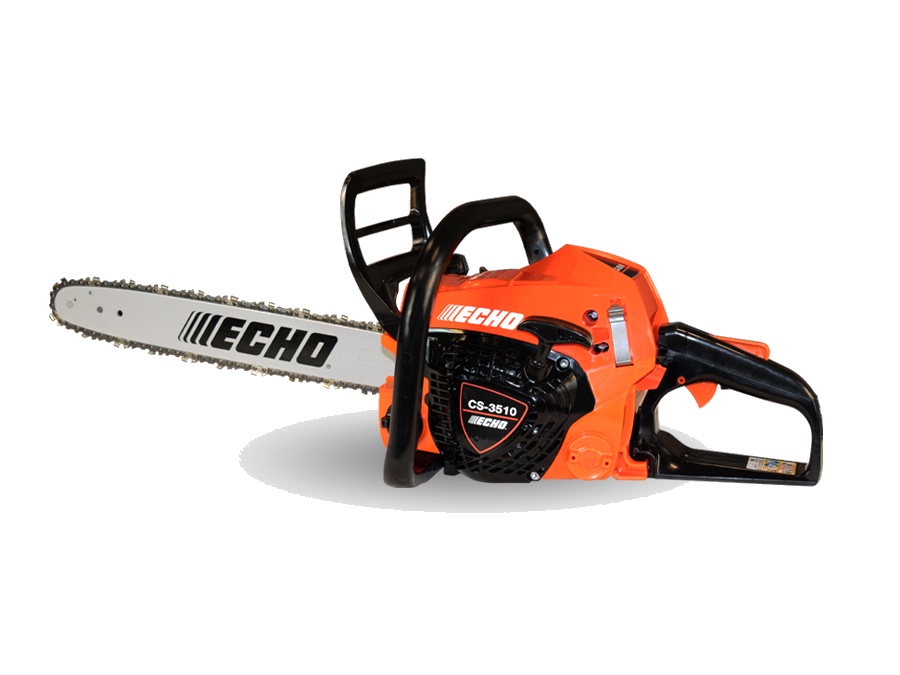
Echo CS-3410

30cc class
34.4cc
engine
16 in
bar
8.2 lb
bare

Homeowners who want the CS-3510's chassis and weight for less money, or specifically want the 14-inch bar.

Homeowner3.8/5 Home Depot
Echo CS-310

Echo / Gas

~$219

Echo CS-310

30cc class
30.5cc
engine
14 in
bar
8.8 lb
bare

Homeowners who need a light, cheap gas saw for limbing, pruning, and storm cleanup a few times a year.

Homeowner

Sources for this entry