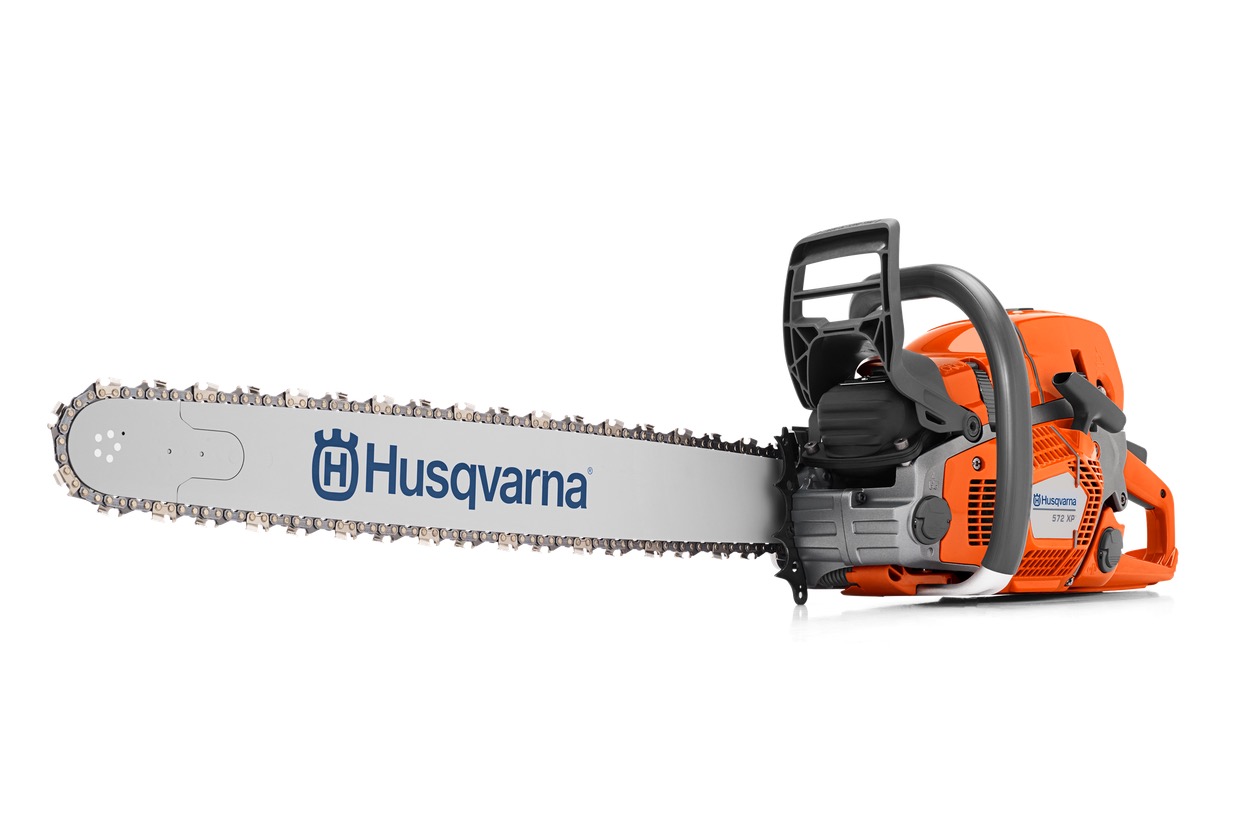
Husqvarna 572 XP

Husqvarna / Gas / Professional

Husqvarna 572 XP

70cc+ class
70.6cc
4.3 kW rated
24 in
cuts to about 22 in
14.5 lb
powerhead only
~$1,349
approx., with 20", 24", 28", or 32" bar and chain
See it at Husqvarna

Price and availability on Husqvarna's site may differ.

Husqvarna's 70cc flagship and one half of the great modern felling-saw rivalry — every 572 XP thread eventually becomes a Stihl MS 462 thread, and the fact that neither side wins is the point: both are spectacular. The 572's case is 5.8 horsepower with AutoTune, cooling and filtration designed for all-day timber work, and vibration numbers that let pros run it for full shifts. Owners praise how it pulls long bars — 24 inches is its sweet spot and 28 is genuinely workable — and how the X-Torq engine keeps torque flat deep into the cut instead of falling on its face. The knocks are few and honest: at 14.5 pounds it gives up about a pound and a third to the MS 462's 13.2, early-production cylinder issues (since resolved) still echo around the arborist forums, and the $1,349 list price plus dealer-only service makes it a professional's purchase. For felling and bucking serious timber, this and the 462 are the two right answers.

Best for: Professional fellers and serious landowners bucking large timber who need all-day 70cc capability.

Specifications

Engine class
70cc+ class (by displacement)
Engine
70.6 cc
Bar range
15-28 in
Single-pass cut
about 22 in (bar minus 2)
Chain
3/8" pitch / .058" gauge (X-Cut C85)
Weight
14.5 lb, powerhead only
Use case
Professional
Warranty
2-year consumer / 1-year commercial
Model
572 XP

Manufacturer figures except the engine class and single-pass cut, which are derived here. What each spec means

  • 5.8 hp professional felling power
  • Runs bars to 28 inches
  • The MS 462's only true rival

What owners like

  • 4.3 kW output pulls 24-28 inch bars through hardwood without bogging
  • AutoTune eliminates carb fiddling across altitude and fuel changes
  • Best-in-class cooling and filtration for sustained full-load work
  • Low vibration for a 70cc saw — full-shift usable
  • Flat torque curve deep in the cut, the X-Torq signature
  • Pro-grade magnesium construction built for years of rebuilds

Common complaints

  • Bar studs back off in use — the most-repeated owner fault; the chain can dull itself against the guard before you notice, and owners run thread-locker on the studs or check the nuts every few tanks
  • Hot starting is the fault that moves owners to Stihl; it is worst a few minutes after shutdown, and setting the fast idle is the workaround
  • $1,349 list and dealer-only — a working tool's price tag
  • 1.3 lb heavier than the Stihl MS 462 it battles — 14.5 lb against 13.2, a wider gap than the brochures suggest
  • Early-production cylinder issues still color forum sentiment despite the fix
  • AutoTune diagnostics require a dealer visit
  • Vastly more saw than any homeowner workload justifies

What owners say

Read from owner discussions, long-term write-ups and dated retail reviews; nothing here was measured on this site.

Every 572 XP discussion turns into a Stihl MS 462 discussion, and owners who have both are clear about where the line falls: the Husqvarna wins on air pre-filtration and anti-vibration, and the Stihl wins on weight. Owners put the 572 at 14.5 pounds against the 462's 13.2 — nearly a pound and a half, not the half pound brochures imply. An owner who stepped up from a Stihl 461 to a 572 on the same 20-inch bar calls the difference in balance and vibration night and day. Several say the saw is simply smooth for a 70cc machine, which is what lets it run full days, and the owners who run bars at 24, 28 and occasionally 32 inches report it pulling 30-inch trees without drama.

Two faults come up specifically. Bar studs back off in use, and owners only notice when the chain has worn itself against the guard underneath — the standard fixes are blue thread-locker on the studs, a shorter bar, and periodically checking the nuts; one owner says his 372 is far less prone to it and blames the 572's higher revs. Hot starting is the other, and it is the one that loses customers: an owner with two 572s says the hot-start problem drove him insane and he switched to a Stihl MS 400 C. Owners who live with it set the fast idle and pull rather than choking a warm engine, which is the long-standing Husqvarna trick. AutoTune divides opinion too. Owners who do not want to touch a carburettor like it and point out the manual explains how to calibrate it; owners who service their own saws worry about saws they cannot adjust and that may not be repairable in a decade the way a 372 XP still is, and the advice from both camps is the same — do not run it out of fuel mid-cut.

Who owners say it is for: fellers, land-clearers and landowners whose logs are consistently 24 inches and up, and anyone who needs a bar longer than 24 inches. If you do not, owners send you down a tier, to the 562 for less weight or a 550 XP paired with it — two professionals run exactly that pair as their daily saws. The alternatives that come up are the Stihl MS 462 as the direct rival, the MS 400 C as the lighter saw that is almost as powerful, the Echo CS-7310P at around $1,000 as the simple non-AutoTune option, and the older 372 XP, which owners keep recommending to anyone who wants a saw they can tune and fix themselves for the next forty years.

What owners like

  • Filtration and vibration are what owners actually name when they pick it over the Stihl MS 462: better air pre-filtration, taking out larger material, and the better anti-vibration system, which more than one owner calls an unbelievably smooth saw.
  • An owner who moved from a Stihl 461 to a 572 with the same 20-inch bar on both says it is night and day — much better balance, much less vibration — and that the saw is overpowered for a 20, so he expects to go longer.
  • It replaces lesser saws outright. An owner with a 450 Rancher and a 572 on a 28-inch bar stopped bringing the 450 at all, calls the 572 light enough to run all day and a workhorse, and after three years does not regret it one bit; he rates the full-wrap handle as a genuinely helpful upgrade.
  • Some owners get easy starting out of it. One with both a 572 and a 550 says the 572 is so easy to start it almost starts itself, where the 550 has occasional hot-start trouble; another has run a 2019 572 alongside a 261 and had no issue with either.
  • Parts availability is why one working logger leans Husqvarna. Clearing land and logging six months a year, he moved off Stihl 660/661 big saws because replacement parts took too long to arrive, and he prefers the ergonomics of the newer Husqvarnas; owners also like the slimmer profile the canted cylinder gives the 572 and its kill-switch and choke lever.

Common complaints

  • The bar studs work loose. Multiple owners report the bar nuts backing off in use without noticing until the chain has dulled itself against the metal guard underneath — annoying enough that one who usually buys Stihl was relieved to find he was not the only one. The fixes owners use are a drop of blue thread-locker on the studs, shorter bars, and simply checking the nuts after a while. One says his 372 does not do it nearly as badly and suspects the 572's higher revs.
  • Hot starting is the fault that drives owners away. One says the hot-start issues on both of his 572s drove him insane and converted him to a Stihl MS 400 C; another notes hot starting has been a Husqvarna trait for years, worse when the saw has been off a few minutes, and that setting the fast idle gets them going.
  • It is heavier than the MS 462 by more than the brochures suggest. Owners put the 572 powerhead at 14.5 pounds against the Stihl's 13.2 — nearly a pound and a half — and an MS 400 C owner argues the 572 and the 400 are not even in the same class, with the 462 as the correct comparison.
  • AutoTune is unadjustable and dealer-dependent, and owners doubt the long haul: these are saws you cannot tune and that, as one puts it, probably will not be repairable in ten years the way their predecessors the 372 XP and MS 461 still are. One small habit matters — forget to let it idle down before shutting off and it can try to restart at wide-open throttle.

Questions owners ask

Why do the bar nuts keep working loose on my 572?

You are not alone — owners report exactly this, and the damage shows up as a chain that has dulled itself on the metal guard at the bottom because the bar shifted without them noticing. The fixes owners use are a drop of blue thread-locker on the studs, left to dry before tightening the nuts; running a shorter bar, which reduces the leverage; and simply retightening after a while as part of the routine. One owner with both a 372 and a 572 says the 372 is much less prone to it and suspects the 572's higher operating revs are the reason.

572 XP or Stihl MS 462?

Owners who have run both say power is very similar and neither is a mistake. The Husqvarna's case is better air pre-filtration and a better anti-vibration system, a slimmer body thanks to the canted cylinder, and — for one logger who switched off Stihl's big saws — faster parts availability. The Stihl's case is weight: 13.2 pounds against the 572's 14.5. Several owners say the practical tiebreaker is which dealer is closer and better, because both are AutoTune or M-Tronic saws that need one.

What is the longest bar owners run on it?

Twenty-four inches is the common setup, 28 is widely run, and owners say it will handle 30-inch trees and cope with a 32-inch bar from time to time. One owner with a 28-inch bar runs it all day and calls it light enough to do so. Be careful matching the chain to the bar: a 28-inch bar on this saw wants 92 drive links, stamped on the bar, and a chain that is too short pulls the heel of the bar into the clutch drum so the chain binds as soon as you tension it. A solid-nose bar at that length makes the saw work much harder than a sprocket-nose one.

Is AutoTune a liability on a saw this expensive?

Opinions split on whether you work on your own saws. Owners who do not want to tune a carburettor like it and say to read the manual so you know how to recalibrate it after changing the air filter or muffler — and not to run it out of gas while cutting. Owners who do their own work are uneasy: you cannot begin troubleshooting it the way you would a carburetted saw, a dealer with the software has to look at it, and more than one owner doubts these saws will be repairable in ten years the way a 372 XP or MS 461 still is. A small habit helps either way: let it idle down before you shut it off, or it can try to start at wide-open throttle.

Is the heated XPG version worth the extra money?

It depends entirely on when you cut. Owners point out that the XPG heats the carburettor as well as the handles, which matters for cold-weather running rather than just comfort. Owners who always wear gloves and cut in mild weather say they never saw the heated grips as worth the premium. If you clean up storm damage in winter, the carb heating is the part of the package to weigh; if you do not, put the money into a full-wrap handle instead, which a 572 owner rates as a genuinely helpful upgrade.

Drawn from 7 owner threads and long-term reviews, kept on file with this entry.

Compare the Husqvarna 572 XP

Nearest alternatives

More from Husqvarna
Husqvarna 585

Husqvarna / Gas

~$1,540

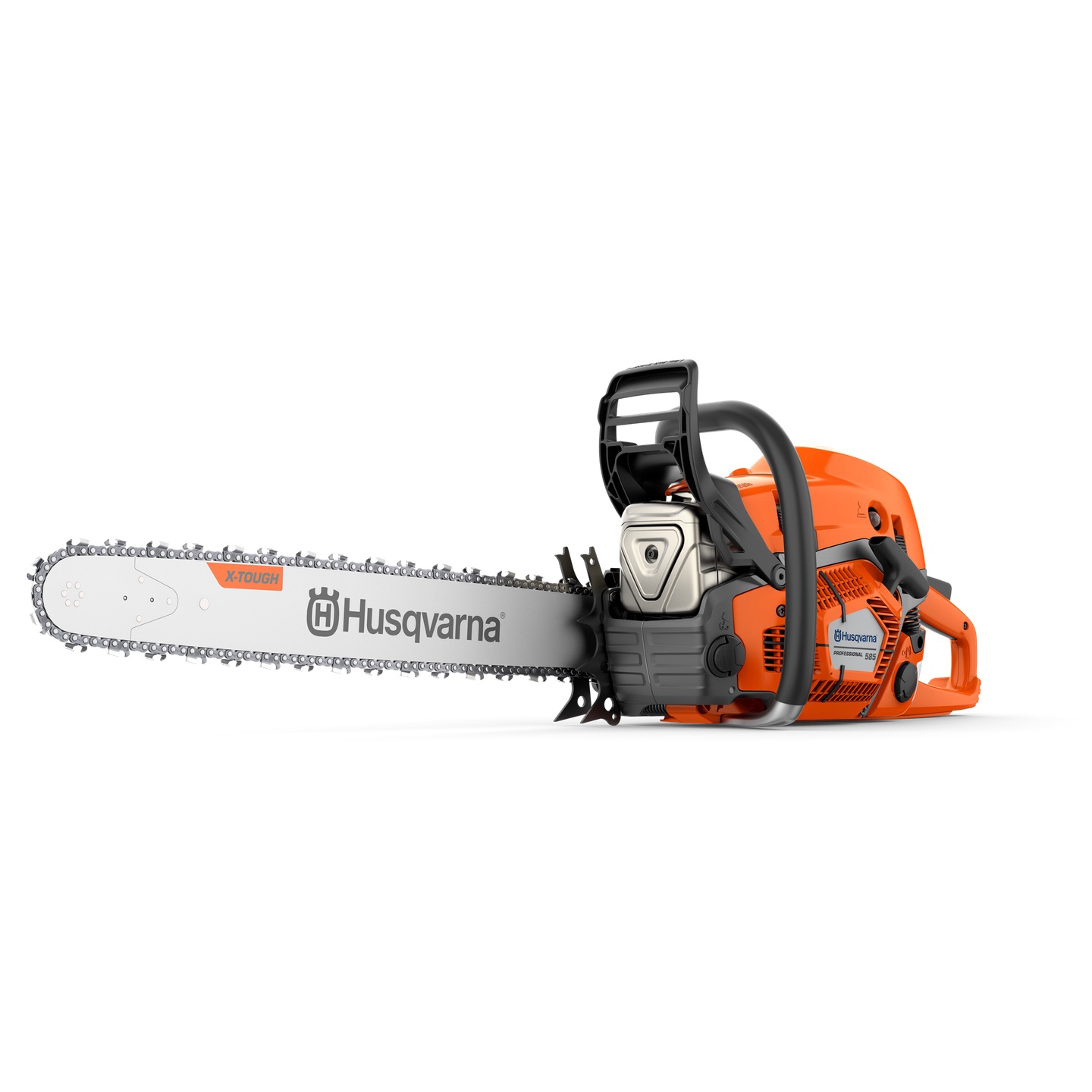
Husqvarna 585

70cc+ class
86cc
engine
28 in
bar
16.5 lb
bare

Landowners and part-time fallers who need a big-bore saw and a 28-inch bar without stepping up to the 592 XP.

Professional
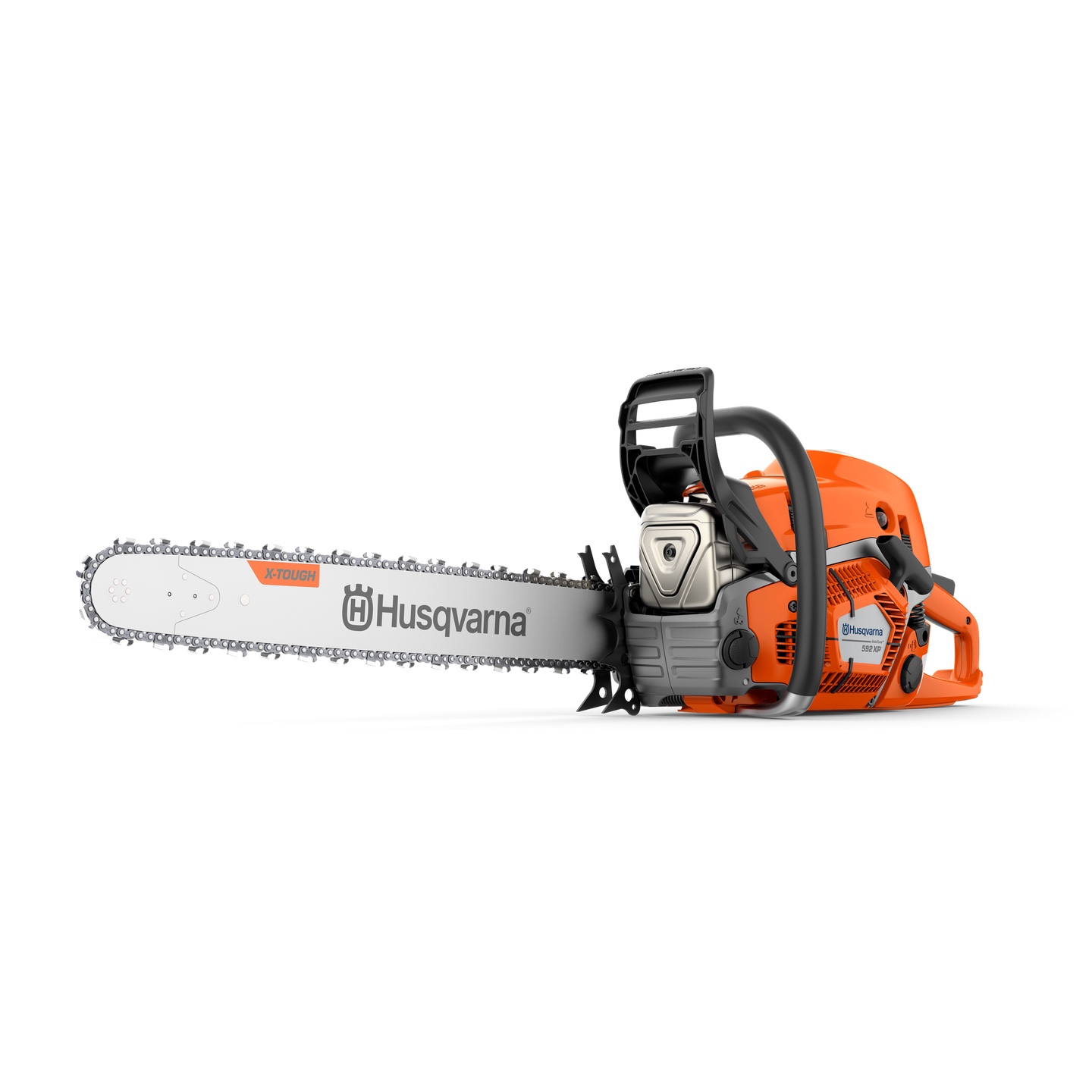
Husqvarna 592 XP

Husqvarna / Gas

~$1,680

Husqvarna 592 XP

70cc+ class
92.7cc
engine
32 in
bar
16.3 lb
bare

Fallers and sawmill operators working consistently in 24-inch-plus hardwood who need flagship power and a 36-inch bar rating.

Professional
Echo CS-7310P

Echo / Gas

~$1,190

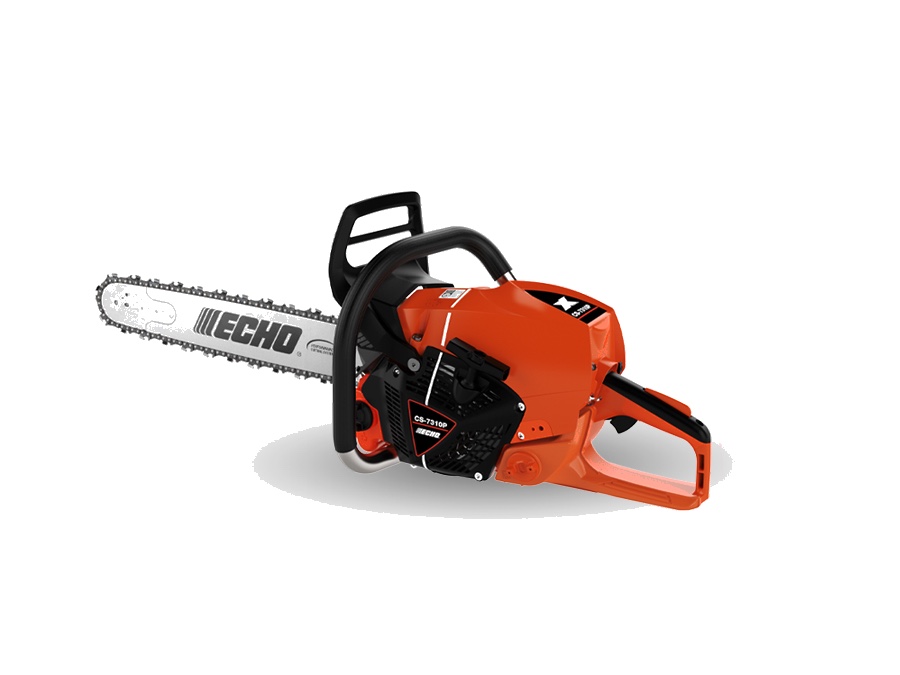
Echo CS-7310P

70cc+ class
73.5cc
engine
20 in
bar
14.8 lb
bare

Loggers and fallers who need 70cc-class power and long bars every day and want a 5-year warranty behind it.

Professional

Sources for this entry