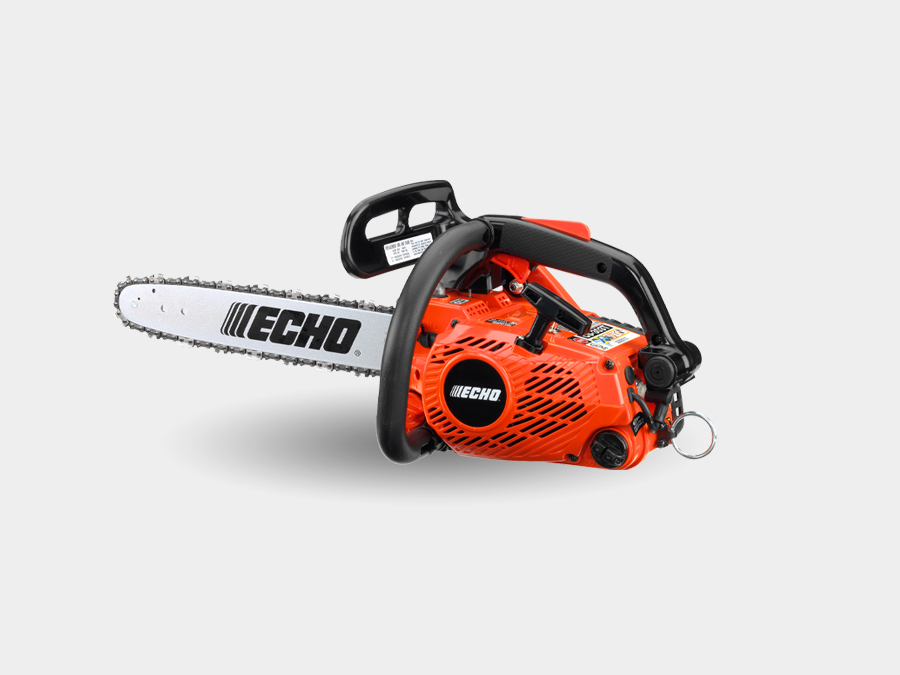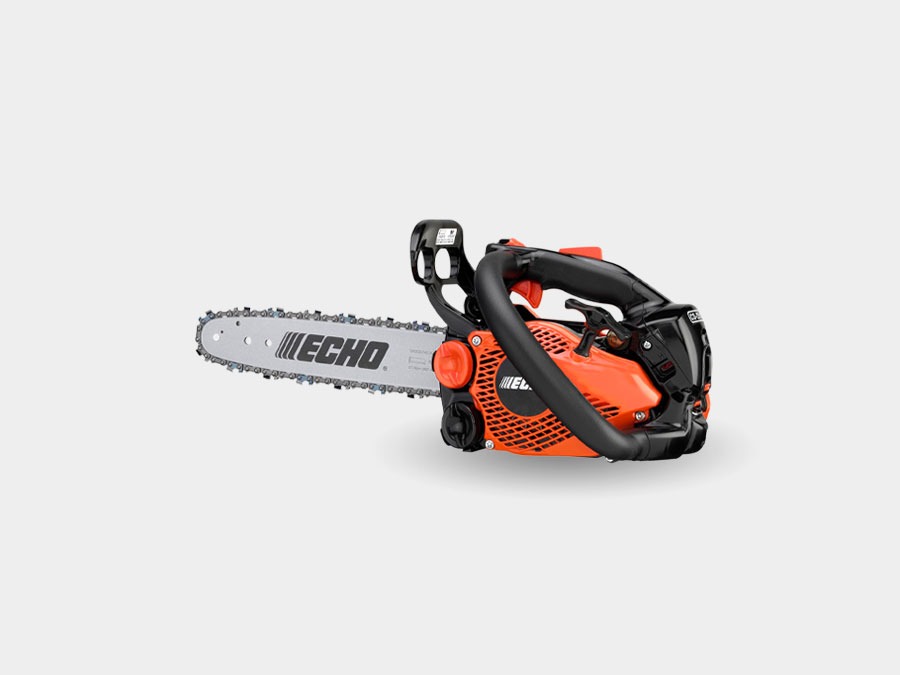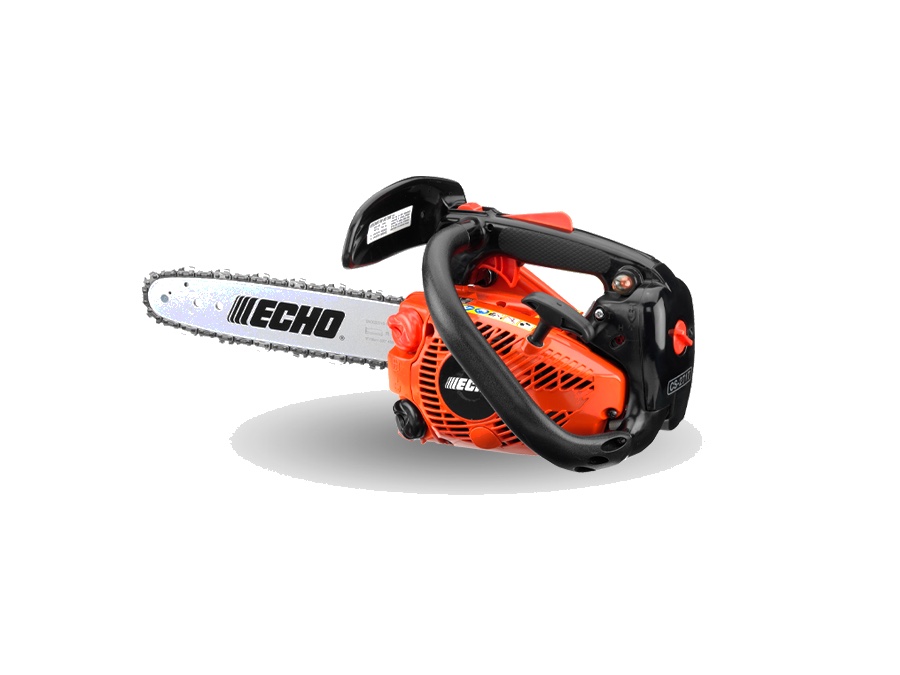
Echo CS-355T

Echo / Gas / Arborist

Echo CS-355T

30cc class
35.8cc
1.6 kW rated
14 in
cuts to about 12 in
8 lb
powerhead only (dry)
~$499
approx., with 14" bar and chain
Check price on Amazon

We may earn a commission. Price and availability on Amazon's site may differ.

4.6/5 across 483 reviews on Home Depot. Nobody reviews saws here; that number is theirs.

Echo's full-size top-handle, and the budget counterpoint to the Stihl MS 201 T that every tree crew debates. The out-of-box comparison is real: multiple climbers say a stock 355T "smokes a 201T outta the box" thanks to Stihl's choked factory tune, though a broken-in, modded 201 pulls back ahead on torque. At around $499 — versus roughly $700+ for the Stihl — whole crews have switched, and one tree-service owner reported his climbers actually preferred the 355s after the changeover. It's also one of the few pro top-handles you can buy at Home Depot, where it holds a 4.6-star rating across nearly 500 reviews, with owners repeatedly noting years of daily starts without failure. The knocks: at 8.0 lbs it's nearly three pounds heavier than Echo's own CS-2511T, the ergonomics and balance feel less refined than the Stihl/Husqvarna benchmarks to picky climbers, and serious users still do a muffler mod and retune to wake it up. The palm rest is an Echo-exclusive touch climbers either love or ignore. For groundies, firewood work from a ladder-free position, and cost-conscious crews, it's the workhorse pick.

Best for: Tree crews and serious property owners who want near-MS 201 T capability at two-thirds the price.

Specifications

Engine class
30cc class (by displacement)
Engine
35.8 cc
Bar range
14-16 in
Single-pass cut
about 12 in (bar minus 2)
Chain
3/8" low-profile pitch / .050" gauge (91PX)
Weight
8 lb, powerhead only (dry)
Use case
Arborist
Warranty
5-year consumer / 1-year commercial
Model
CS-355T

Manufacturer figures except the engine class and single-pass cut, which are derived here. What each spec means

  • 4.6 stars across 483 reviews
  • $200 under a Stihl MS 201 T
  • Echo's most powerful top-handle

What owners like

  • Stock-for-stock, owners report it out-cuts a factory-tuned Stihl MS 201 T
  • Roughly $200 cheaper than the Stihl and Husqvarna pro top-handles it competes with
  • 4.6-star Home Depot aggregate across 483 reviews — rare retail validation for a pro saw
  • 1.6 kW comfortably pulls a 16-inch bar for a top-handle
  • 5-year consumer warranty plus lifetime ignition-module coverage
  • Proven durability — crews running fleets of them report years of daily service

Common complaints

  • 8.0 lb powerhead is heavy for a climbing saw — nearly 3 lbs over the CS-2511T
  • Ergonomics and balance rate below the Stihl/Husqvarna benchmarks with picky climbers
  • Needs a muffler mod and retune to reach its full potential
  • Low-profile 3/8" chain caps cutting speed versus the 201T's .325" options
  • Vibration levels are noticeably higher than the newest-generation top-handles

What owners say

Read from owner discussions, long-term write-ups and dated retail reviews; nothing here was measured on this site.

The 355T is the budget answer to the Stihl MS 201, and owners state the case in dollars: about $500 against roughly $950, so a climber whose company buys him a 201 for work buys one of these for side jobs, and a Stihl loyalist who could not justify a 200T or 201T for his own fleet picked one up and was immediately pleased with how much easier it made limbing a big sugar maple than his MS 261. It is bigger and heavier than Echo's CS-2511T and owners choose it for exactly that — one runs a 14-inch bar in the tree for limbing and taking tops and buries it in big limbs, and one climbed with his daily for three years and says that next to a hot-rodded 201 it is tame, but it will take trees down. It is also rated above the Stihl MS 194T by owners who have run both.

The defect to know about before you buy is the top handle. Pinch the bar, pull hard on the handle to free it, and the handle comes off — one owner has done it twice, with the first repaired under warranty, and another who had read the warnings opted to cut his saw out of the tree instead of yanking. A third has replaced the handle on his repeatedly and points out he has never replaced any plastic on his used Stihl 201TC. The same theme runs through the smaller complaints: stripped plastic screw bosses, one of which turned into fuel pouring out of a screw hole mid-cut, and a thin wire lanyard loop on the back that climbers eye warily. The other everyday nuisance is the stock air filter screen, which clogs in dusty brush work fast enough that one owner loses noticeable power inside 10 minutes and gets it back by pulling the filter out; nobody has found a foam or cloth replacement for a top-handle this small.

Owners who like it modify it, and cheaply: drill a hole in the muffler below the factory outlet so it exhausts through the gap already in the plastics, delete the air box baffle under the filter, pull the limiter caps, retune. One who went further — fully ported, 1/4-inch pitch bar and chain — says it cuts much faster, but rates the muffler mod alone as no slouch. If you do tune it, use a tach and know the numbers: one owner measured about 11,500 rpm wide open stock, saw it fall slightly after fitting a performance muffler, then leaned the high screw to 13,800 against a 14,500 rated maximum, which is the kind of territory where going lean kills a saw. Two cautions owners raise repeatedly: a top-handle is not for overhead work from the ground — the answer to trimming above your head is a pole saw — and this particular saw is the one owners say they never lend out, because it is small and cute enough that people stop respecting it and reach one-handed.

What owners like

  • Price is the whole argument and owners make it plainly: around $500 against roughly $950 for a Stihl MS 201, which is why climbers who love the 201 buy this for their own side work, and why one owner notes you can buy two Echos for the price of one of the alternatives
  • It has more grunt than its lighter sibling and owners use that — one runs a 14-inch bar in the tree for limbing and taking tops and reports burying it in big limbs without issues, and another climbed with one every day for three years and says that while it is tame next to a hot-rodded 201, it will take trees down
  • Owners rate it above the Stihl MS 194T outright, and a retired arborist who replaced a 40-year-old Stihl with one says it has given him great service doing his own tree work on a 12-inch bar
  • Simple, cheap mods wake it up: owners drill a hole in the muffler below the factory outlet so it exits through the existing gap in the plastics — no disassembly beyond a hand drill — and report that the muffler mod alone helps these saws a lot, before any limiter-cap or porting work

Common complaints

  • The top handle tears off if you pinch the saw and pull on it. One owner has done it twice, getting the first repaired under warranty; another, having read the warnings, chose to cut his saw out of the tree rather than yank it; a third has replaced the handle on his several times and never replaced any plastic on a used Stihl 201TC
  • The air filter clogs fast in dry, dusty brush work — one owner loses a noticeable chunk of power after about 10 minutes and gets it all back by pulling the filter, which does not even look dirty. There is no foam or cloth filter available for top-handles this small, so owners drill extra holes in the cover and accept a dirtier filter
  • Carb troubles show up early on some saws: one two-month-old example developed a bog nothing in the carb adjustment would fix, and another bought in spring was diagnosed with a blown carburettor by autumn on a diet of canned 50:1 premix
  • Plastic fastener bosses strip. One owner's screws were stubborn coming out and the replacement spun endlessly, after which fuel poured out of the screw hole while he was cutting
  • It throws chains more readily than owners expect — one reports the chain coming off multiple times a day whenever a falling twig nicks it, with a cut hand on one occasion, something he never experienced with Stihl top-handles (he was running cheap off-brand chains, which is the first thing to change)

Questions owners ask

Is it true the top handle can break off?

Yes, and it is the complaint to take seriously. It does not take much force when the saw is pinched and you start pulling on the handle — one owner has done it twice, the first time repaired under warranty, and another chose to cut his saw free of the tree rather than risk it. If yours pinches, free it with wedges or another saw. A replacement housing runs around $80 and a couple of hours of your own labour.

Why does it lose power after a few minutes in dusty work?

The air filter. One owner clearing brush in dry, dusty conditions loses a big chunk of power after roughly 10 minutes and recovers it all by pulling the filter, which does not even look dirty to the eye. Owners have not found a foam or cloth filter made for top-handles this small; the workarounds are frequent cleaning, a spare filter on hand, and drilling a couple of extra holes in the filter cover — accepting that more airflow also means the filter loads up faster.

How does it compare to the Stihl MS 201 T and MS 194T?

Owners put it clearly ahead of the 194T. Against the 201 it is roughly half the price and, in the words of a climber who used one daily for three years, tame next to a tuned 201 — but capable of real removals. Buyers who want the 201 are usually told the 201's power-to-weight and clutch durability justify the money if the saw earns its living; buyers doing occasional side work are the ones who come out happy with the Echo.

What mods do owners do, and how far can I safely tune it?

The cheap and popular ones are a hole drilled in the muffler below the factory outlet so it exits through the existing gap in the plastics, deleting the air box baffle under the filter, pulling the limiter caps and retuning. Buy a tachometer before you touch the high screw: one owner measured roughly 11,500 rpm wide open stock and, after a performance muffler, leaned it to 13,800 against a rated maximum of 14,500 — fine with the extra airflow, but leaning a stock saw toward those numbers is how they get destroyed. Dogs made for the CS-2511T will fit, though they sit a little low.

Can I use it for trimming branches over my head from the ground?

Owners say firmly no — a top-handle is for climbing with rope and saddle, and reaching overhead with one is how kickback finds a body part. The consistent recommendation for overhead limbing is a pole saw, battery or gas, or a one-handed pruning saw for small stuff. One owner who has both the 355T and a 620P says the little saw is the more dangerous of the two, because people do not respect it and it invites you to work too close with one hand.

Drawn from 8 owner threads and long-term reviews, kept on file with this entry.

Compare the Echo CS-355T

Nearest alternatives

More from Echo
Echo CS-271T

Echo / Gas

~$500

Echo CS-271T

30cc class
26.9cc
engine
12 in
bar
6.6 lb
bare

Climbers and tree crews who want a dependable pro top-handle for pruning and tip work at the lowest price Echo sells one.

Arborist
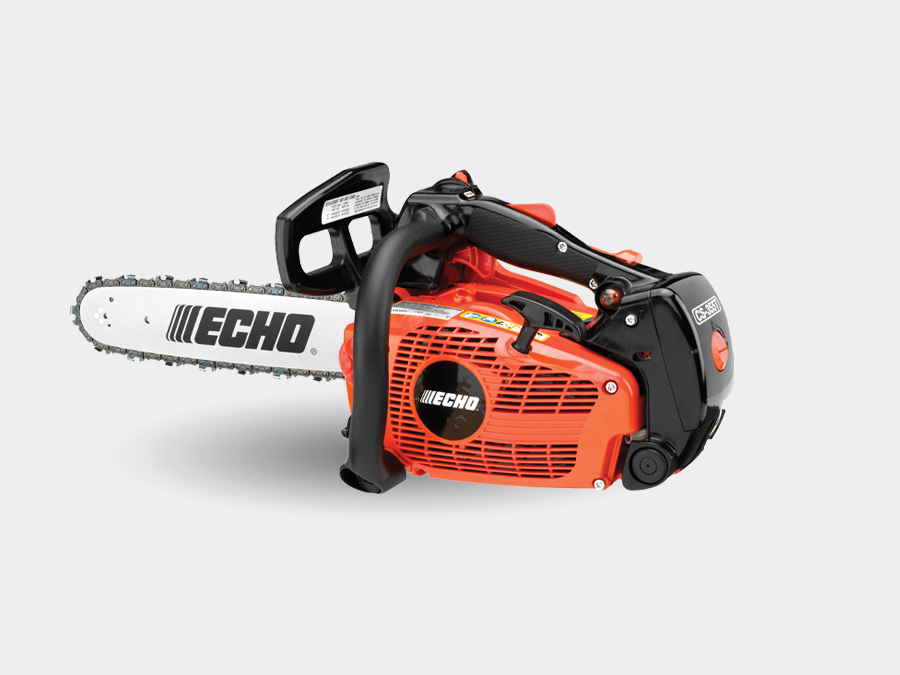
Echo CS-303T

Echo / Gas

~$549

Echo CS-303T

30cc class
30.1cc
engine
12 in
bar
7.7 lb
bare

Working climbers who want Echo durability in a light pruning saw without the 2511T's premium.

Arborist
Echo CS-2511T

Echo / Gas

~$599

Echo CS-2511T

30cc class
25cc
engine
12 in
bar
5.2 lb
bare

Working climbers and arborists who prioritize minimum weight aloft for pruning and small takedowns.

Arborist

Sources for this entry