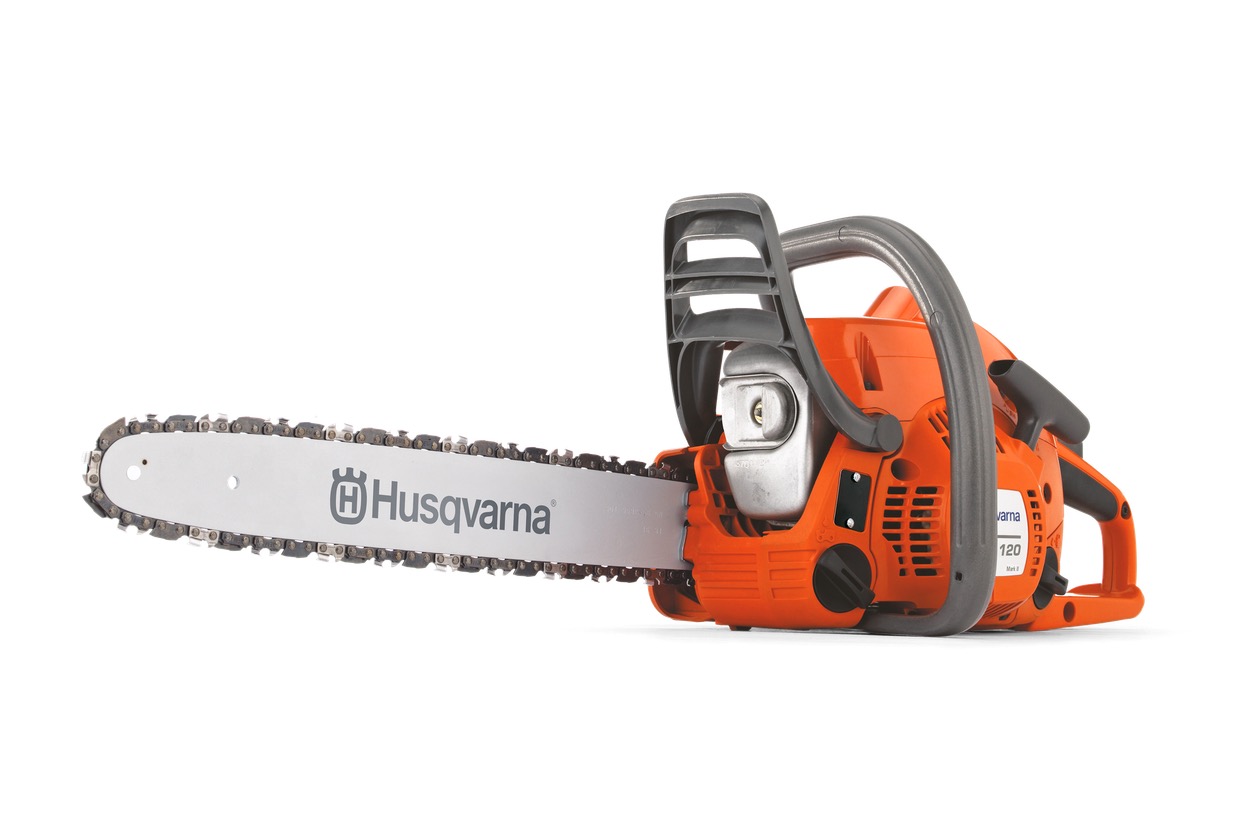
Husqvarna 120 Mark III

Husqvarna / Gas / Homeowner

Husqvarna 120 Mark III

30cc class
38.2cc
1.4 kW rated
14 in
cuts to about 12 in
10.7 lb
powerhead only
~$219
approx., with 16" bar and chain
Check price on Amazon

We may earn a commission. Price and availability on Amazon's site may differ.

Husqvarna's answer to the Stihl MS 170 fight at the bottom of the gas market, now in its third generation: 38.2cc, a hair over 10 pounds, and a $219 price at Lowe's that gets a real Husqvarna badge into suburban garages. Owners like the X-Torq engine's fuel sipping and the light, neutral balance for limbing and storm cleanup, and the Mark III now carries bars up to 18 inches. The gripes are consistent and worth knowing: cold starts take more pulls than the ritual printed on the recoil housing suggests, the plastic construction reads budget next to the 400-series, and the tool-required chain tensioning annoys people coming from big-box battery saws. It's built in the same value tier as the Poulan hardware it shares DNA with — the badge buys you Husqvarna's dealer network and parts availability, which is exactly what the no-name saws at this price lack.

Best for: Budget-minded homeowners doing storm cleanup and light firewood who want dealer support over big-box anonymity.

Specifications

Engine class
30cc class (by displacement)
Engine
38.2 cc
Bar range
14-18 in
Single-pass cut
about 12 in (bar minus 2)
Chain
3/8" mini pitch / .050" gauge
Weight
10.7 lb, powerhead only
Use case
Homeowner
Warranty
2-year consumer (extendable to 4 with fuel registration)
Model
120 Mark III

Manufacturer figures except the engine class and single-pass cut, which are derived here. What each spec means

  • Real Husqvarna badge at $219
  • 10.7 lb limbing weight
  • X-Torq fuel efficiency

What owners like

  • One of the cheapest routes into a dealer-supported gas saw
  • Light and neutral-balanced — comfortable for limbing sessions
  • X-Torq engine sips fuel compared to older small saws
  • Sold and serviced everywhere: Lowe's, Tractor Supply, and dealers
  • Mark III revision now runs bars up to 18 inches

Common complaints

  • Cold-start pull count is the recurring owner complaint
  • Plasticky build next to Husqvarna's own 435 II
  • Tool-required chain tensioning feels dated at this price
  • Shares value-tier internals with Poulan — the badge is the upgrade
  • Underpowered for regular bucking of hardwood

What owners say

Read from owner discussions, long-term write-ups and dated retail reviews; nothing here was measured on this site.

The 120 is a storm-cleanup and limbing saw, and owners who like theirs are clear about which job it is for. It lands in the same shopping basket as the Stihl MS 170 and 180, usually at a Lowe's or a farm store, and the argument owners make for it over a Ryobi or a Craftsman is not performance but serviceability — a dealer will stock parts for it. Owners who run both brands at this price split: one prefers the Husqvarna's fuel economy, several prefer the Stihl's easier cold start, and more than one says the Husqvarna is noticeably heavier than its 38cc suggests.

Two faults come up over and over. New saws rattle at idle, which a dealer mechanic traced to loosely fitting clutch drums on this model; nobody has reported it eating needle bearings, but he would still have warrantied it. And the chain brake band is the model's booby trap — take the clutch cover off with the brake engaged and the band springs open, the cover will not go back on, and some owners end up buying a replacement band. The other recurring thread is new owners worrying that the chain spins at full chat the instant they start it; that is the choke's fast idle and it is normal on every Husqvarna, cleared by blipping the throttle. Break-in is a non-event: owners tell new buyers to blip it and go to work, because idling a two-stroke for tanks on end glazes the bore rather than protecting it.

Where owners draw the line is firewood. Asked about bucking, a repair-shop owner and a dealer tech both said to start at the 4-series — a 440, 450 Rancher or above — if the saw will see real wood, and one shop would not even sell a 120 to a first-time buyer. Buy it for branches, brush, downed limbs and a few small trees a year, keep a 14 or 16 inch bar on it and the chain sharp, and owners say it earns its $219. Expect to spend more than the sticker when you add chaps, a helmet, premix and a file kit — owners are blunt that if that total is out of reach, so is the saw.

What owners like

  • When the alternative is a store-brand saw, this is the one owners actually name. People cross-shopping a $139 Ryobi or a Troy-Bilt-grade Craftsman get told to spend the extra on a 120 or a Stihl MS 170 for one reason: parts and service exist for those two and not for the others.
  • An owner who runs both a 120 and a Stihl MS 170 picks the Husqvarna for fuel economy — a useful trait on a saw that spends most of the year in a shed and gets picked up after a storm.
  • Now that Stihl has discontinued the MS 170, 171, 180 and 181, owners pointing beginners at a proven sub-$250 gas saw list the 120 among the few left that isn't a brand-new unproven model.
  • It is a saw owners fix at home. The chain brake band sits under the clutch cover, runs about $40 from a dealer, and owners talk each other through the swap step by step rather than paying shop labour on a $219 saw.

Common complaints

  • Cold starting is the complaint that repeats. An owner running a 120 beside a Stihl MS 170 says the Stihl starts right up while the 120 is a pain — and puts the Husqvarna at nearly two pounds heavier as well.
  • Brand-new saws rattle at idle from the clutch area. A mechanic at a Husqvarna dealer confirmed the 120s do seem to have loosely fitting clutch drums and said he would send one back for warranty; other owners say they all do it and to ignore it. Either way it is the model's habit, not something you caused.
  • Pull the clutch cover with the chain brake engaged and the band locks itself spread open. Owners call this the classic Husqvarna mistake — several ended up buying a new band. You reset it by rotating the three-tab brake actuator with the splined end of the scrench, or by mashing the cover close enough to work the brake handle.
  • Service refusal is real at this tier. One buyer was told by a shop that sells and services both brands not to buy a 120 and that they would not work on them. A Husqvarna owner of 40 years who repairs saws locally says he would buy an Echo or a Stihl homeowner saw before any current Husqvarna 1-series.
  • It bogs the moment the wood gets big. New owners posting video of painfully slow cuts are told the saw is fine and the log is too much for 38cc — the practical ceiling owners give is a 14 to 16 inch bar in small, soft wood.

Questions owners ask

My brand-new 120 rattles at idle and stops when I set the chain brake — is that a problem?

It is the clutch drum, and owners report it on enough of these saws that a Husqvarna dealer mechanic described the 120s as having loosely fitting clutch drums. He said he would take one back under warranty on principle, while noting he has not seen a wave of wrecked drums or needle bearings from it. Check your chain tension first, though — a chain run too tight makes almost the same noise against the bar and nose sprocket, and new bars need re-tensioning once the paint wears off the rails.

Why does the chain take off at full speed the second I start it?

That is fast idle, which the choke engages, and owners confirm every Husqvarna does it — bump the throttle once and it drops to normal idle. Start it on the ground or between your knees with the chain brake on, not drop-started, and you will never see the chain move. If it keeps revving after you blip the throttle, or the chain spins once the choke is off, that is a carb or throttle issue worth a dealer visit rather than something to adjust blind.

I took the clutch cover off and now it won't go back on. What did I do?

You removed it with the chain brake engaged, which lets the brake band spring open wider than the cover can clear. Rotate the three-tab brake actuator on the cover with the splined end of the scrench until the band closes, or pull the bar off so you can seat the front of the cover and get leverage on it; backing the tensioner screw off a few turns also helps. Some owners mangle the band doing this and end up buying a new one for around $40, so it is worth going slowly.

Do I have to break it in before I cut anything?

Owners say no, and specifically tell new 120 buyers not to idle tanks of fuel through it — idling a small two-stroke risks glazing the cylinder instead of bedding the rings. The consensus is to let it warm up for 30 to 60 seconds, then use it normally while avoiding long, hard buried-bar cuts for the first tank or two. Check the chain tension after the first few cuts; a new chain and a new bar both stretch and wear in quickly.

Can the 120 handle firewood?

Owners who work on saws for a living say to step up to the 4-series if firewood is the job — a 440, 450 Rancher or bigger. The 120 will get through 10 to 12 inch rounds with a sharp chain and patience, but owners posting video of slow cuts are consistently told the log is too big for the saw rather than that the saw is faulty. If you plan to buck a truckload at a time, the money is better spent one or two tiers up.

Drawn from 6 owner threads and long-term reviews, kept on file with this entry.

Compare the Husqvarna 120 Mark III

Nearest alternatives

More from Husqvarna
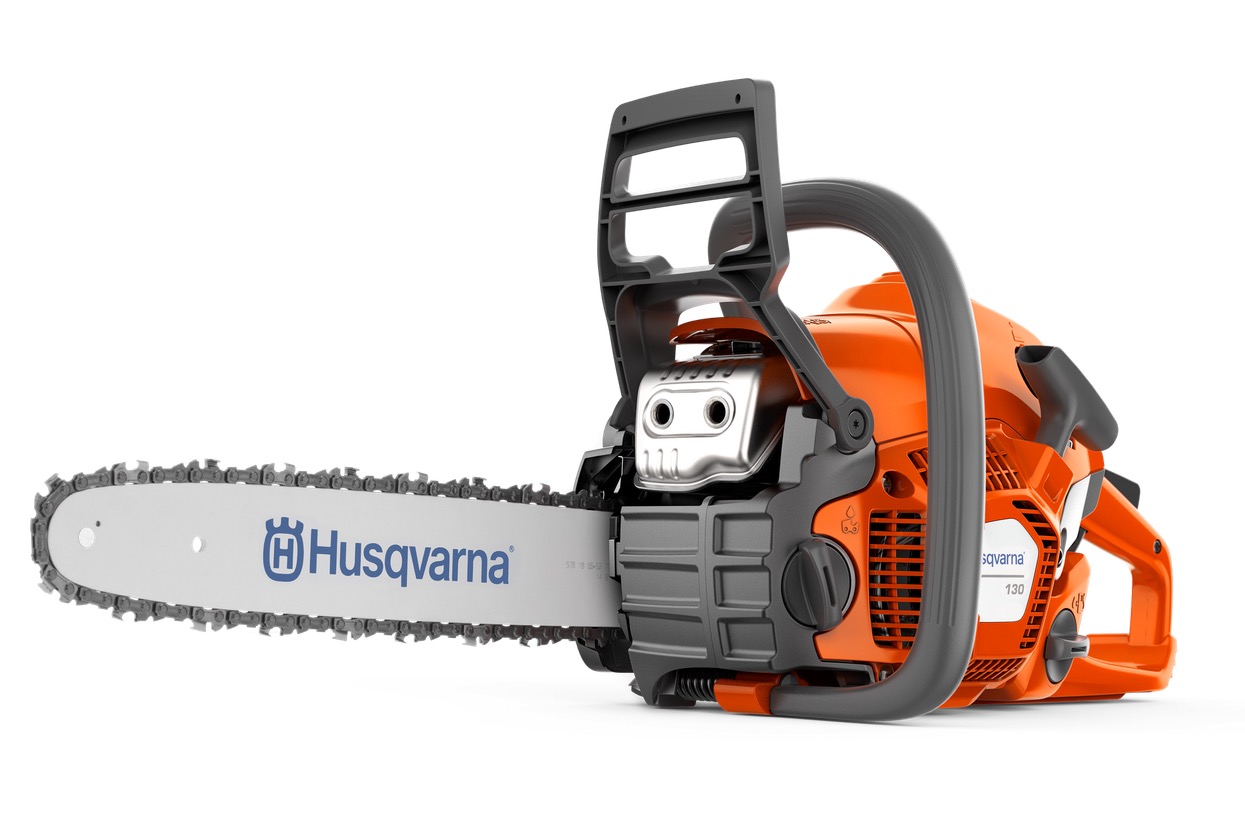
Husqvarna 130

Husqvarna / Gas

~$259

Husqvarna 130

30cc class
38.2cc
engine
16 in
bar
10.4 lb
bare

Homeowners who want one small gas saw with a bit more pull than entry-level, without crossing $300.

Homeowner
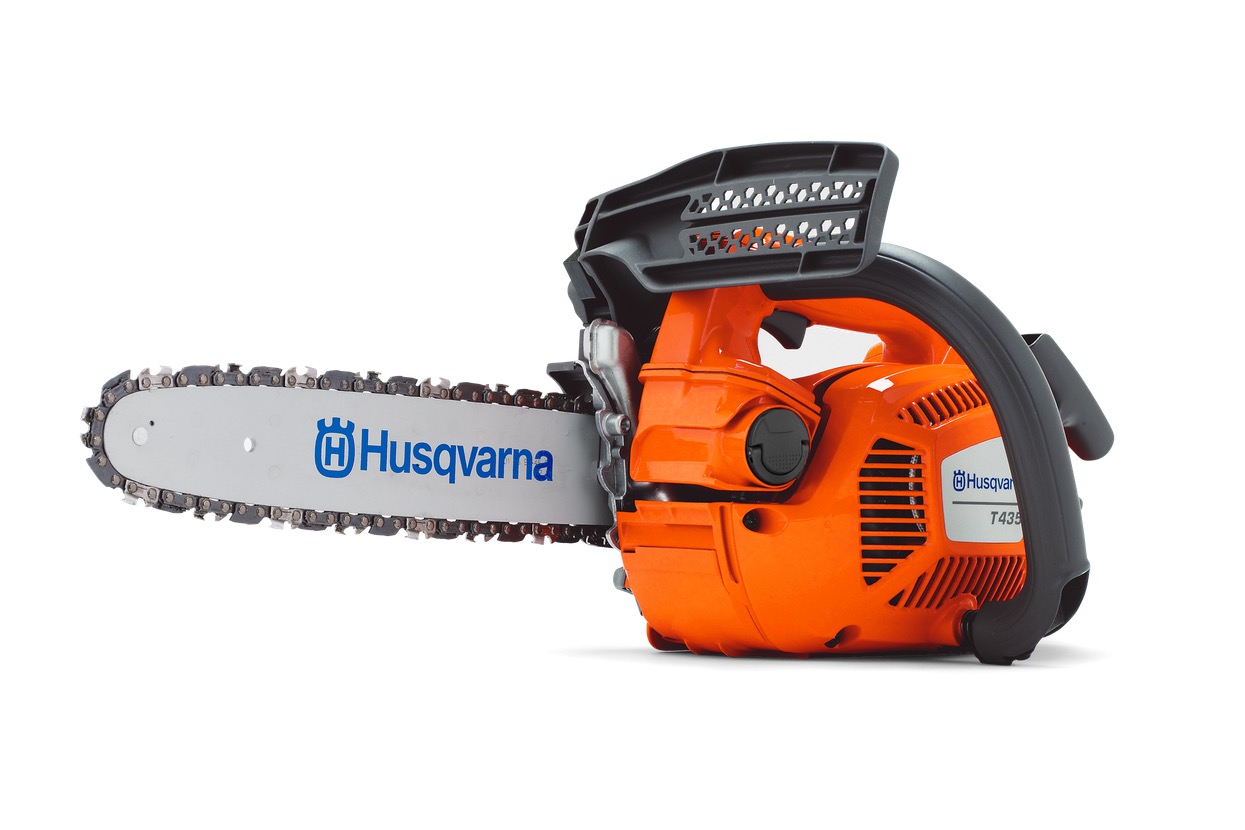
Husqvarna T435

Husqvarna / Gas

~$470

Husqvarna T435

30cc class
35.2cc
engine
12 in
bar
7.5 lb
bare

Orchardists, part-time climbers, and homeowners with ladders who want a pro-brand top-handle without T540 XP money.

Arborist
Husqvarna T525

Husqvarna / Gas

~$630

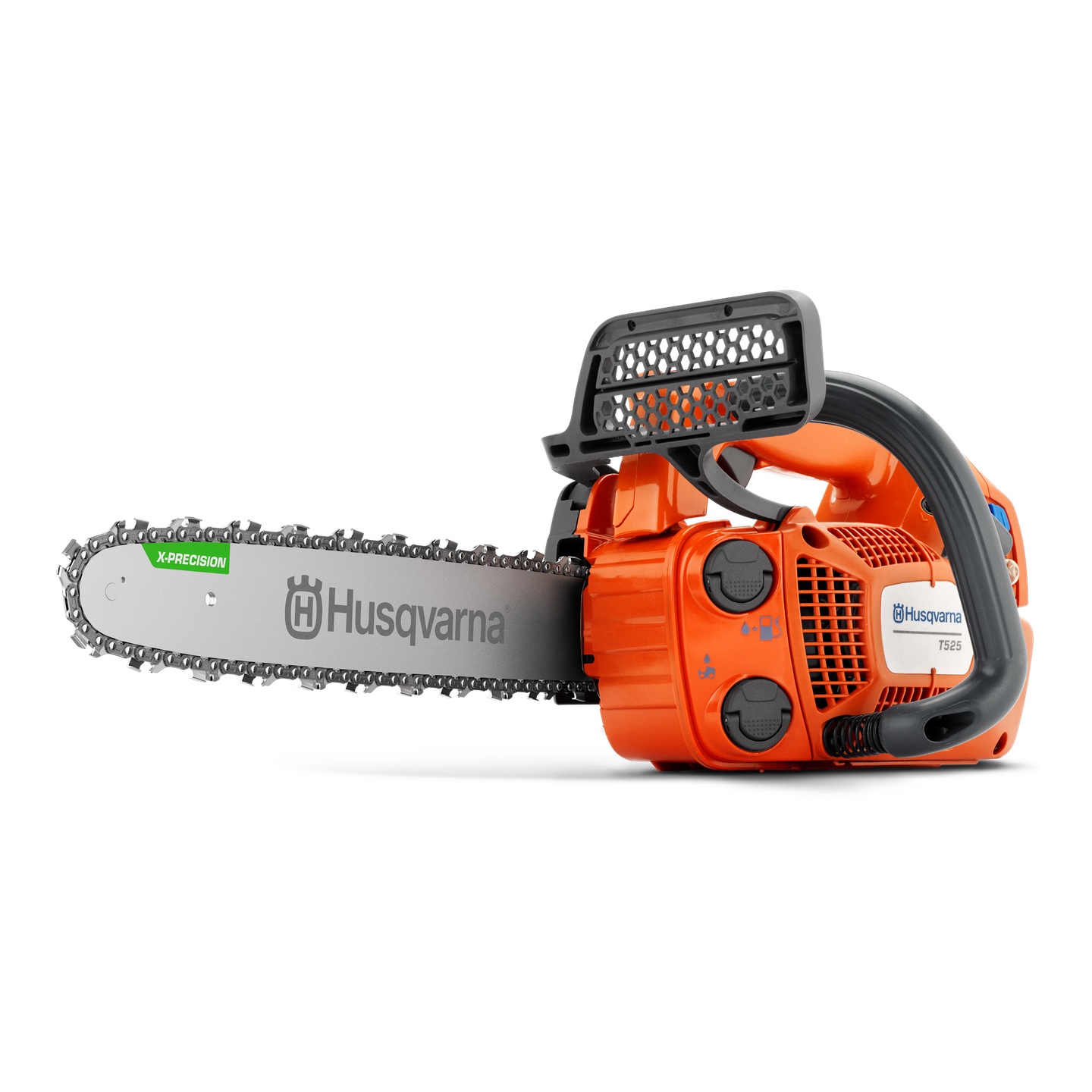
Husqvarna T525

30cc class
27cc
engine
12 in
bar
5.95 lb
bare

Certified climbing arborists doing pruning and trimming on rope who want the lightest, best-balanced top-handle available.

Arborist

Sources for this entry