What Size Chainsaw Do I Need? Bar Length and Engine Size, Explained
Chainsaw sizing has one honest rule: buy for the wood you cut most weekends, not the biggest log you can imagine. A bar about two inches longer than your typical cut diameter, driven by the smallest engine class that pulls it well, beats a bigger saw every time — because the saw you can hold comfortably for an hour is the one that's still safe at the end of it.
Bar length: measure the wood, not your ambitions
The bar needs to be about two inches longer than the diameter you cut most often — that's enough to pass through in a single stroke without burying the tip. A 16-inch bar handles a 14-inch trunk in one pass, and with a little technique (cutting from both sides) it will get through wood nearly twice the bar length when the occasional big log shows up. You do not need a 20-inch bar for one 18-inch oak that fell last spring.
Longer bars carry real costs that never show up in the store: more weight held at arm's length, more chain to sharpen, more bar surface to feed with oil, and — most importantly — more exposed tip, which is where kickback comes from. A shorter bar on the same saw is faster in the cut, easier to control, and cheaper to feed with chains.
Engine classes: what each cc range actually does
| Class | Typical bar | What it's really for |
|---|---|---|
| 30-40cc gas / 36-56V battery | 12-16" | Limbing, storm cleanup, small trees, occasional firewood |
| 40-50cc gas / 56-80V battery | 16-18" | Regular firewood duty, felling small-to-medium trees |
| 50-60cc gas | 18-20" | The farm & ranch sweet spot — serious firewood, medium felling |
| 60-70cc gas | 20-24" | Big firewood volume, large felling, small-scale logging |
| 70cc+ gas | 24-36" | Professional felling and bucking of large timber, milling |
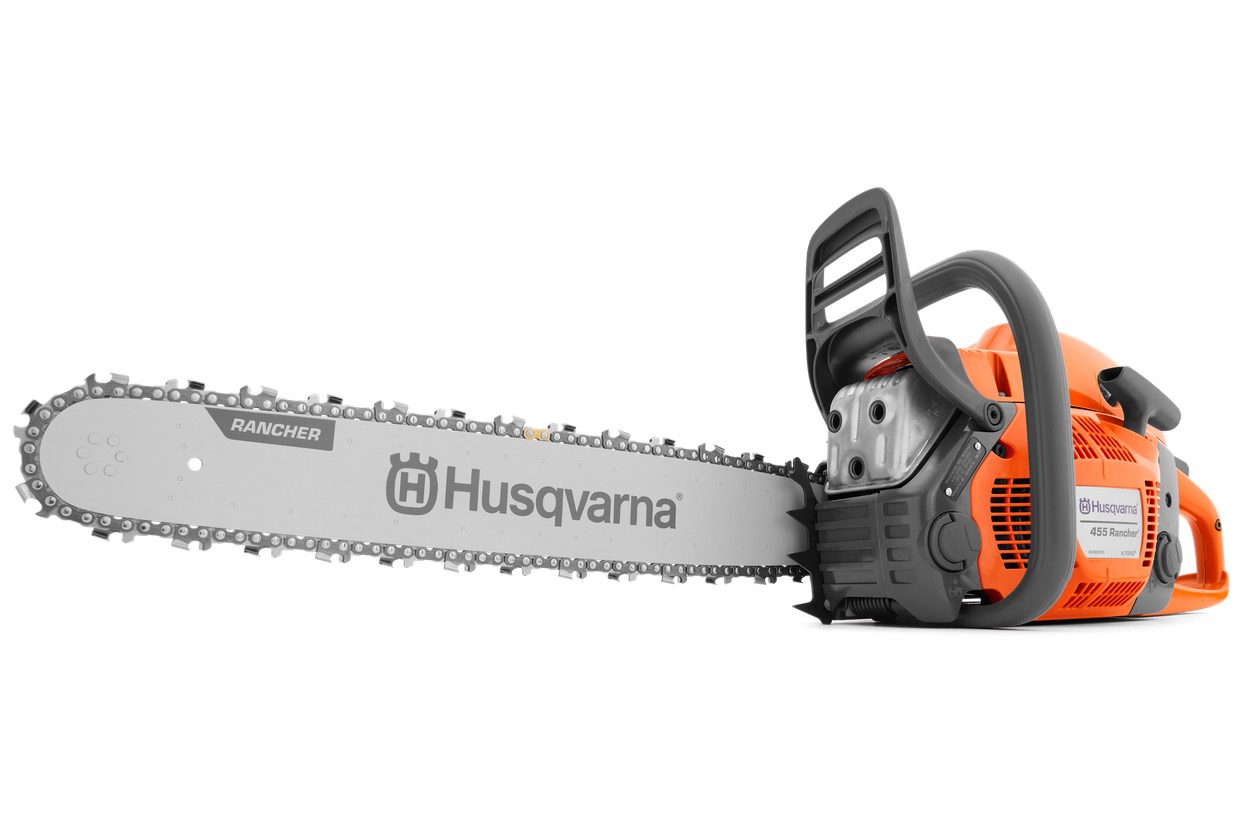
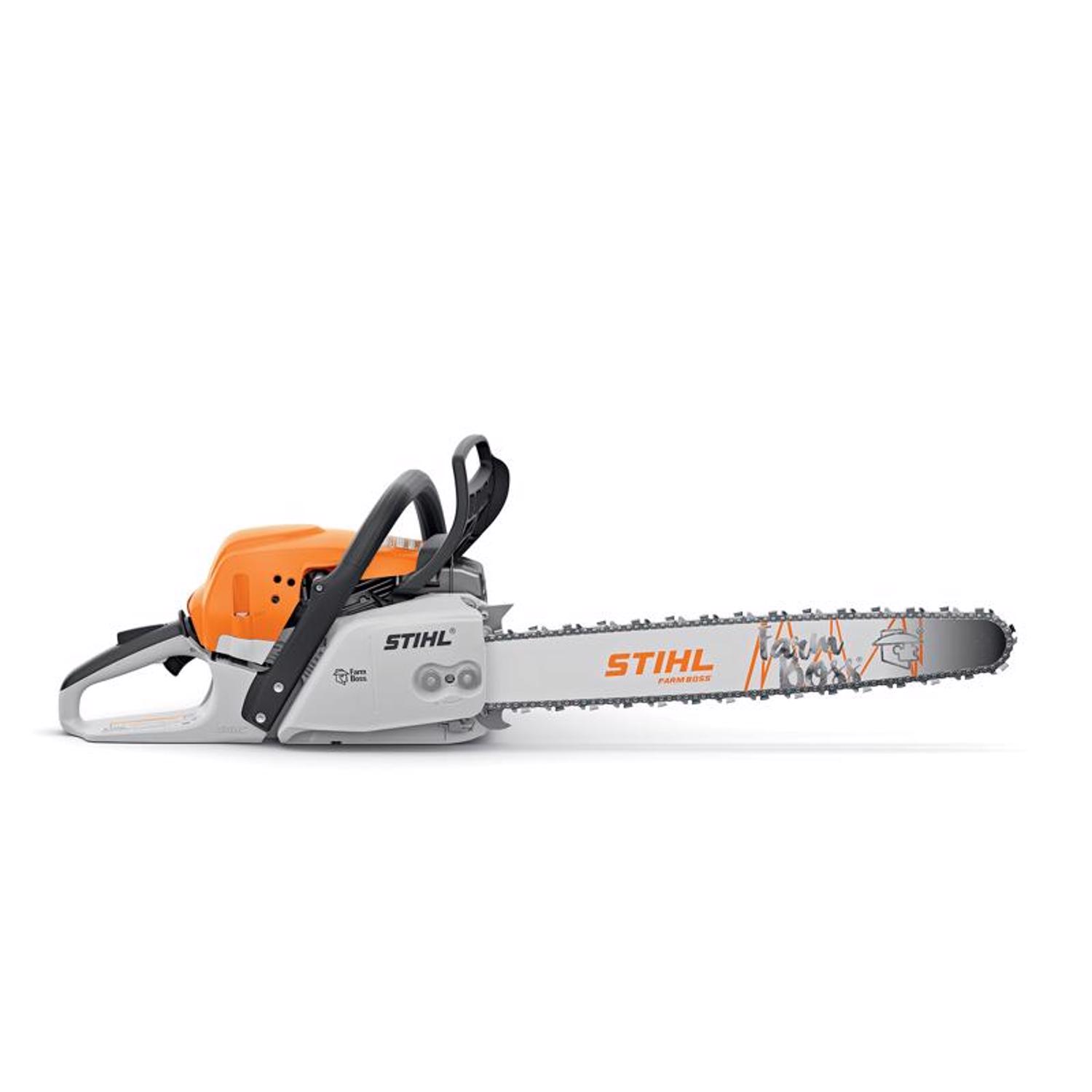
Displacement is a proxy for how fast the saw pulls chain through wood under load. A 50cc-class saw like the Stihl MS 271 Farm Boss or Husqvarna 455 Rancher is the classic firewood answer for a reason: enough torque to run an 18-inch bar through hardwood without bogging, light enough to limb with, cheap enough to leave money for chaps and a spare chain.
Battery saws map onto the bottom two rows. A modern 56-80V saw genuinely covers the 30-45cc envelope — the limit isn't cutting speed, it's how many packs you can afford to drain in an afternoon.
The oversizing mistake (and the undersizing one)
Oversizing is the classic first-saw error: the 60cc, 20-inch saw sounds like insurance until you're holding twelve-plus pounds of powerhead through two hours of limbing, at which point fatigue makes you sloppy, and sloppy with a chainsaw is dangerous. Big saws also cost more to run — bigger chains, more fuel, more bar oil — and are miserable for the trim work that makes up most real yard cutting.
Undersizing has a subtler cost: a 30cc homeowner saw asked to buck a truckload of 16-inch oak will do it, but slowly, at full throttle all day, with you leaning on it — and leaning on a saw is how chains grab and bars pinch. If your honest workload is regular firewood, start at the 50cc class.
When one saw has to do everything, the boring answer wins: 50cc-class gas with an 18-inch bar, or the strongest battery saw your budget allows plus a second battery. When you find yourself wanting both a big felling saw and a light limbing saw, you've discovered why every farm ends up owning two.
The bottom line
Storm cleanup and small stuff: 14-16 inch bar, small gas or any decent battery saw. Regular firewood: 18-inch bar on a 50cc-class saw. Felling big hardwood: 20-24 inches on 60cc+, and at that point buy professional-grade — the farm-class saws aren't built for that duty cycle. Measure the wood you actually cut, add two inches, and buy the smallest engine that pulls it well.
Saws mentioned in this guide

Stihl
Stihl MS 170
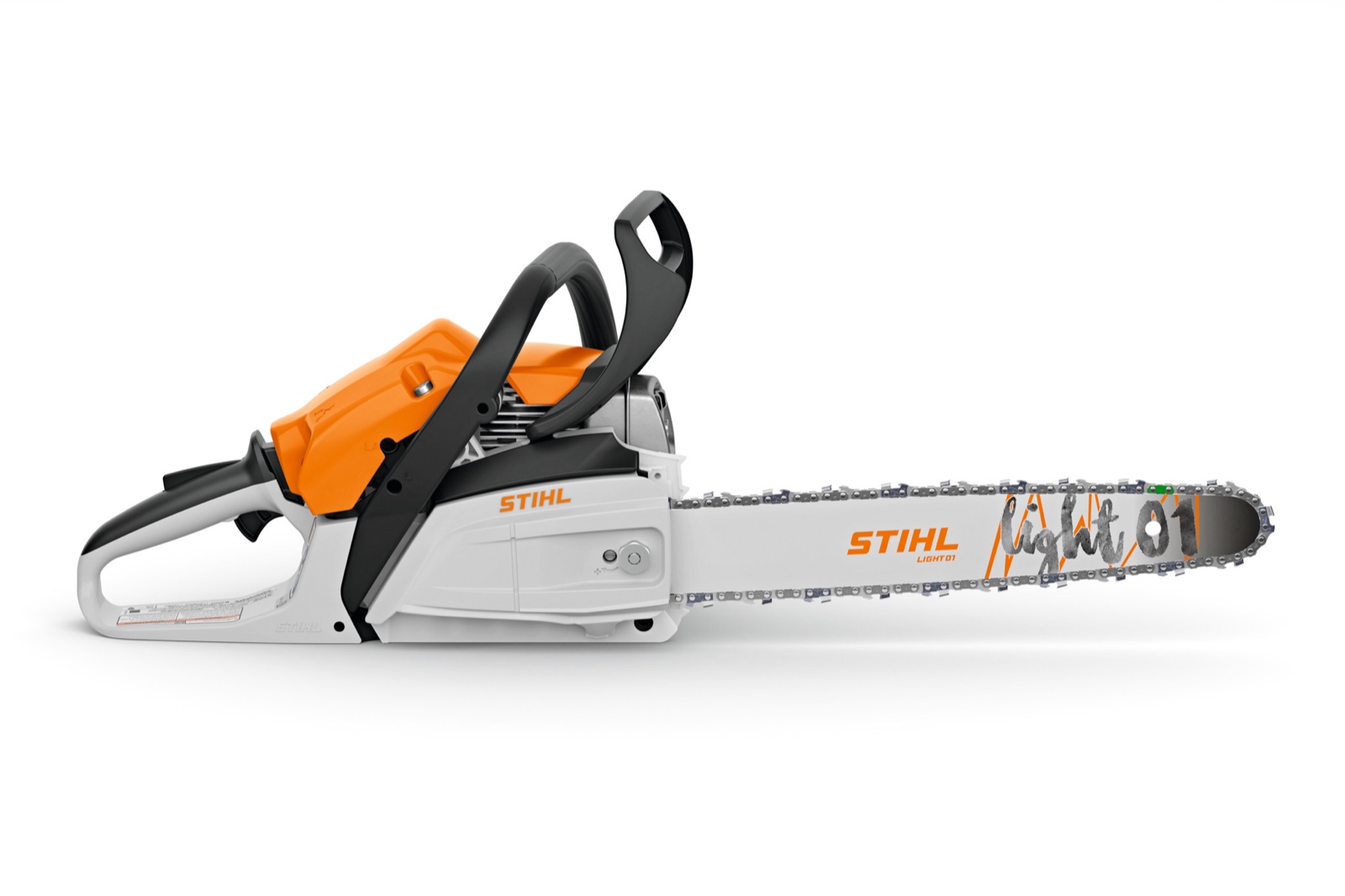
The cheapest way to get a real Stihl in your garage, and the saw dealers hand to first-time buyers who need to clean up storm limbs a few weekends a year. At 8.6 pounds for the powerhead it's genuinely easy to run all afternoon, and the 4,400+ Ace Hardware reviews averaging 4.5 stars back up the 'thousands of happy owners' vibe you see in forum threads. But owners are blunt about the ceiling: this is a light pruning and limbing saw, not a firewood saw, and it gets slow and sluggish once logs pass about 10-12 inches. The cost-cutting shows up close — a basic carburetor, minimal anti-vibration, and a bar-swap chain tensioner instead of the side-access adjuster on pricier models. Stihl has also started rolling out the updated MS 172 alongside it, so the 170 is a proven but aging design. For under $230 with a 16-inch bar, most homeowners decide the limitations are a fair trade.

The Farm Boss is probably the most-recommended 'my first serious saw' in America, and its 4.5-star average over 2,850+ Ace reviews shows the formula works: 50.2cc, a 20-inch bar, modern spring anti-vibration that owners say leaves their hands fresh after a full day, and a fuel-efficient engine that runs 20% longer per tank than the MS 270 it replaced. There's a whole ArboristSite thread literally titled 'Why do so many guys bad mouth the MS 271' — the answer is that pros dismiss it as a heavy clamshell homeowner saw with mediocre power density (12.3 lbs for only 2.6 kW, about what a 10-pound pro 50cc saw makes). Both sides are right. It's slower than an MS 261 and not rebuildable the way a pro saw is, and OEM top-end parts are expensive with little aftermarket support. But for a landowner cutting a few cords a year, it's smooth, dependable, and roughly half the price of the pro alternative — which is exactly why dealers can't keep them on the wall.

Husqvarna
Husqvarna 455 Rancher
America's default farm saw, full stop — the 455 Rancher has been the answer to "what chainsaw should I buy for firewood" at Lowe's for two decades, and its 4.6-star average across about 700 reviews there says the formula still works: 55.5cc, a 20-inch bar, and a chassis that shrugs off neglect. Owners love that it starts spring after spring and pulls a full 20 inches through oak without drama. The counterpoint lives on the forums, where the 455 is the perennial punching bag: at 13.2 pounds for the powerhead it's genuinely heavy for its power class, the vibration is noticeable next to a 550 XP, and the pro crowd sniffs at the consumer crankcase. Both camps are right. This is a saw built to survive ranch sheds, not win power-to-weight arguments — and the Stihl MS 271 and Echo CS-590 comparisons are the most-argued matchups in the category for a reason.

Stihl
Stihl MS 462 C-M
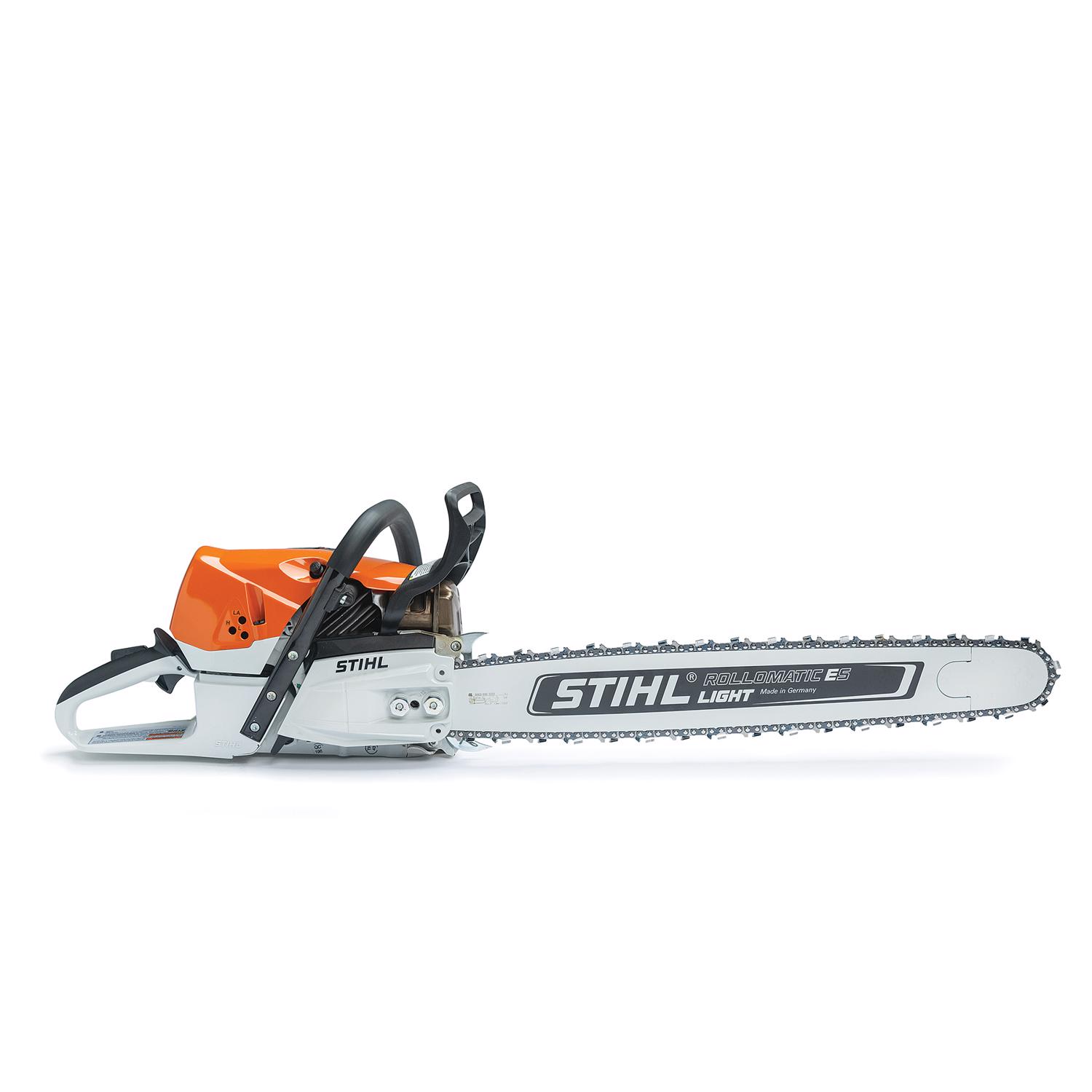
The saw that made West Coast fallers trade in their 044s and 461s: 72.2cc and 4.4 kW in a 13.2-pound powerhead that Stihl bills as the lightest it has ever built in this class, and owners on ArboristSite describe with phrases like 'monster torque' and 'game changer'. The M-Tronic metering keeps it in perfect tune from sea level to mountain jobs, and users bucking hardwood with 25- and 28-inch bars report it never feels short of breath — several admit their 660-class saws now sit unused because the 462 does the work at two pounds less. Complaints are scarce and mostly economic: the price has marched steadily upward (Ace lists the 25-inch at $1,619.99), and weekend cutters frequently confess they love it but reach for it less than expected because it's simply more saw than most firewood requires. A few owners cross-shop the lighter MS 400 and wonder if 66cc would do. As a do-everything big saw for felling and heavy bucking, though, forum consensus is about as unanimous as chainsaw forums get: no buyer's remorse.