Stihl / Gas
~$250
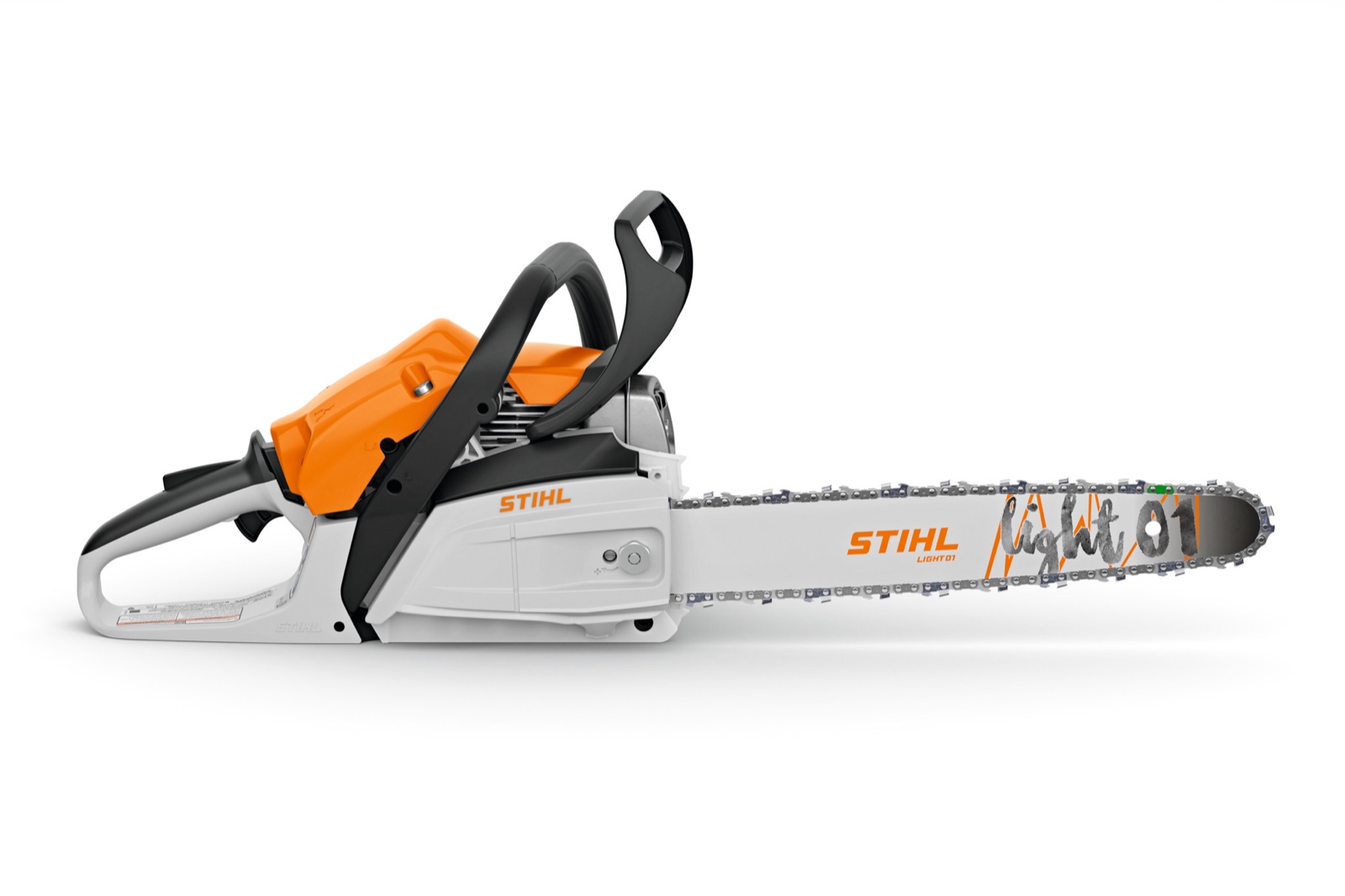
Stihl MS 172 C-E
30cc class
- 31.8cc
- engine
- 16 in
- bar
- 10.4 lb
- bare
Suburban owners who need an occasional saw for storm limbs and 8-inch firewood and want a dealer-serviced Stihl at the lowest price Stihl sells one.
Homeowner
Chainsaws injure about 36,000 Americans a year, and the wounds cluster with grim predictability: left thigh, left knee, left forearm — exactly where a running chain lands when a saw kicks or slips. The good news is that the protection is cheap, the technique rules are few, and almost every serious injury involves skipping one of them.
Chainsaw chaps are filled with long synthetic fibers that a moving chain rips out and drags into the drive sprocket, jamming the chain dead in a fraction of a revolution. A $70-$90 pair turns a 110-stitch, muscle-deep leg wound into a ruined pair of chaps and a story. No piece of safety equipment in any hobby delivers more protection per dollar, and the injury statistics — legs are the most common strike zone — say chaps are the first thing to buy, before a better saw, before anything.
Two caveats worth knowing: chaps are rated for gas-saw chain speeds and standard chains, and electric saws' instant torque can behave differently — but tests still show them stopping or dramatically slowing battery saws. And chaps only work if they're on your legs, not hanging in the garage because 'it's just one quick cut.' The one quick cut is the classic injury scenario.
Eyes and ears are non-negotiable: chips fly on every cut, and a gas saw at your ear runs 105-115 dB — permanent-damage territory in minutes. A forestry helmet system (hard hat, face screen, earmuffs, about $40-$60) covers the head trifecta and is mandatory the moment anything is being cut overhead or a tree is coming down. Add snug gloves and real boots — a dropped saw finds sneakers with terrible accuracy. The complete kit is under $200, roughly one ER copay.
Kickback happens when the upper quadrant of the bar tip — the spot sawyers call the kickback zone — touches wood while the chain is moving. The chain grabs, and the stored energy rotates the whole saw up and back toward your head in a few hundredths of a second, far faster than any human reaction. It isn't a strength problem; it's a geometry problem.
The defenses are boring and effective: know where your tip is on every cut, never plunge or bore with the tip unless you've been taught the technique, keep two hands on the saw with your left thumb wrapped fully around the front handle (a wrapped thumb is what keeps a kicking saw in your grip), stand slightly to the side of the cutting plane, and keep the chain sharp — dull chains make you push, and pushing is how tips find wood. The chain brake exists exactly for this; test that it snaps the chain dead before every session.
Spring poles and tension wood: a bent sapling or a limb under a log stores energy like a drawn bow, and cutting the wrong side releases it into your face. Read the tension, cut the compression side first, and take small bites. Bucking logs on the ground: the bar hits dirt (instantly dull) or the log pinches the bar closed; get wood up on a log or sawbuck when you can, and finish ground cuts from the top down meeting an undercut.
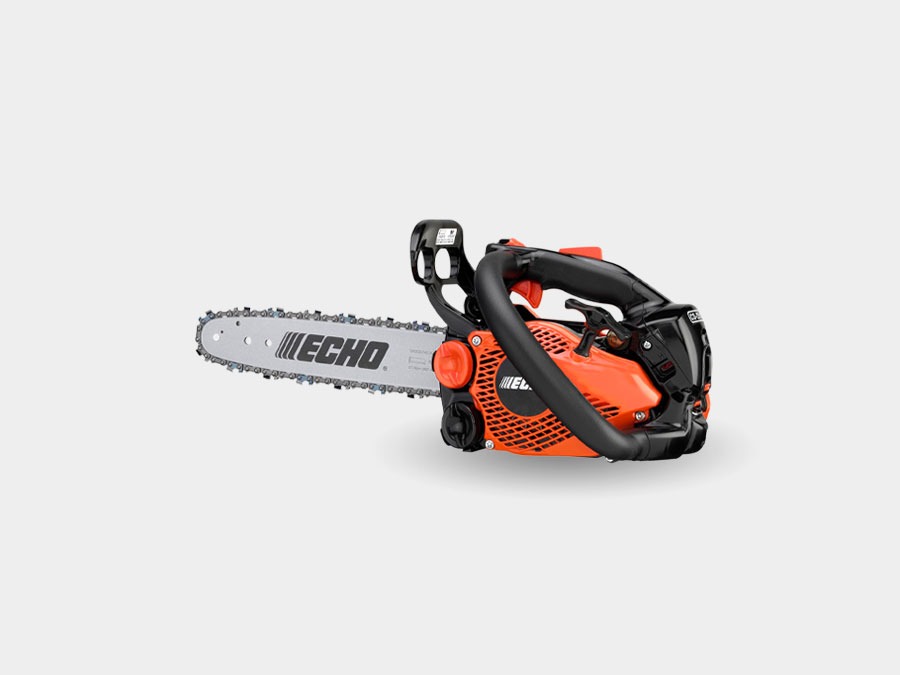
Overhead cutting and ladders: a running saw above shoulder height, or any saw on a ladder, is how homeowners die — that work belongs to a pole saw or a professional. Felling: anything bigger than a small, open-field tree deserves either training (hinge, notch, escape routes at 45 degrees behind) or a hired pro; the tree does not care how confident you feel. And the top-handle saws sold online (Echo CS-2511T, Stihl MS 194 T) are one-handed climbing tools for roped-in arborists — on the ground they offer less kickback leverage, not more, and every manufacturer says in-tree use only.
Chaps, eyes, ears — every cut, including the quick one. Two hands, thumb wrapped, tip awareness always. Sharp chain, working chain brake. Feet on the ground, saw below your shoulders. When a tree, a tension situation, or a cut is beyond you, it's cheaper to hire it out than to learn mid-cut. That's the whole discipline — none of it is hard, and all of it is skippable right up until it isn't.