Makita
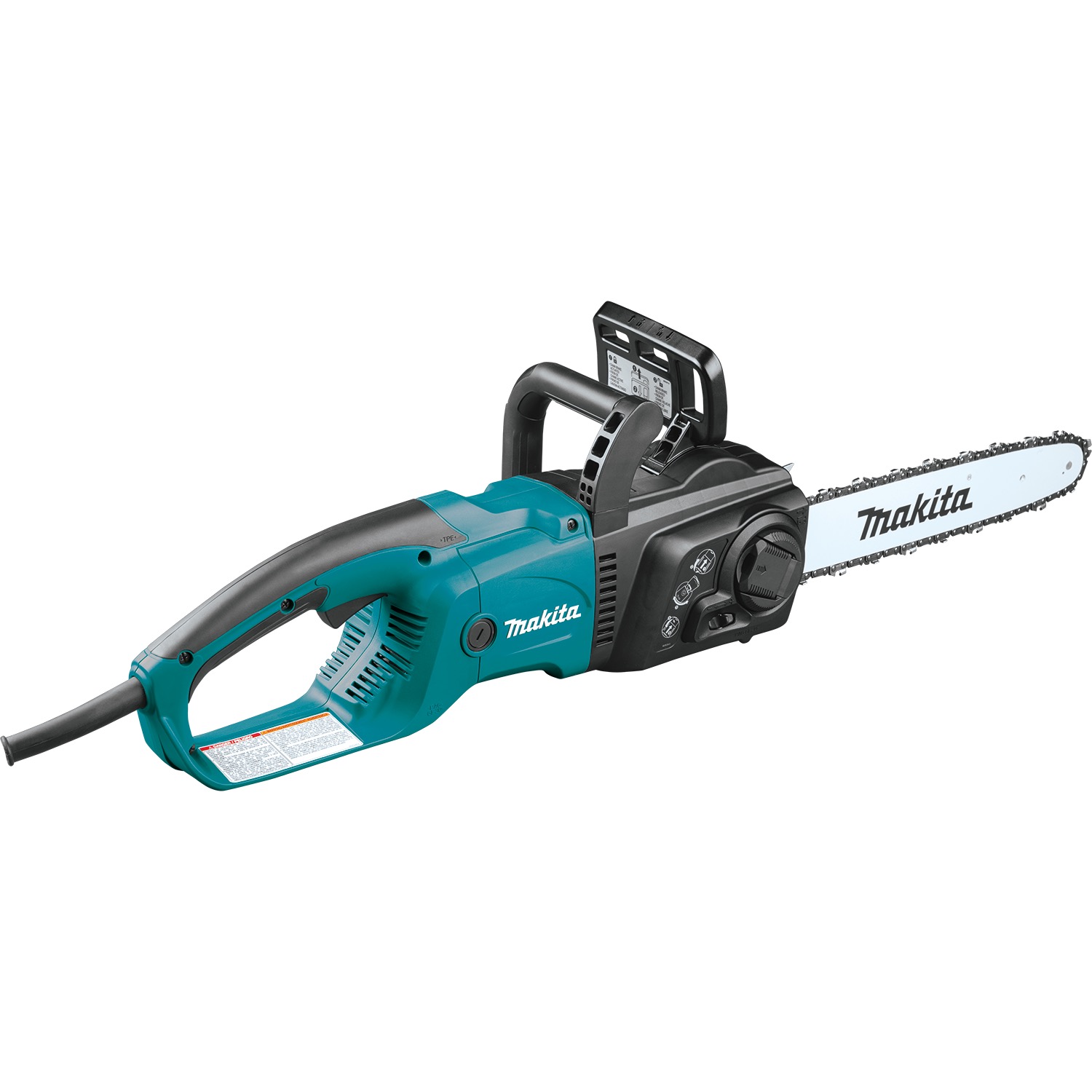
Makita UC4051A
The UC4051A is what happens when a professional tool company builds a corded chainsaw and refuses to build it to a price: a 14.5-amp motor with real torque, a metal spike bar, tool-less blade-and-chain adjustment, and build quality that makes the $99 corded crowd feel like toys — priced, at around $279, like it knows it. The buyers are specific and satisfied: shop users cutting stock, urban tree services doing ground bucking near power, and homeowners who simply refuse plastic tools. Owners praise the smooth, quiet power delivery, the effective rubberized vibration damping (rare in corded saws), and current-limiter protection that keeps the motor alive under abuse. The honest question is the price: at nearly three Worx-es, you're paying for durability and refinement in a category most people treat as disposable. For daily or weekly corded use it's the only serious choice; for four weekends a year, it's overqualified.
Specifications
Highlights
Pros
- ✓Build quality in a different league from value corded saws
- ✓Smooth, torquey 14.5A motor with current-limiter protection
- ✓Effective anti-vibration — rare in the corded class
- ✓Tool-less chain tensioning done right
- ✓Large oil reservoir with a view window
Cons
- ✗Nearly 3x the price of the value corded standard-bearers
- ✗1-year warranty trails the cheap competition's 2-3 years
- ✗12.3 lb is substantial for a 16-inch electric
- ✗Overkill for occasional woodpile duty
- ✗No verifiable retailer aggregate captured at research time
Related chainsaws
More from Makita →
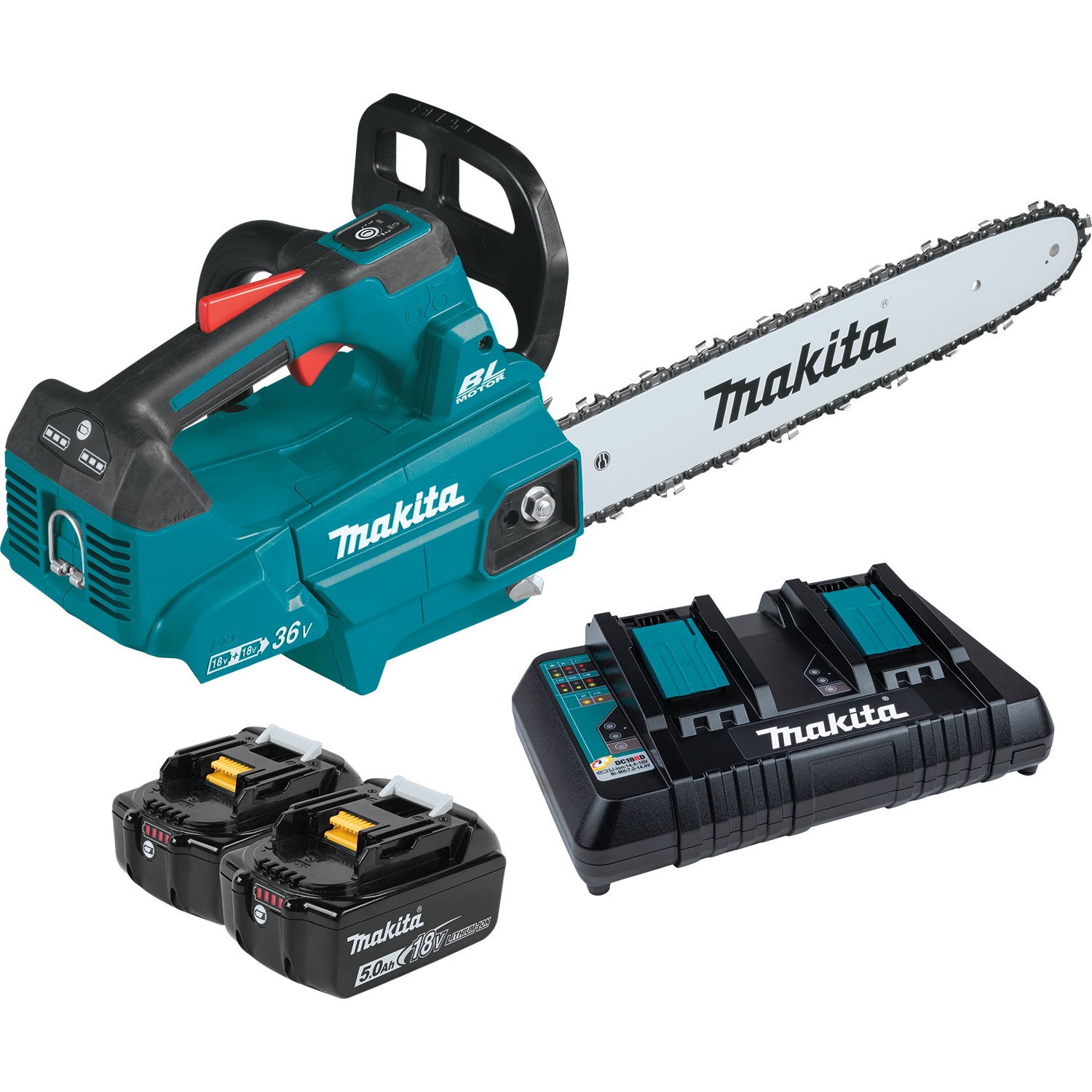
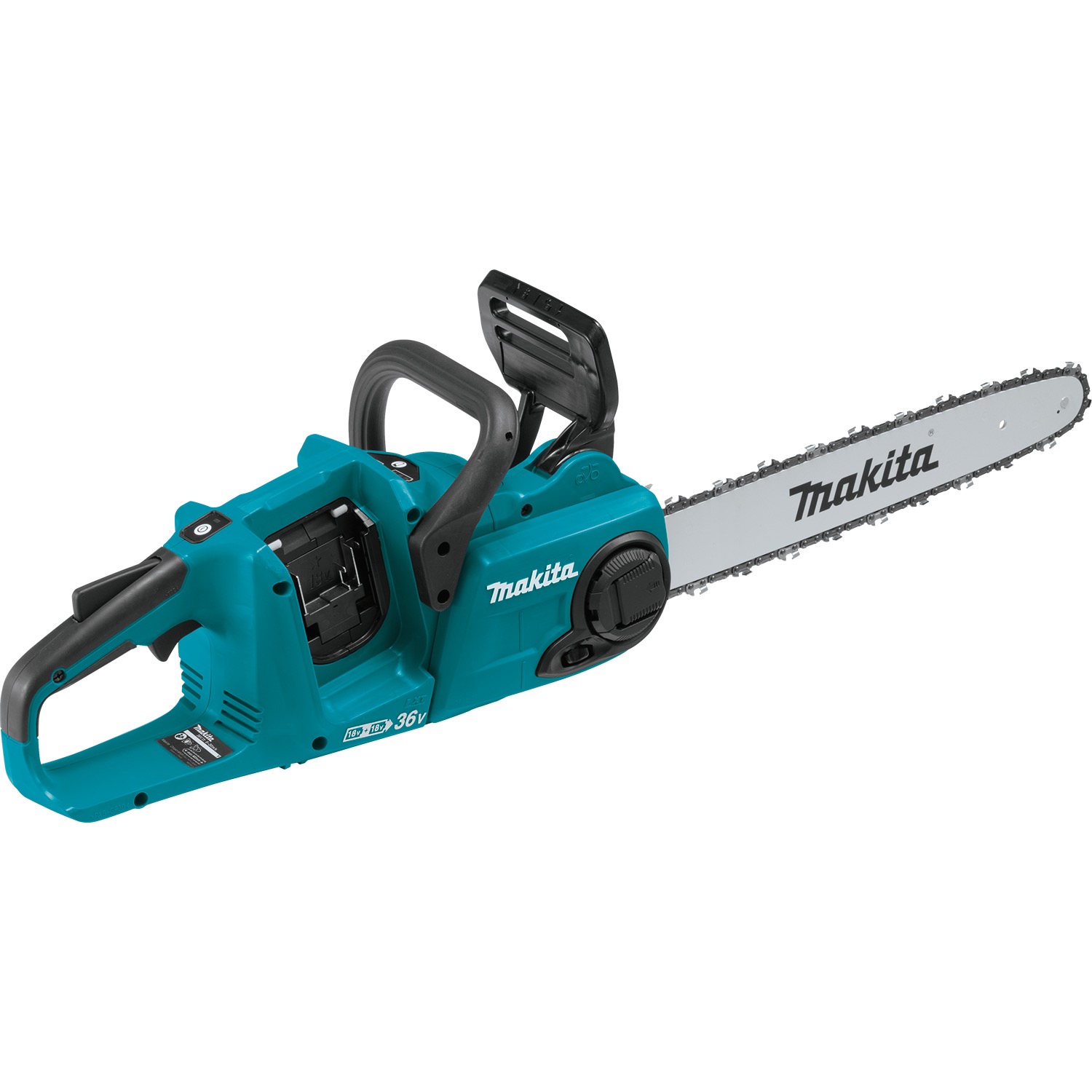
Makita's clever answer to not having a big OPE battery: run two 18V LXT packs in series for 36V, so the enormous LXT tool ecosystem doubles as a chainsaw fleet. The XCU04 is the quietest, smoothest-feeling saw in this class — 11.5 lbs with both 5.0Ah packs, tool-less chain adjustment, and an auto power-off that keeps idle saws from draining batteries. But Makita's own 32cc-equivalence claim tells the honest story: this is the least powerful 16" saw among the big brands, and owner reviews echo it — great for limbing, storm branches, and occasional cordwood, but it bogs in hard 12"+ wood and 'gobbles batteries' under sustained bucking. The X2 arrangement also means every outing requires two charged packs, and the saw stops when the weaker one taps out. As a yard saw for someone deep in the LXT platform it's genuinely pleasant; as a primary firewood saw it's outclassed by EGO and Milwaukee at the same money.

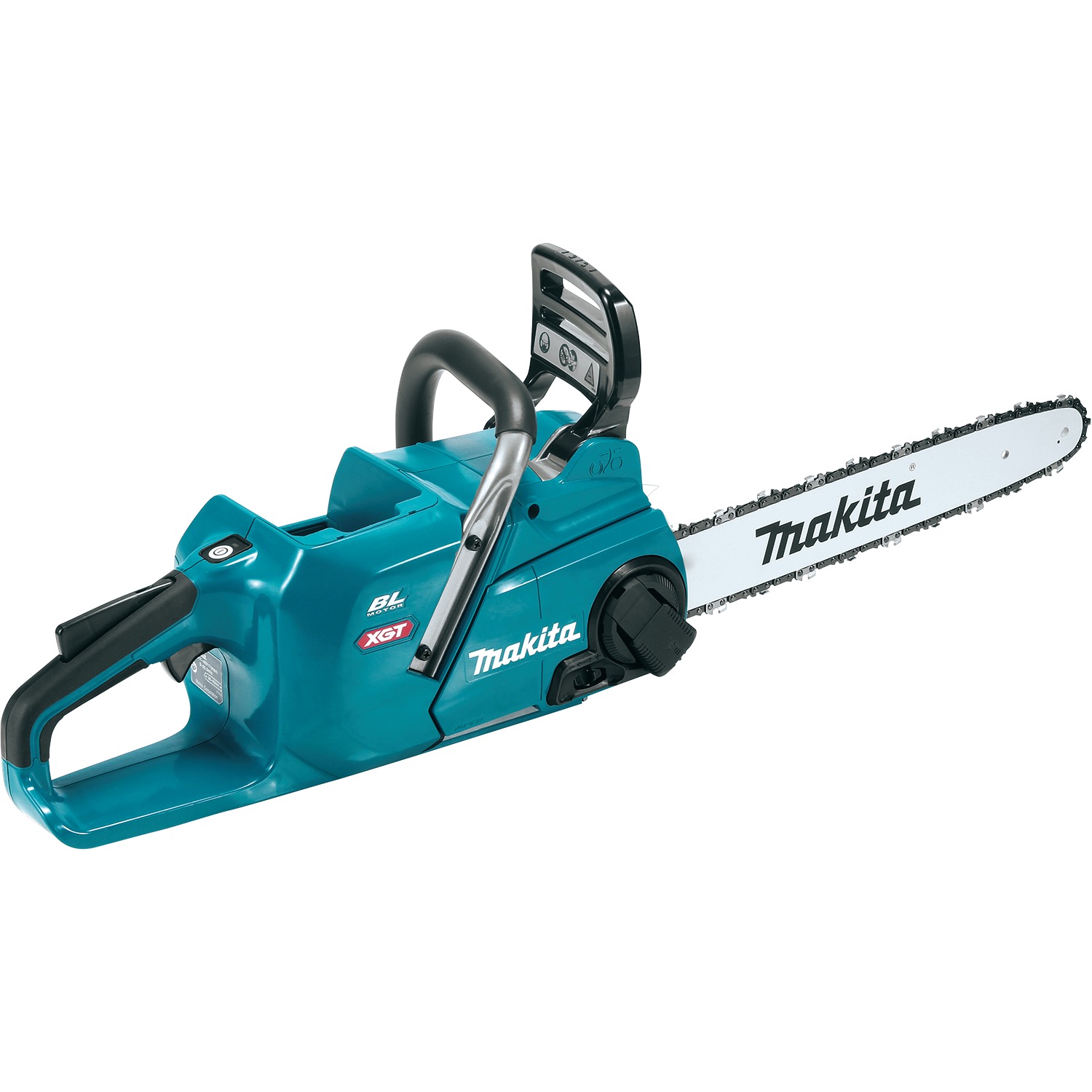
The saw Makita built after admitting two 18V packs weren't enough — the 40V XGT GCU05 (sold internationally as the UC016G) spins its chain at 5,020 FPM and carries a 42cc-gas-equivalence claim that puts it in a different league from the old XCU04. Build quality is classic Makita: XPT weather sealing, a proper inertia chain brake, tool-free tensioning, and a standard 91PX 3/8"LP/.050 chain you can buy at any hardware store. The catches are cost and runtime: at $629 the kit costs $100+ more than an EGO CS2005 with a bigger bar, XGT packs are among the priciest batteries in OPE, and Makita's own runtime claim — about 30 cuts in 12" cedar on the included 4.0Ah — means firewood days require multiple packs. Home Depot owner reviews (4.3 stars) praise the power and fit-and-finish while flagging exactly that: you'll want a second (or 5.0Ah) battery, and you'll pay dearly for it. For XGT-platform loyalists it's the best saw Makita has ever made; for everyone else the math is hard.

The CS1500 has one party trick no other chainsaw offers, and it's a good one: pull a lever while the saw runs and the built-in PowerSharp stone touches up the chain in three seconds — no files, no guides, no trip to the shop. That feature, bolted to a legitimate 15-amp motor pulling an 18-inch bar, is why this $139 saw from the company that makes half the world's chains has such a devoted following among people who hate maintenance. Owners report it cutting genuinely large stacked firewood as long as the extension cord cooperates (12-gauge, and mind the 100-foot ceiling). The tradeoffs: the PowerSharp chain system is proprietary (replacement chains and stones cost more than commodity loops), sharpening this way eats chain life faster than filing, it's on the heavy side for a corded saw, and — the corded constant — the wall socket decides your range. For woodpile duty near the house, it's the definition of fit for purpose.