Greenworks
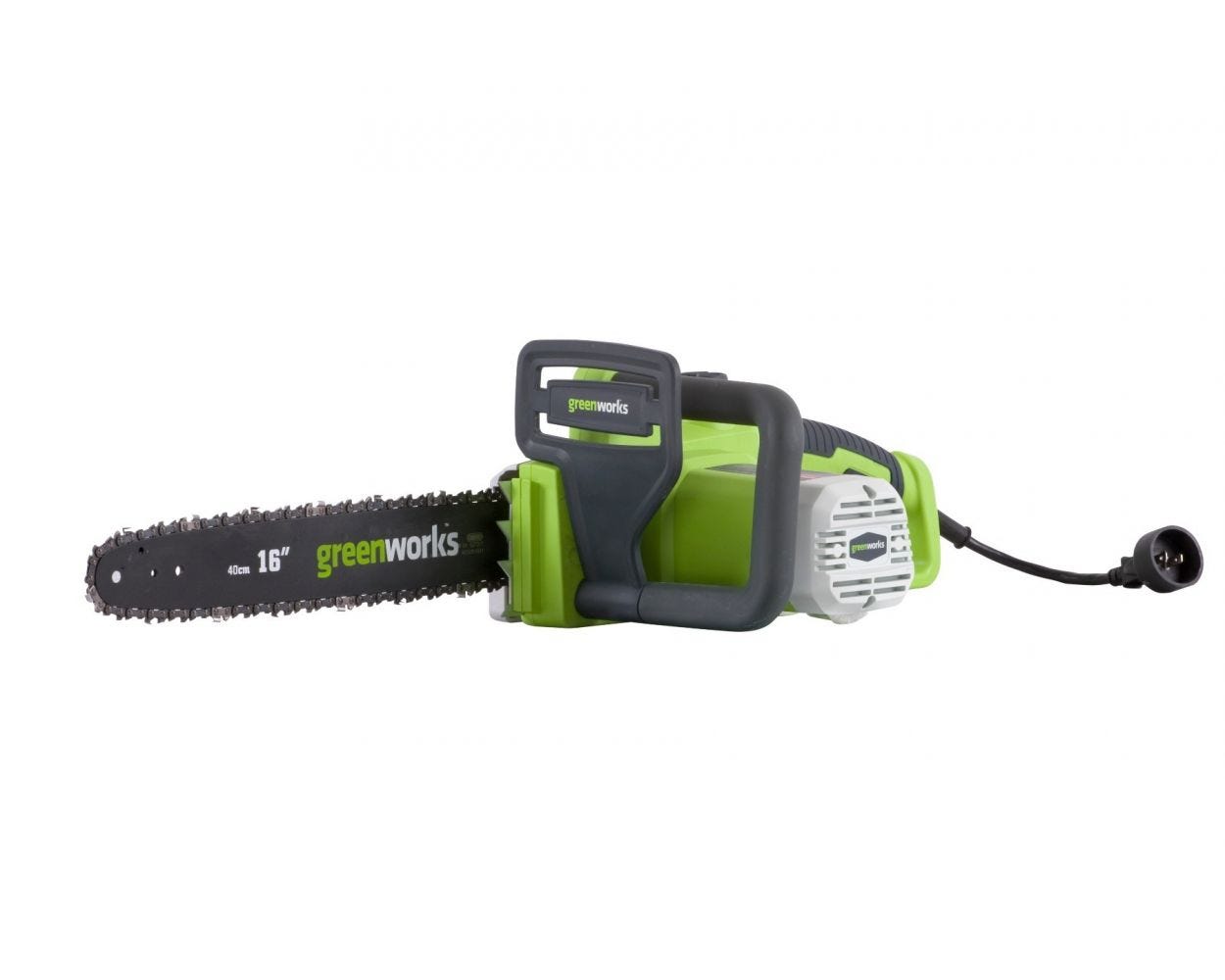
Greenworks 12A 16" Corded Chainsaw
Greenworks' 12-amp corded is the floor of the credible chainsaw market — usually $70-90, light, simple, and exactly adequate for the pruning, storm-limb, and small-log work that most suburban saws actually see. The 16-inch bar is honest about the 12-amp motor behind it: this is a saw for wood under a foot, cut patiently, and owners who treat it that way report years of service from a tool that costs less than a nice dinner. Tool-less tensioning, an auto-oiler with a view window, and Greenworks' 4-year warranty round out a package that undercuts even the Worx on price. The compromises are proportional: the 12A motor bogs where 15A saws push through, the oiler can be inconsistent enough that owners check it religiously, and the build is unapologetically light-duty. As a storm-kit saw that lives in the garage until needed, or a first saw for a small lot, the price makes the argument by itself.
Specifications
Highlights
Pros
- ✓Routinely the cheapest name-brand chainsaw sold in America
- ✓4-year warranty doubles most of the value tier
- ✓Light and unintimidating for first-time users
- ✓Tool-less tensioning and oil view window at a bargain price
- ✓Zero maintenance beyond chain and bar oil
Cons
- ✗12A motor is the class's least powerful — patience required in hardwood
- ✗Oiler consistency is the recurring owner complaint
- ✗Light-duty build throughout; treat it gently
- ✗16-inch bar flatters what the motor can actually pull
- ✗No verifiable retailer aggregate captured at research time
Related chainsaws
More from Greenworks →
Greenworks
Greenworks Pro 80V 18" Chainsaw
The long-running 80V kit that made battery chainsaws credible for cheap — an 18-inch bar, brushless motor Greenworks rates as 42cc-gas-equivalent, and a 2.0Ah battery with a genuinely quick 30-minute recharge. Lowe's buyers rate it 4.6 stars and repeatedly describe dropping and bucking 18-22 inch trees on a charge, and the price is the hook: it lists at $380 but routinely street-prices at $210-250, an absurd amount of saw for the money. The honest caveats from owner reviews: the 2.0Ah pack is good for roughly 110 cuts and fades fast in big hardwood, the chain works loose and derails more than it should (check tension often), it's thirsty on bar oil, and the saw bogs if you lean on it in oversized logs. Note that Greenworks now also sells a newer 2.5kW Gen III 80V 18-inch (CS80L417, ~$430 with 4Ah) with more power for considerably more money — this classic kit remains the value pick.

Greenworks
Greenworks 60V 18" Brushless Chainsaw
The Gen II 60V is Greenworks' volume seller — a 2.0 kW brushless saw the company claims out-torques a 42cc gas engine by 20%, sold as an 18-inch kit with a 4.0Ah battery and 40-minute charger for around $310-350 at Lowe's, Tractor Supply, and Greenworks direct. Its 383 Lowe's reviews average 4.6 stars, with owners consistently surprised that a box-store battery saw fells and bucks real trees — the no-prime, no-choke, instant-trigger start is the most-praised feature among gas converts. At 9.5 lbs bare it's manageable for limbing, and the 65.6 ft/s chain speed is respectable if not pro-fast. The complaint pattern in reviews: the chain can come off under hard use, it bogs in very large logs if you rush it, and the 4.0Ah pack is good for about 140 cuts — enough for an afternoon, not a full firewood day. The 60V battery line spans 75+ Greenworks tools, which is a more useful ecosystem than the 80V line for most homeowners.

Worx
Worx WG304.1
The WG304.1 has been the internet's default 'just get the cheap electric one' answer for over a decade: 15 amps, an 18-inch bar, tool-free auto-tensioning, and a street price that hovers around $99 at Walmart and Lowe's. Consumer Reports has tested it, a decade of owners has validated it, and the formula hasn't changed because it doesn't need to — plug it in, pull the trigger, and it cuts wood far above its price grade. The auto-tension system is the love-hate feature: brilliant for beginners who'd otherwise run chains loose, but the oversized knob can over-tighten if cranked carelessly, and experienced users prefer a manual setup. Beyond that the caveats are the category's: oiler output is generous to a fault (buy bar oil in bulk), the plastic build is honest about its price, and the cord decides where you cut. As a first saw or a woodpile saw, it's the value benchmark everything else gets measured against.